
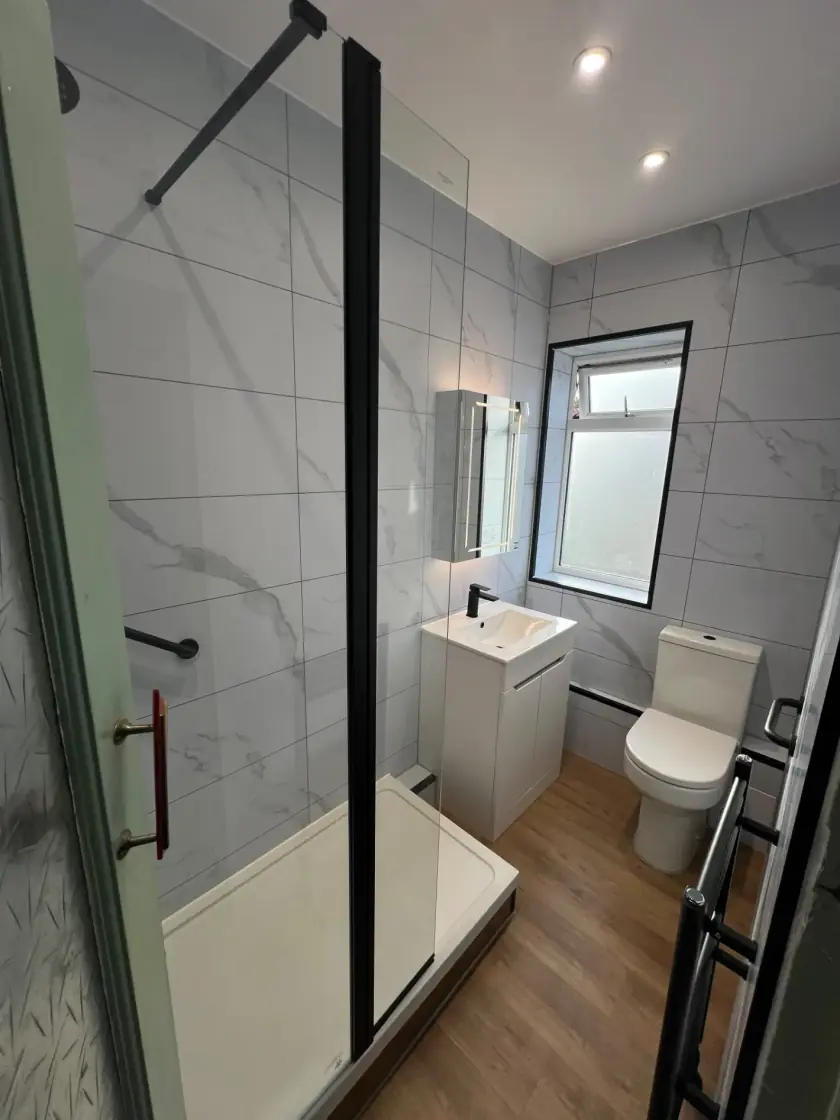
Five Checks for Bathroom Damp and Mould
Updated 11 October 2026
Mould that keeps returning needs more than another coat of paint. The cause may involve a leak, condensation, poor ventilation or a building problem, and those need different responses. These five checks help Glasgow homeowners describe the problem, arrange appropriate repairs and include ventilation and maintenance in a planned bathroom refit.
1. Record where damp appears and when it returns
Note whether the problem is around a shower joint, under a basin, across a cold wall or on the ceiling. Photograph it and record when you notice it, including whether it follows bathing or appears at other times. Tell the installer about earlier leaks and repairs. These details can help an investigation, but the position or colour of a mark alone does not establish the cause.
Do not cover damaged areas with new panels or tiles before the cause is understood. A leaking pipe, failed joint or problem elsewhere in the building may need repair first. Ask what can be inspected without removing finishes and what remains concealed. If there is substantial or recurring mould, seek appropriate professional advice. A new bathroom should not be presented as the automatic answer to every damp problem in a home.
2. Check how the bathroom removes moist air
Ask whether the extractor works as intended and where its duct ends. The whole route matters, including the duct length, bends and outlet. A fan that makes a noise is not proof that it is moving the required amount of air. Tell the electrician or installer if the room stays wet for a long time, the fan is unusually noisy or you do not understand its controls.
Use and maintain the installed ventilation according to its instructions, and keep intended ventilation openings unobstructed. Ask for the timer or humidity control to be demonstrated rather than guessing its setting. Our bathroom ventilation guide explains what to discuss when replacing a fan. Do not add an unsuitable portable electrical appliance or extension lead to the bathroom as a workaround for ventilation that needs attention.
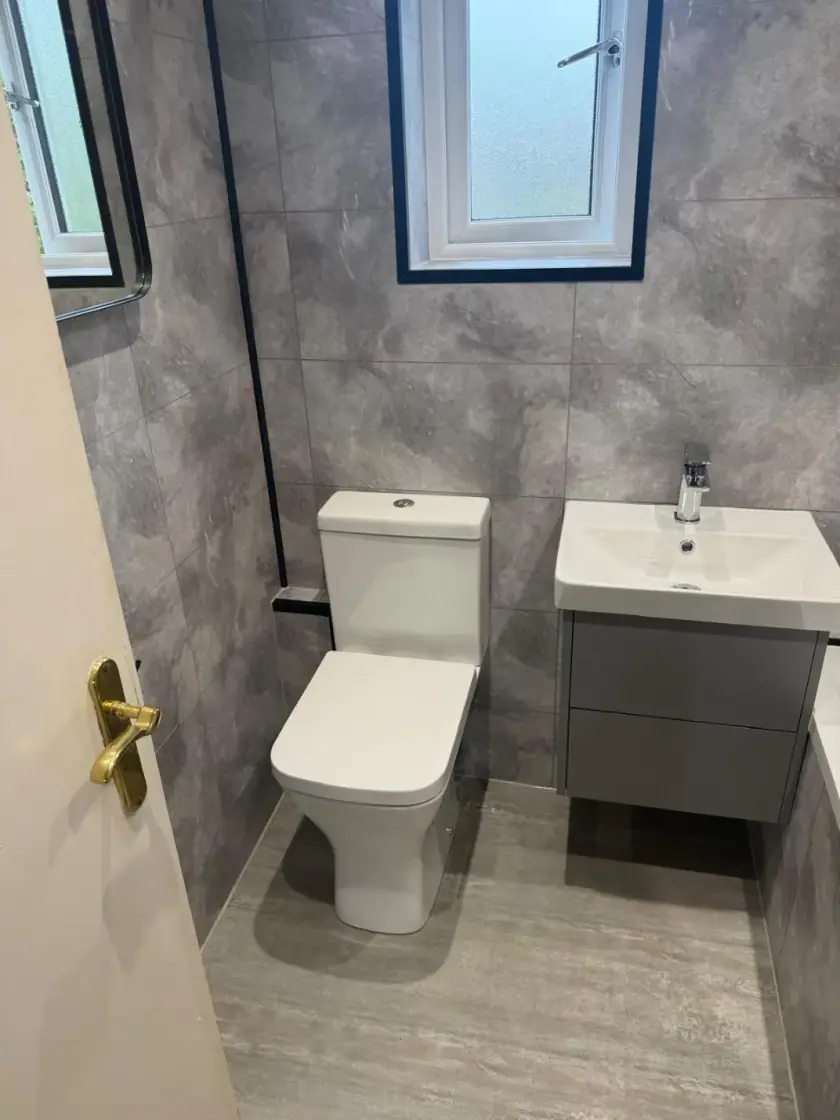
3. Include leaks, heating and the building in the investigation
Check accessible areas for visible drips or damaged seals without dismantling fixed services. Report a leak promptly and ask what repair is needed. Persistent damp can also involve the building beyond the bathroom, including shared parts in a flat. Tell the relevant owner, factor or landlord where appropriate. Replacing a seal is useful only when that seal is actually part of the problem, rather than a convenient explanation for every mark.
Heating and ventilation need to be considered together when condensation is involved. NHS Inform's indoor air guidance explains that poor ventilation can allow moisture to become trapped. If you are concerned about health effects, seek healthcare advice rather than relying on a renovation article. Keep the building investigation separate from assumptions about a person's cleaning habits; the cause should be established from the home and the evidence.
4. Choose finishes and cleaning methods that suit the problem
For a refit, ask which preparation and waterproofing are required before the new surfaces are installed. Tiles, grout, paint and panels have different roles. A mould-resistant label does not fix a leak or remove the need for ventilation. Our wet wall bathroom page explains a finish with fewer grout lines, while retaining the need for properly installed joints and ongoing care.
Follow the surface manufacturer's cleaning instructions and the cleaning product's label. Do not mix cleaning chemicals or use a home-made mixture simply because it is described as natural. Products that are acceptable on one surface may damage another. If the affected area is extensive, keeps returning or may involve damaged material behind the finish, arrange specialist advice rather than repeatedly scrubbing, sanding or painting over it yourself.
Keep ordinary bathroom surfaces accessible for routine care. Avoid packing bottles into corners where water collects, and follow care instructions for towels, curtains and mats so they can dry between uses. These habits help with upkeep, but they do not replace repairs to the building, plumbing or ventilation when those are needed.
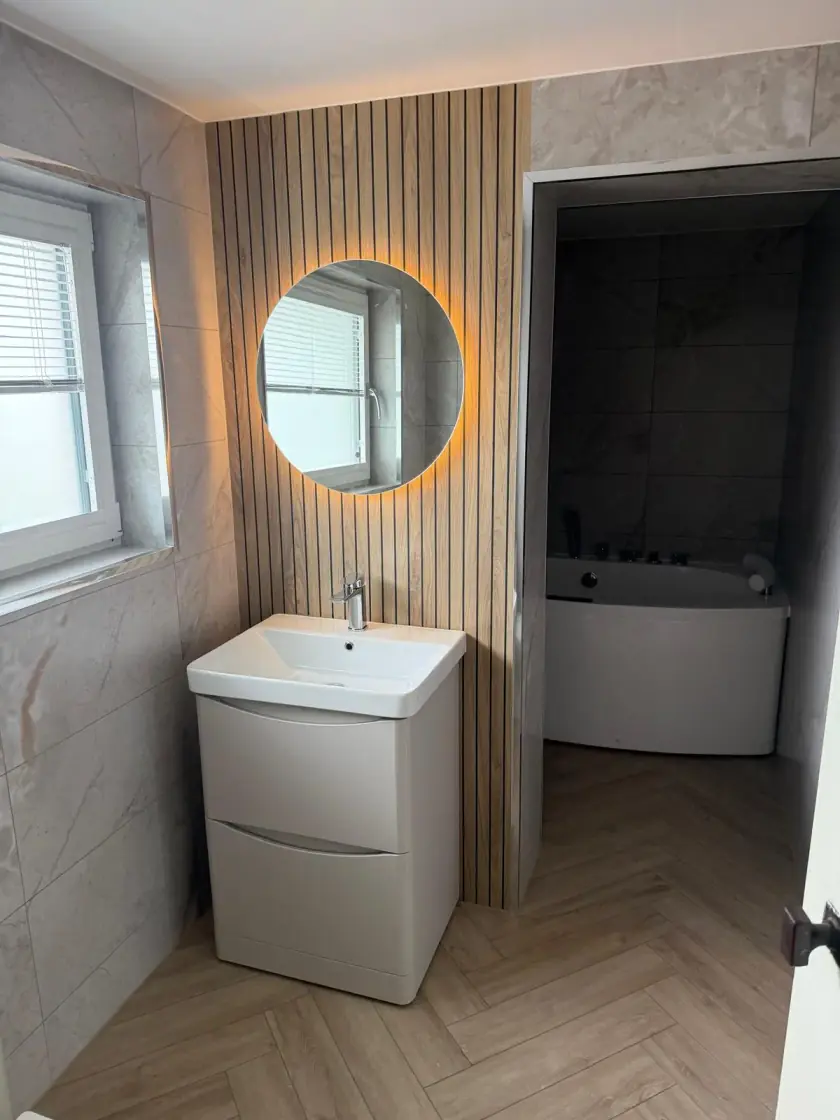
5. Agree repairs and keep checking the result
Ask for the diagnosed problem, proposed work and any remaining uncertainty to be explained in writing. If the investigation identifies several causes, the plan should address them rather than only the visible mark. Keep photographs and repair records so changes can be compared afterwards. Where new finishes are proposed, ask how the underlying material will be assessed and prepared before it is covered.
If you rent, report damp and mould to your landlord and keep a record of the report. The Scottish Government's current guidance for tenants explains the reporting process and landlord responsibilities. For owner-occupied refits, call Dream Bathrooms Glasgow on 0141 471 9145 to discuss the bathroom work being considered. Describe any existing damp at the outset so it is investigated before decorative choices or an installation date are agreed.
Plan your bathroom in Glasgow
Talk through your room, the changes you want and the work that needs to be included.