
Wet Wall Panels or Tiles for Your Glasgow Bathroom?
Updated 11 October 2026
Wet wall panels offer broad surfaces with fewer joints, while tiles offer more choices of size, pattern and layout. Both need suitable preparation and properly sealed joints around water. This guide helps Glasgow homeowners compare the appearance, cleaning, repairs and complete installation price before choosing a wall finish for a shower or bathroom refit.
Compare how each finish will look across the room
With tiles, the size, laying pattern and grout colour all affect the result. A small rectangular tile creates a different rhythm from a large plain tile or a patterned floor-to-ceiling wall. Ask to see the proposed layout around the window, basin and shower. Narrow cuts and interrupted patterns can be more noticeable in the finished room than they are on a small sample board.
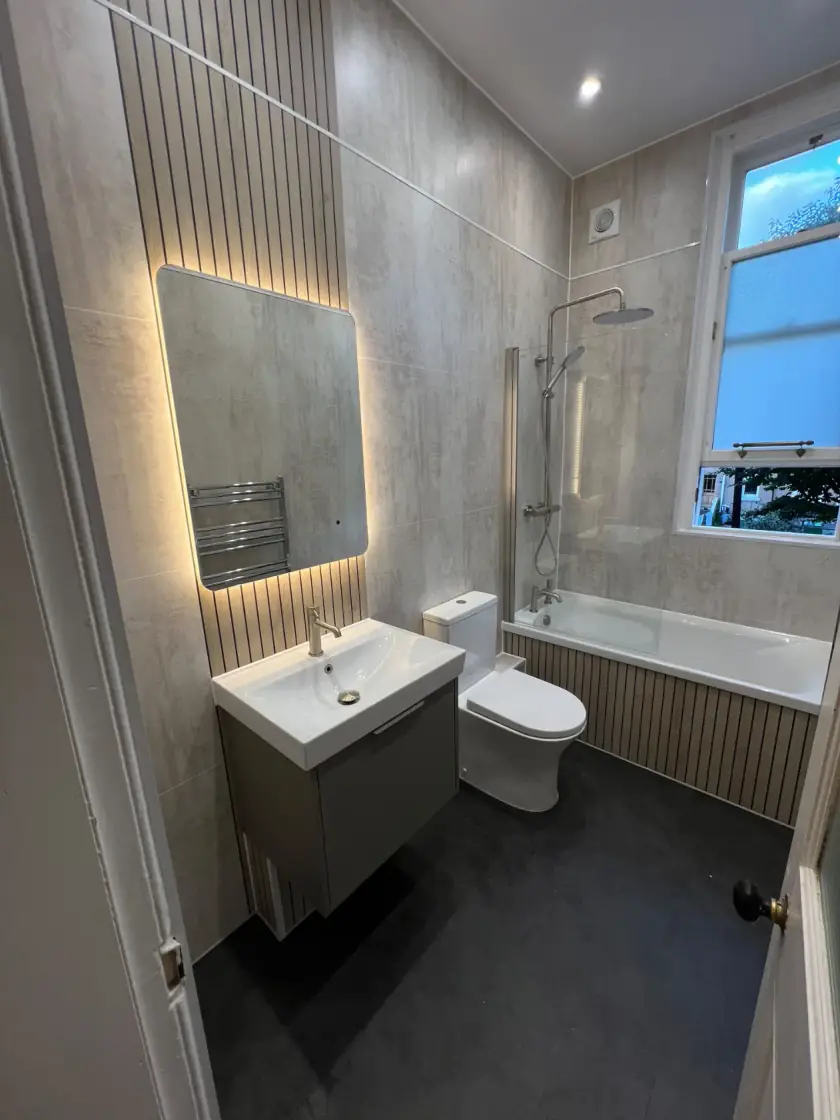
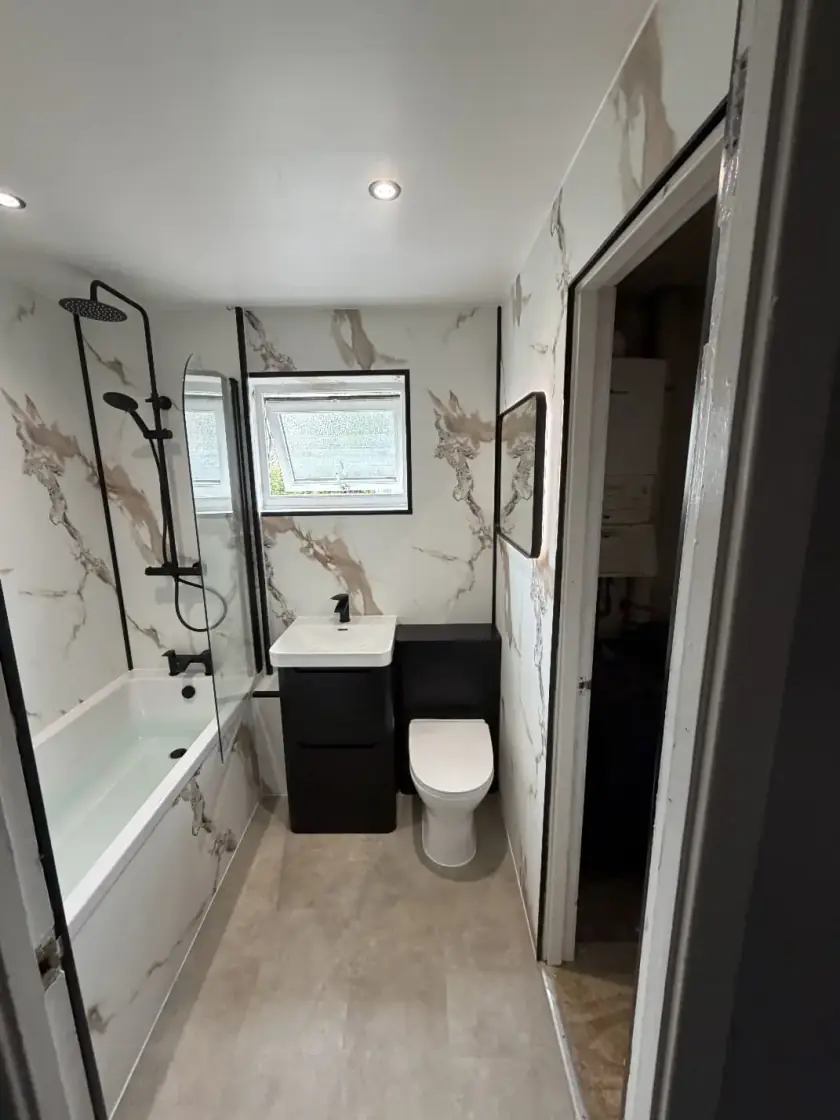
Panels use larger sheets, so the main questions include the pattern scale, repeat, joints and visible trims. A stone-effect panel may look different across a full wall than on a small sample. Compare its texture and sheen in the room's light. Our wet wall bathroom page gives a starting point for discussing panel finishes, while our tile-pattern guide explains the layout choices for tiles.
Ask about the preparation and waterproofing
Neither finish should hide a loose, damaged or damp wall without the necessary investigation and preparation. Ask what the installer can check before the old bathroom is removed and what may only become visible afterwards. Panels may be suitable over some existing finishes, depending on the system and condition; that is not a universal permission to cover old tiles. Extra thickness also affects windows, fittings and junctions with other surfaces.
Tiles and grout alone do not form a waterproof shower construction. Panels also depend on the selected system's joints, seals, corners and connections to the tray or bath. Ask for the complete method to be specified, including pipe openings and other holes. Comparing a panel and a tile without the wall beneath the finish and waterproofing is incomplete: the installation beneath and around the visible finish is part of the job.
Decide which cleaning routine suits you
Panels generally have fewer grout lines, leaving broader areas to wipe. Tiles add grout joints whose care depends on the actual product and location. Not every grout needs the same sealing routine, and no finish eliminates cleaning. Ask for care instructions before selecting materials. A textured tile, coated panel and polished stone can require different products, so a generic bathroom cleaner may not be suitable for every surface.
Keep the shower's seals, drain and ventilation in the maintenance plan whichever wall finish you choose. If damp or mould returns, investigate the cause rather than assuming the wall material is the only issue. Our bathroom damp and mould guide explains the different checks. Fewer joints may suit your cleaning preferences, but they do not guarantee a leak-free or mould-free room.
Plan fittings and later repairs
Shelves, taps, screens and any support rails need suitable fixings and seals through the selected finish. Load-bearing supports must connect to suitable construction behind it. Discuss their positions before installation, especially where wall reinforcement or a niche is needed. A wall panel does not make the floor safer to walk on; floor choice, drainage and individual access needs remain separate decisions in the overall layout.
Ask how damage would be repaired. Replacing a tile may be possible if matching material and access are available, but disturbing the waterproofing needs care. A damaged panel may require a larger area to be removed, possibly including nearby fittings. Keep exact product references and ask whether retaining suitable spare material is worthwhile. Do not assume either option can always be repaired invisibly years after the original installation.
Compare complete prices and realistic timing
Get quotations for the actual products and the same area of wall. Include removal, preparation, waterproofing where required, adhesives, grout or sealants, trims, installation and repairs to walls and floors disturbed by the work. An intricate tile pattern can involve more work, while a premium panel system or awkward room can also raise costs. There is no reliable universal rule that all panels are cheaper than all tiles once the whole job is included.
Ask for the schedule to reflect the room, selected products and any necessary drying or curing time. Confirm how hidden damage or unavailable materials will be handled before the bathroom is stripped out. If you want to combine panels and tiles, ask how the join will be sealed and priced. A mixed finish can work, but it should be planned as one installation rather than two unrelated purchases.
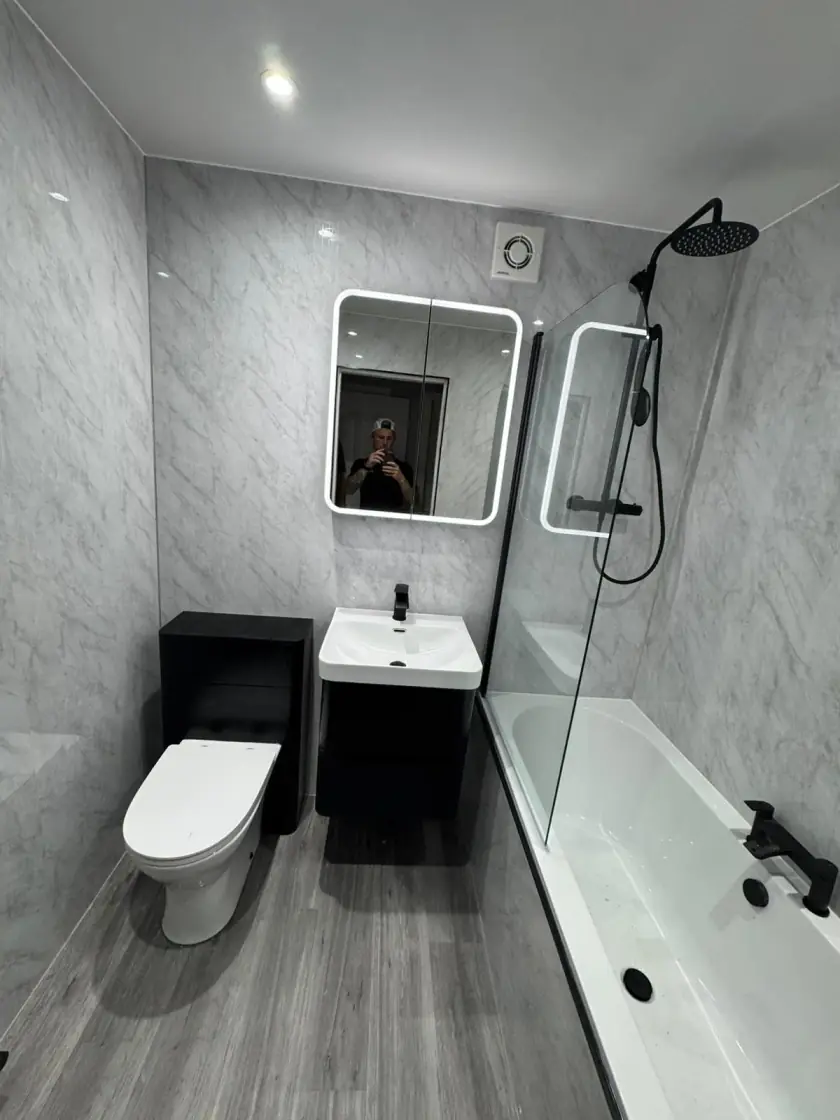
Before approving the final choice, view the wall samples beside the floor, vanity and metal finishes. Record the product names, colours and visible trim or grout choices. Call Dream Bathrooms Glasgow on 0141 471 9145 to discuss your bathroom and priorities. Start with the appearance you like and the care you can manage, then compare proposals that include all the preparation and fitting work.
Plan your bathroom in Glasgow
Talk through your room, the changes you want and the work that needs to be included.