
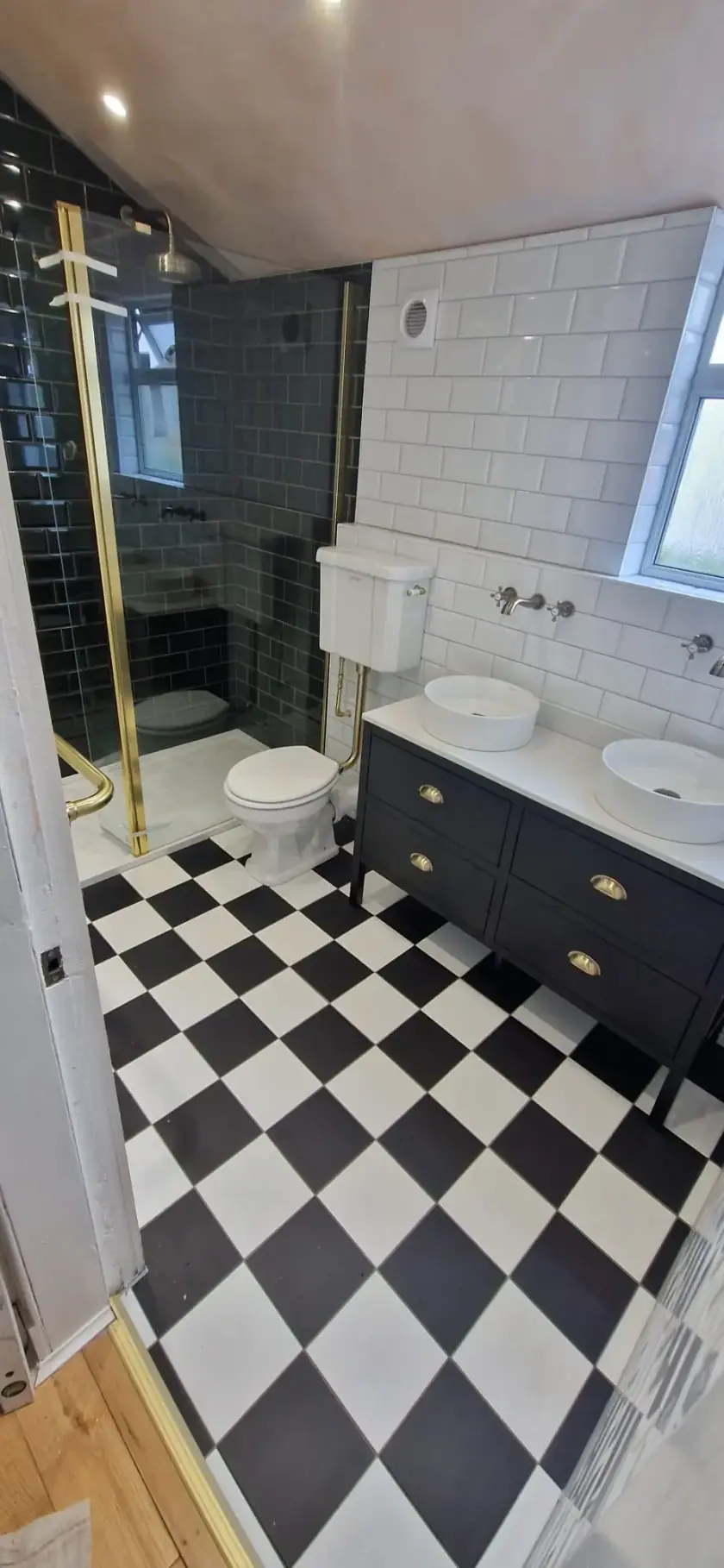
Bathroom Tiles or LVT Flooring: Which Suits Your Home?
Updated 11 October 2026
Tiles and luxury vinyl tile, usually called LVT, can both suit a bathroom when the product and installation are right for the room. Tiles give you a hard ceramic, porcelain or stone surface. LVT gives a vinyl finish in tile or plank shapes. Compare comfort, cleaning, preparation and repair options before deciding on the pattern.
Check that the product suits a bathroom floor
Some tiles are intended for walls, so do not choose them for a floor based only on colour. Ask for the product's floor-use and slip-resistance information. Porcelain, ceramic and natural stone have different properties, and products within each group vary. A matt appearance alone does not prove that a tile has suitable grip when wet.
For LVT, check the manufacturer's instructions for bathroom use, joints, edges and fitting around furniture. A waterproof plank is not the same as a waterproof floor installation. Water may still reach the layers below through gaps or edges. Ordinary bathroom flooring should not be assumed suitable for the floor inside a wet-room shower.
Find out what preparation your floor needs
Tiles need a suitable stable base. Movement, damaged boards or an uneven surface can lead to problems even when the tiles themselves are good quality. Ask the installer to check the existing floor and specify the preparation. Include any necessary repairs, boards, levelling or waterproofing in the comparison so both quotes cover the same work.
LVT also needs the right base. Thin glued products can show imperfections beneath them, while click systems have their own flatness and installation requirements. Covering a soft or damp floor with vinyl does not repair it. Ask how moisture and existing damage will be checked before the new floor is fitted.
Compare comfort using real samples
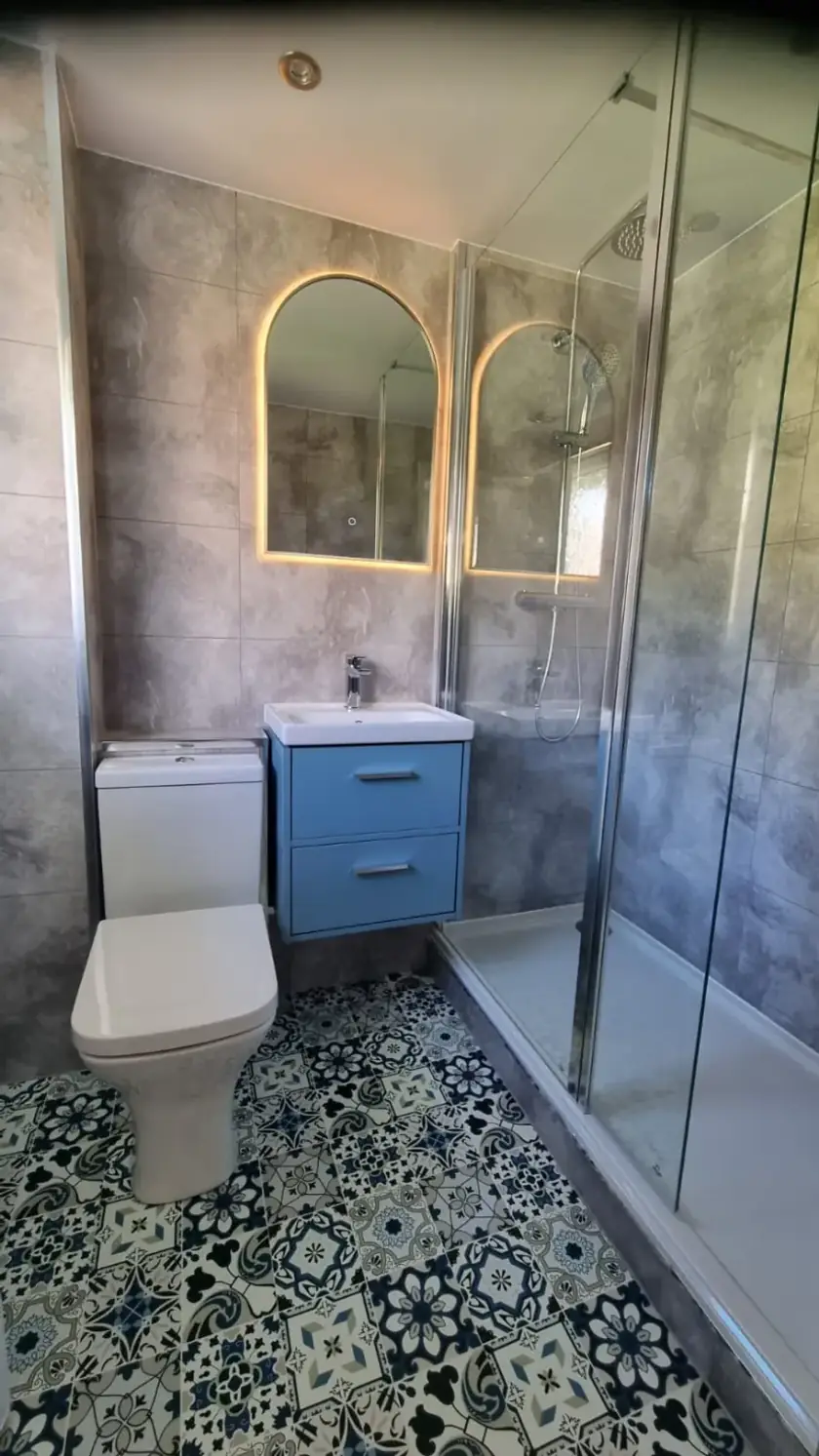
Tiles often feel cooler under bare feet than vinyl in an unheated room. LVT can feel softer, although the difference depends on the specific product and the floor beneath it. Try samples if possible. Think about how you use the room in the morning rather than judging comfort only from photographs or the product name.
If you want underfloor heating, check the complete combination of heating system, floor preparation, adhesive and finish. Both tile and LVT options can have specific requirements. Ask about controls, permitted temperatures and running costs for the proposed system. Do not assume an existing heating system will work with a new finish without checking compatibility.
Decide how much cleaning you want to do
Tiles have grout joints that need cleaning as well as the tile face. Joint colour can change how marks show, but darker grout does not remove the need for care. Natural stone and some other finishes may have particular sealing or cleaning requirements. Read those instructions before buying if you want a straightforward routine.
LVT has no traditional tile grout, which can make routine wiping simpler. It still needs suitable cleaning products and attention to spills and joints. Avoid abrasive methods or steam cleaning unless the manufacturer permits them. A textured surface may provide useful grip but can also take more effort to clean than a smooth finish.
Think about scratches, chips and repairs
A dropped heavy object can chip a tile or mark vinyl. Neither material is damage-proof. Ask how an individual damaged piece would be replaced in the proposed installation. Glued and click LVT can have different repair methods, while replacing a tile needs care to avoid damaging nearby tiles or the waterproofing beneath it.
Keep a labelled spare pack or a few suitable spare pieces where practical. Designs and batches can change, so a later replacement may not match exactly. Store the product name, batch details and fitting information with your bathroom paperwork. These records can be more useful for a repair than a broad claim about how many years a floor will last.
Choose a pattern that fits the room
Large tiles can reduce the number of visible grout lines, but cuts around a small room still matter. Lay out the pattern on a drawing so awkward thin strips do not end up by the door or bath. Ask how the tile size will work with the floor dimensions and any changes in level.
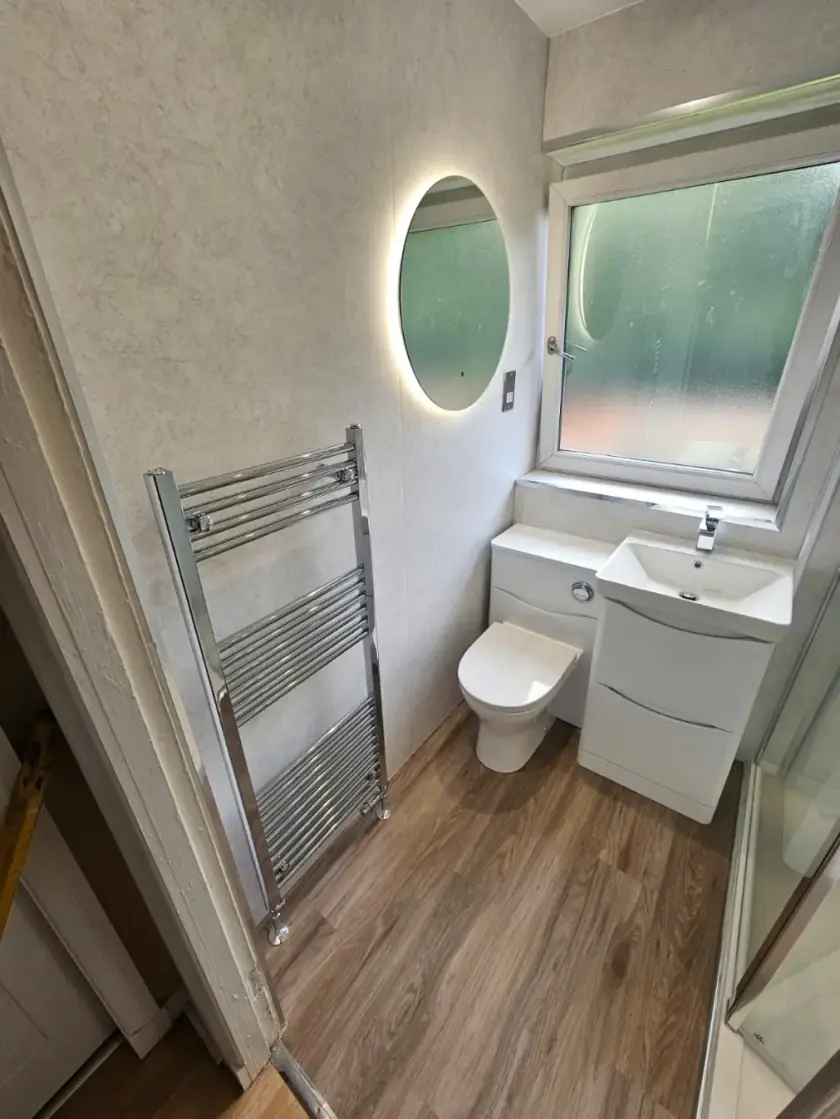
LVT offers wood and stone effects without using those materials as the surface you walk on. Look at several pieces together to see the pattern repeat. A wood effect can bring warmth to a pale bathroom, while a simple stone effect may sit quietly beside patterned walls. Use samples beside the vanity and wall finish before deciding.
Compare the full installed price
The product price per square metre is only part of the cost. Include removal, preparation, adhesives or underlay where required, trims, thresholds, labour and waste. A room with difficult cuts or repairs can cost more to fit than an open rectangular space. Ask for a written total for your bathroom rather than comparing headline material prices alone.
Check the finished floor height at the door and around the suite. New floor layers may affect the space beneath the door, thresholds or an adjoining floor. Discuss the order of fitting furniture and flooring with the installer because product instructions differ. Include any door adjustment or repairs to walls and floors disturbed by the work in the quote so those details are not left until handover.
Match the floor to your bathroom plans
Choose tiles if you prefer their hard surface and are comfortable with the grout and care requirements of the product you have selected. Choose bathroom-suitable LVT if you prefer its feel and appearance and the fitting requirements suit the room. In either case, deal with leaks, floor movement and preparation before the new surface goes down.
For a wider refurbishment, our bathroom design service helps bring the floor, walls and fittings together. You can also read our guide to what affects a bathroom quote. Call 0141 471 9145 or request a free home design visit to discuss the options for your room.
Plan your bathroom in Glasgow
Talk through your room, the changes you want and the work that needs to be included.