
Five Material Choices for an Easier-to-Clean Bathroom
Updated 11 October 2026
An easier-to-clean bathroom starts with suitable surfaces, reachable corners and fewer places for water to collect. No material removes all maintenance. For a Glasgow refit, compare the actual products and their care instructions alongside the layout, rather than relying on a low-maintenance label.
1. Compare shower walls by joints and details
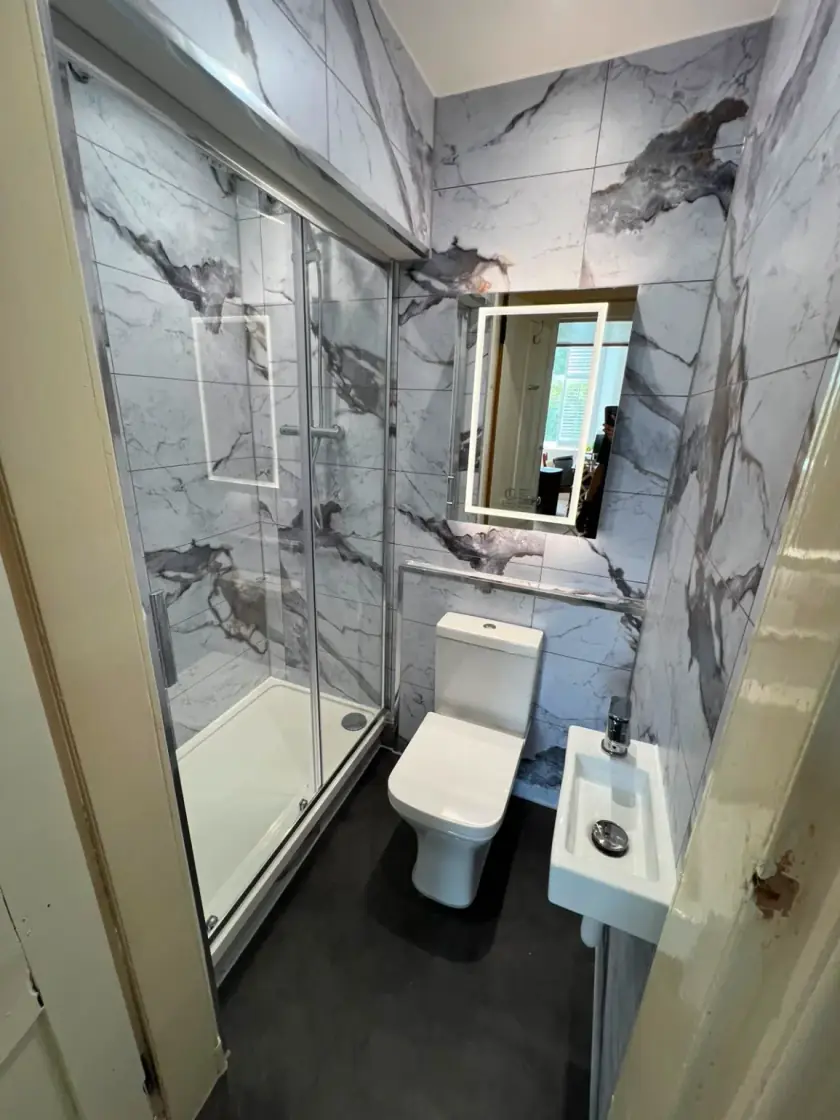
Wet wall panels can reduce the amount of grout in a shower area. That may suit you if cleaning tile joints is a chore. The panels still have connections, corners and seals that need correct installation and care. Check the exact system and how it meets the tray, window and fittings before choosing it.
Tiles offer a different range of sizes, patterns and finishes. Larger tiles can reduce the number of grout joints, but they still need suitable preparation and a planned layout. Tile and grout choices should be made together. Neither tiles nor a decorative panel surface can compensate for leaks, unstable walls or missing waterproofing where it is required.
Our wet wall bathroom options provide a starting point for comparing panel finishes. Ask for the cleaning instructions before ordering. Avoid a heavily textured wall if its care routine would be difficult for you. A finish that looks simple may still have awkward corners or trims once installed.
2. Choose a floor for use and cleaning
Select flooring intended for its actual bathroom position, including direct shower use where relevant. A product described as water-resistant is not necessarily suitable for a wet-room floor. Joints, edges and the construction beneath also matter. Ask the installer to explain the complete system rather than treating the visible surface as the whole waterproofing arrangement.
Check information relevant to wet slip resistance as well as appearance. Matt finishes and wood or stone textures do not establish suitability by themselves. Compare the cleaning method too: a pronounced texture may need more attention than expected. Use the approved products and tools rather than assuming any floor cleaner or steam mop is permitted.
Keep the floor accessible around the toilet, furniture and shower entrance. A narrow gap that cannot be reached will remain awkward regardless of the material. Plan storage so loose items do not gather in the walking route. For more detail, read our bathroom flooring and slip-resistance guide.
3. Look at basin and furniture edges
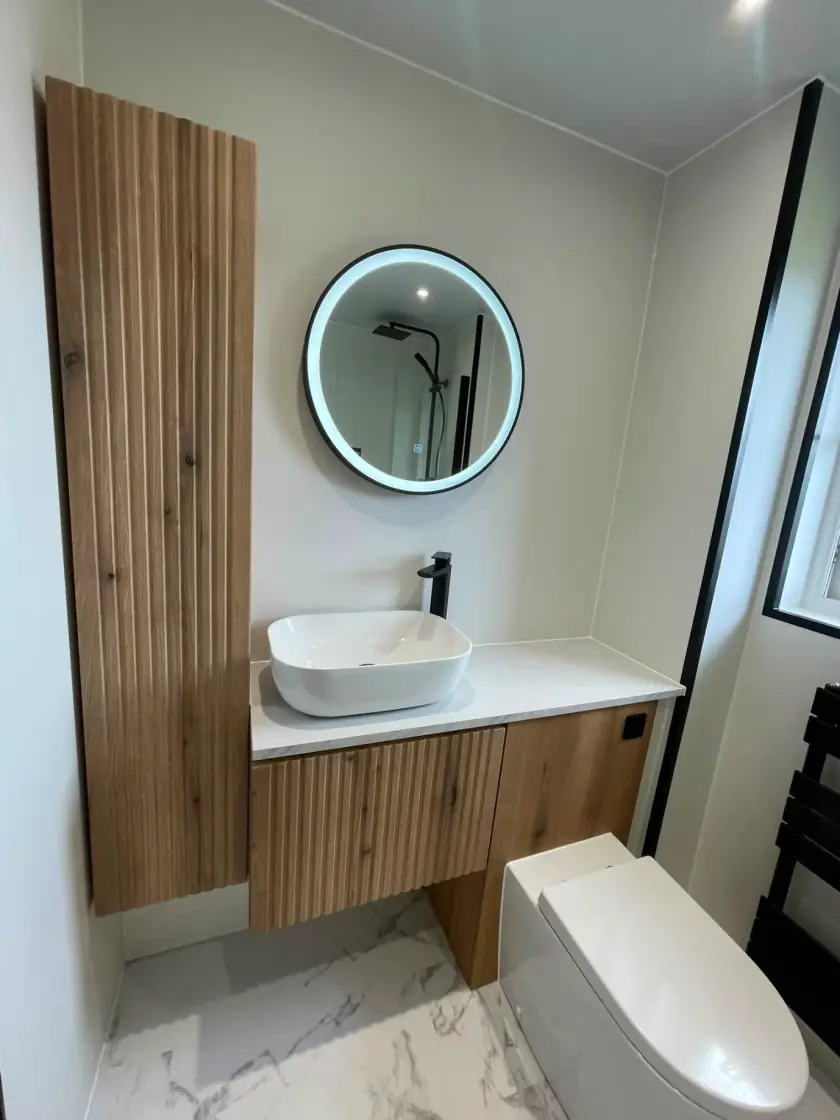
A basin with a usable bowl and a suitable tap can help contain ordinary splashes. Check where the water lands and how easy it is to wipe around the tap base. A worktop covered with small bottles takes longer to clean, so provide storage for most daily items rather than relying on a larger surface to hold them all.
Choose furniture intended for bathrooms and pay attention to the edges, cut-outs and connection to the basin. Moisture resistance does not mean standing water can be left indefinitely. Follow the care instructions and wipe splashes promptly. A leak inside a cupboard should be dealt with before it damages the cabinet or stored belongings.
Simple cupboard fronts can be straightforward to wipe, but handles and door openings still need to suit the user. Check how the trap and valves can be reached for repairs. Cleaning and maintenance are different jobs, and a good arrangement supports both. Do not close off parts that may need repair simply to achieve an uninterrupted furniture front.
4. Check the shape of toilets and screens
A smooth-sided toilet may be easier to wipe around than one with several exposed recesses. A removable seat can help with cleaning if it is designed for that purpose. Look at the actual fitting and the space around it. A good product positioned too close to a wall may still leave areas that are difficult to reach.
For shower screens, compare tracks, hinges, seals and overlapping panels. An easy-clean coating may help with routine care, but it does not mean the glass cleans itself. Follow the product instructions and use any cleaning-release features only as described. Keep the model details so worn seals or rollers can be identified correctly later.
Tap finishes also have specific care needs. Do not assume brushed, black or brass-coloured fittings will always show fewer marks or tolerate stronger cleaners than chrome. View samples and read the instructions for the exact product. Choose a finish you are prepared to maintain, with enough room around it for ordinary wiping.
5. Keep paint and ventilation in their proper roles
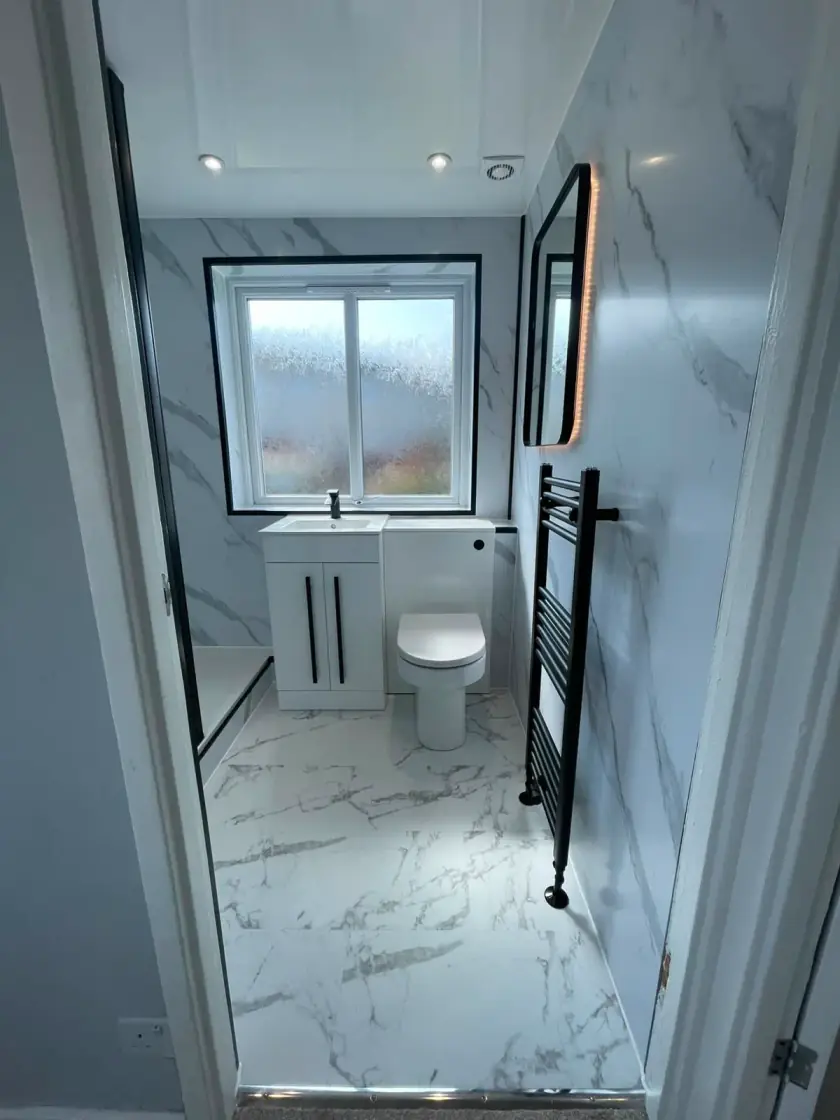
Use paint suitable for its proposed bathroom surface, following preparation and application instructions. Some products include mould-resistant properties, but paint does not repair a leak or remove moisture from the room. Recurring staining needs its cause investigated before a fresh coat is treated as the solution.
A working ventilation system and suitable heating help the room perform as intended. Include the fan and duct route in the refit discussion, particularly if condensation remains after normal use. Keep the cleaning guidance for the different surfaces together. There is no universal product that is safe for every panel, metal finish, seal and furniture edge.
Our bathroom design service in Glasgow can help combine suitable materials with a practical layout. Explain which cleaning tasks you find difficult now, and use those problems to guide the choices. Call Dream Bathrooms Glasgow on 0141 471 9145 to discuss a bathroom that is easier to use and look after.
Plan your bathroom in Glasgow
Talk through your room, the changes you want and the work that needs to be included.