
Bathroom Wall Panels or Grouted Tiles: Cleaning, Joints and Repairs
Updated 11 October 2026
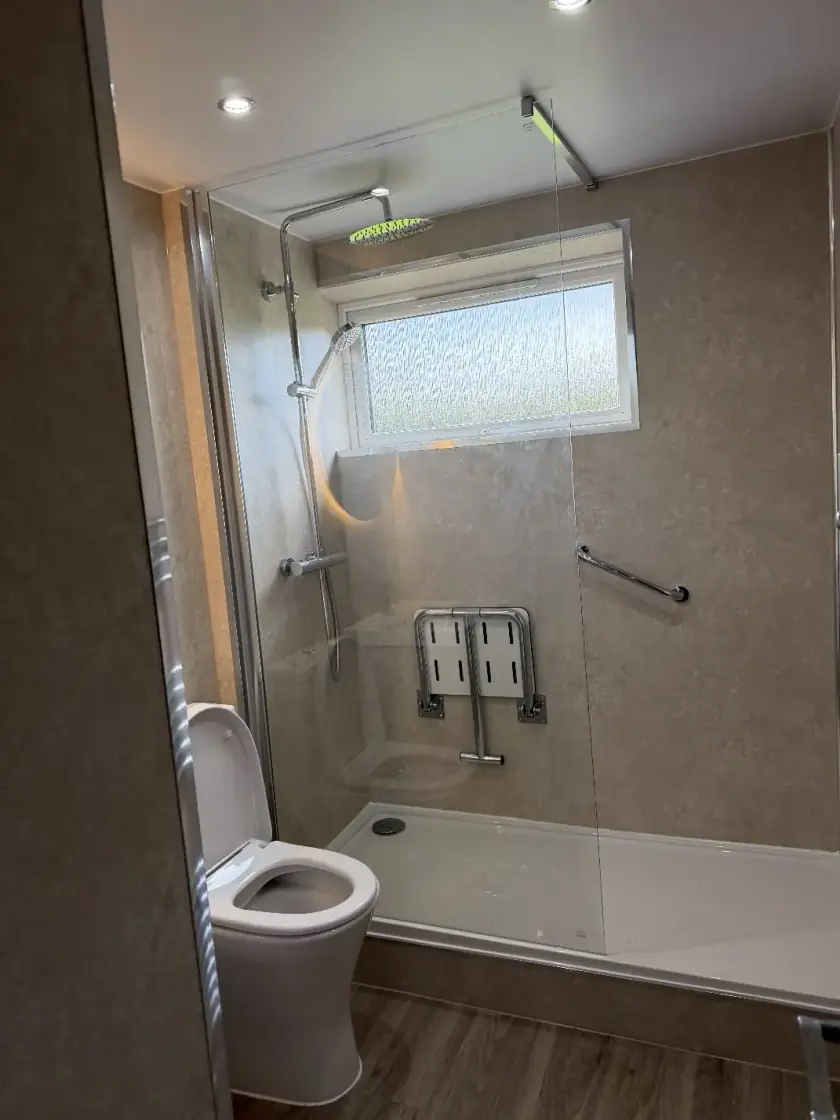
Bathroom wall panels remove most of the grout lines found in tiled walls, but they still rely on properly fitted joints and seals. Tiles give you more individual pieces to arrange into patterns. Compare the cleaning, preparation and repair work as well as the finish when choosing for your Glasgow bathroom.
Panels and tiles create different patterns
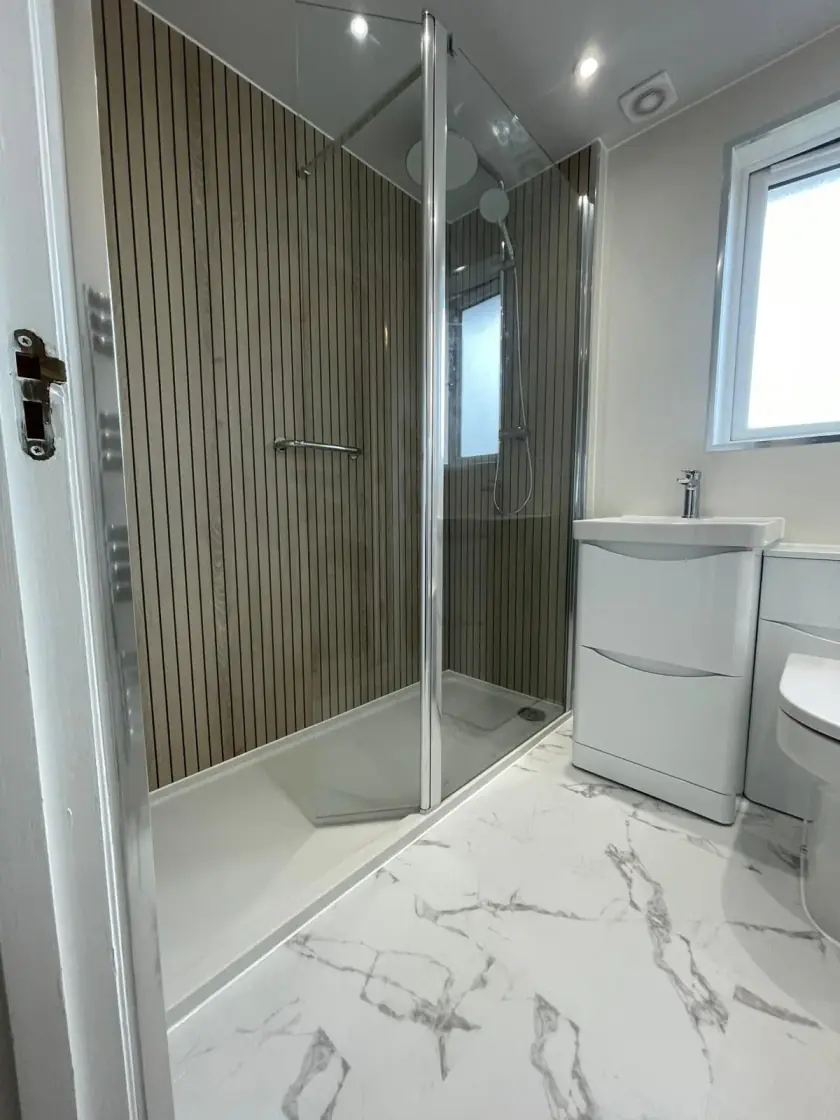
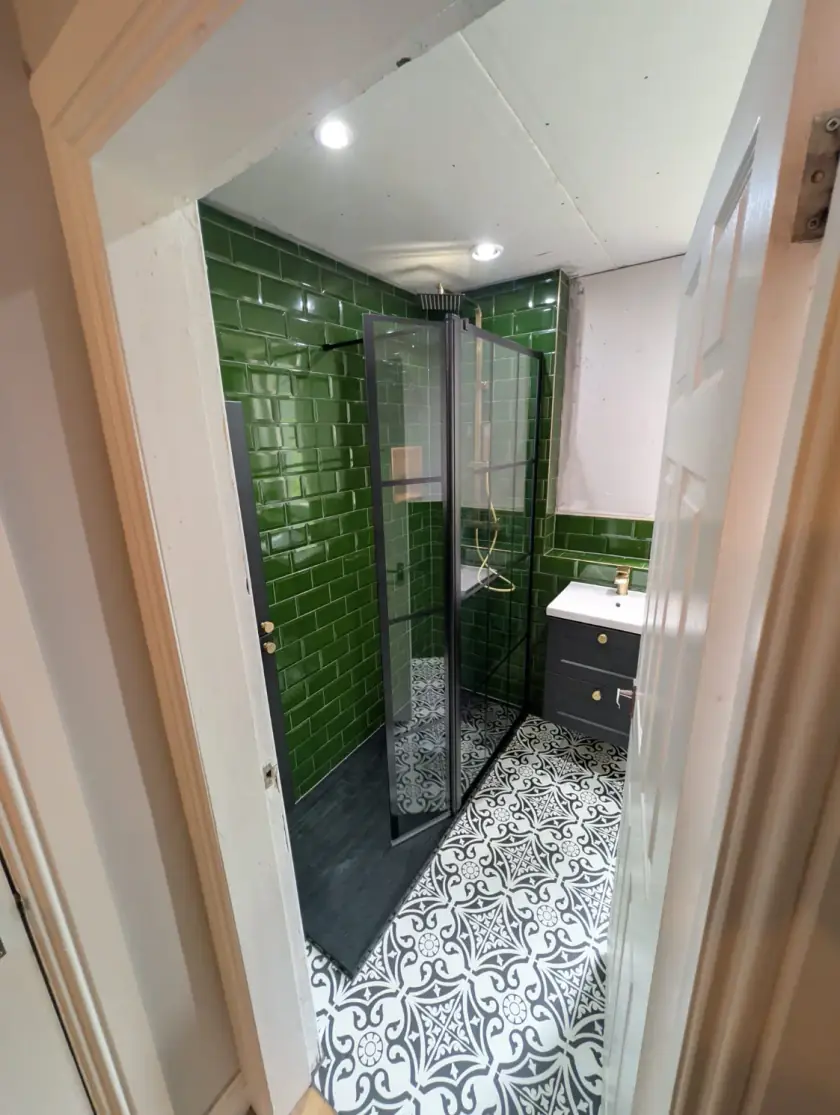
A large panel can show a broad stone effect or a plain colour with relatively few joins. Tiles let you choose the size, pattern and grout colour separately. Small tiles create more visible lines; larger tiles create fewer. Neither finish is restricted to a particular type of home: a tenement can suit simple panels, and a newer house can suit traditional tiles.
Look at full samples and the proposed layout. A strongly patterned panel may repeat across the room, while a tile pattern may need awkward cuts around a window. Matching grout closely to the tile can reduce contrast without eliminating the joints. Decide what you want the wall to look like from the doorway as well as close up.
Understand what keeps shower walls dry behind the finish
Grout fills the spaces between tiles; it does not by itself provide a complete waterproof barrier. Shower areas need a suitable waterproofing system behind or as part of the finish. This is often called tanking. BAL's wet-area tiling guidance explains why tiles, adhesive and grout alone are not enough to protect the wall beneath the finish from water damage.
A panel system also needs correct installation. Joints, cut edges and openings around pipes must follow the product's instructions. A waterproof panel face does not make every joint waterproof automatically. Ask the installer to explain the complete approach for the shower, including its connection to the tray or bath, rather than relying on a broad waterproof label.
Compare the wall preparation needed
Both finishes need a suitable wall beneath the finish. Loose tiles, damaged boards or unresolved damp should be dealt with before new material is fitted. Some panels can go over existing tiles when the system permits and the tiles are sound. That is not permission to cover a leaking shower or a wall whose condition has not been checked.
The panel thickness or tile build-up can affect screen positions, tap connections and window details. Ask whether these changes are included in the quote. In an older bathroom, opening up the room may reveal repairs that were not visible beforehand. Agree how those findings will be explained and priced before the work continues.
Look closely at corners and edges
Panel joins may use profiles or shaped interlocking edges, depending on the product. Ask to see the corner trim, exposed edge and bath connection, not just the centre of the sample. Colour-matched trims can look different under bathroom lighting. The position of each join should be planned before cutting begins, particularly with a strong stone or wood-effect pattern.
Tiled walls also need suitable edge finishes and movement joints. These are joints designed to allow movement, rather than spaces filled indiscriminately with rigid grout. The installer should use the correct materials in the correct locations. A neat-looking corner is only part of the job: its construction needs to suit the wall beneath the finish and expected water exposure.
Compare the cleaning you can manage
Smooth panels generally give you fewer grout lines to scrub, although soap and water marks still need cleaning. Tiles require care across the tile faces and joints. Textured finishes, small mosaics and deep patterns can create more places for residue to collect. Feel a sample and check the care instructions before selecting a finish based only on appearance.
There is no single cleaner suitable for every panel, stone, grout and metal trim. Follow the instructions supplied with the chosen products. Some grout types and natural stones have specific care or sealing requirements; do not apply a blanket resealing schedule to everything. Good ventilation helps the room dry, but neither panels nor tiles remove the need to investigate persistent damp.
Think about repairs before choosing a finish
A damaged panel may require replacement of a larger area than a single damaged tile. However, replacing one tile can still disturb nearby work and the waterproofing beneath it. The repair needs to preserve the complete system. Ask what spare material is sensible to keep and where replacement trims, tiles or panels can be obtained.
Cracks, loose finishes or recurring failed seals can indicate a problem beyond the surface. Regrouting or adding sealant may not fix movement, leaking pipework or damage underneath. Have the cause checked when problems return. Keep the product names and fitting details so a future repairer can identify compatible materials instead of guessing what was installed.
Compare time and price for the actual room
Panels can reduce the number of pieces to fit, but preparation, difficult cuts and sealing still take time. Tiles involve setting out, fitting and appropriate drying or curing periods. Neither option comes with a reliable universal completion time. Ask for a schedule based on your room, including when the shower or bath can be used again.
Compare quotes covering the same areas and preparation. Include disposal, trims, adhesive, waterproofing where required and repairs to walls and floors disturbed by the work around fittings. A cheaper wall material can still lead to a higher overall bill if it needs more work to fit. Our wet wall panel guide explains the product details to discuss before ordering.
Choose the finish around your bathroom priorities
If cleaning grout is your main frustration, panels may be worth comparing. If a particular tile pattern is important, include suitable grout and waterproofing in the plan. Discuss both through our wet wall bathroom service. Call Dream Bathrooms Glasgow on 0141 471 9145 to talk about the room and the work you want included.
Plan your bathroom in Glasgow
Talk through your room, the changes you want and the work that needs to be included.