
Grout-Free Bathroom Ideas That Are Easier to Clean
Updated 11 October 2026
Bathroom wall panels can give you fewer grout lines to clean around the bath or shower. They still have joints and edges that need proper fitting and care. For a Glasgow bathroom, start with the areas you find hardest to clean, then choose finishes that make those jobs simpler.
Use shower panels where they help most
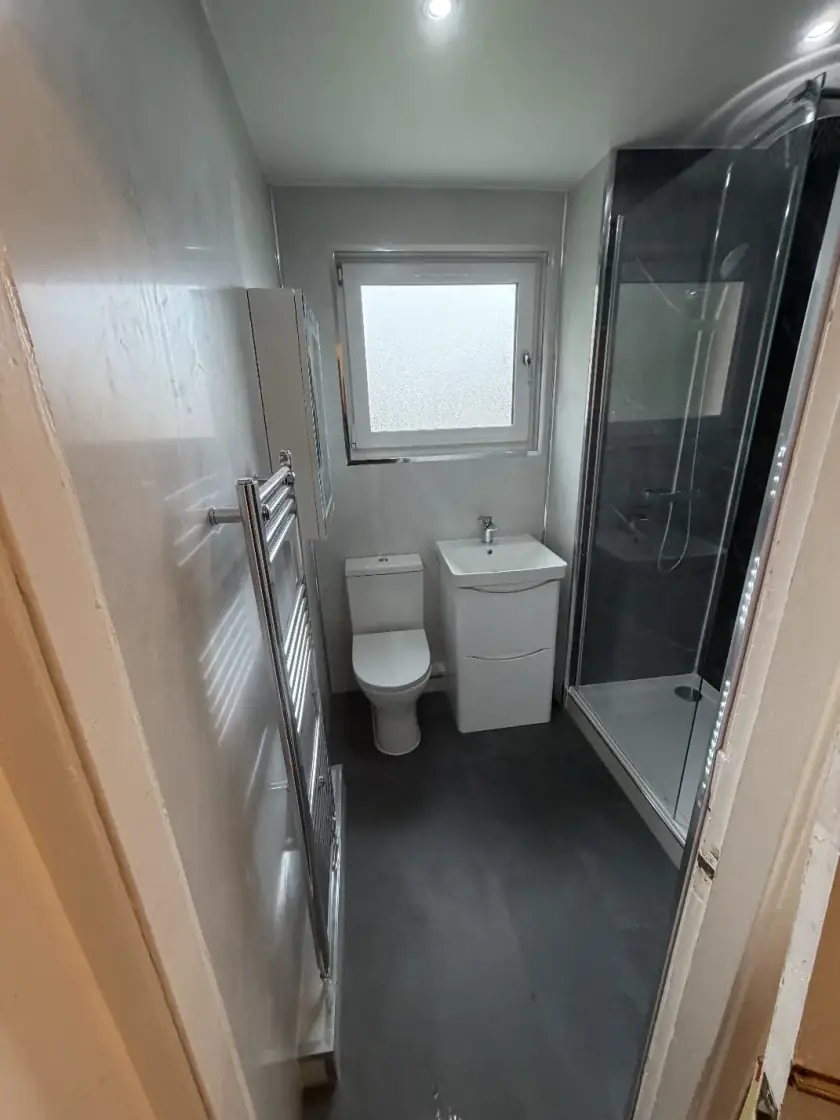
Large panels can cover the shower walls with fewer joins than small tiles. A plain finish gives a quiet background, while a stone-effect design adds pattern without separate pieces of stone. Compare a large sample if possible: a small swatch may not show the full pattern or how often it repeats across the wall.
Check that the selected panel system is suitable for the shower area. Decorative wall cladding intended for a dry room is not an equivalent substitute. The panel, joints, edge details, adhesive and sealing method need to work together. Ask the fitter to identify the actual system in the quote so you know what is being supplied.
Keep the rest of the room simple
You do not have to use the same finish on every wall. Panels around the shower can sit beside a suitable painted finish in a drier part of the room. A small tiled splashback may also work, provided the join between finishes is properly sealed. Choose the coverage according to water exposure and the product instructions.
In a compact bathroom, one main wall colour and a coordinated floor can be easier on the eye than several competing patterns. Use the vanity or towels for a second colour if you want contrast. A clear screen can leave more of the wall finish visible, but the shower layout must still contain splashes effectively.
Understand the joints you will still see
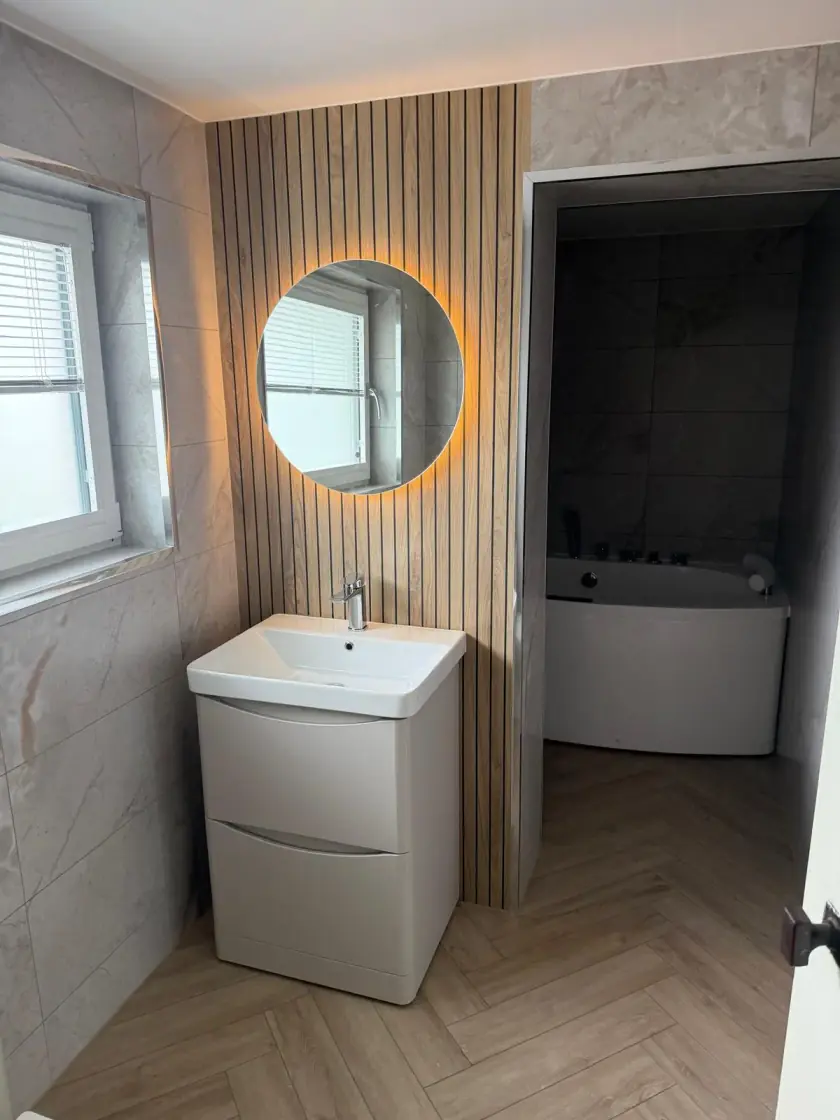
Grout-free does not mean joint-free. Panels meet at corners, around windows and along the bath or shower tray. Some systems use joining strips; others use shaped edges with specified sealing. Ask to see how these details look in a finished example. The trim colour and position can change the overall appearance of the room.
Plan joins around the whole wall, including any pattern that needs matching. A narrow cut piece beside a window may stand out more than a well-positioned full joint. The installer should also allow for the movement and clearances required by the manufacturer. Trying to hide every gap by fitting panels tightly together can cause problems later.
Repair damp and loose surfaces first
New panels should not cover an unresolved leak, soft wall or loose tiles. The existing surface needs checking before the fitter decides whether it can stay. Some systems allow fitting over sound tiles, but that depends on the product and condition of the wall. The extra thickness can also affect taps, screen fixings and window edges.
Ask what happens if damaged material is found when the old bathroom is removed. The quote should explain how extra preparation will be agreed. Older unidentified materials may need assessment before being disturbed. A quicker finish is only useful when the surface beneath it is suitable; covering the problem does not remove the cause.
Choose storage with fewer awkward corners
A useful shelf or properly formed shower recess can keep bottles off the tray. Check how its edges will be sealed and how easily it can be wiped. A recess adds joints and needs a suitable wall construction, so it is not automatically the simplest option. A removable shelf may be more practical in some bathrooms.
Keep everyday items within reach and put spare bottles in a cupboard. Open storage looks tidy only when it holds a manageable amount. Avoid packing the shower with several small baskets that make cleaning harder. Our fitted and freestanding storage guide helps you compare the space and access each option needs.
Pick a suitable floor separately
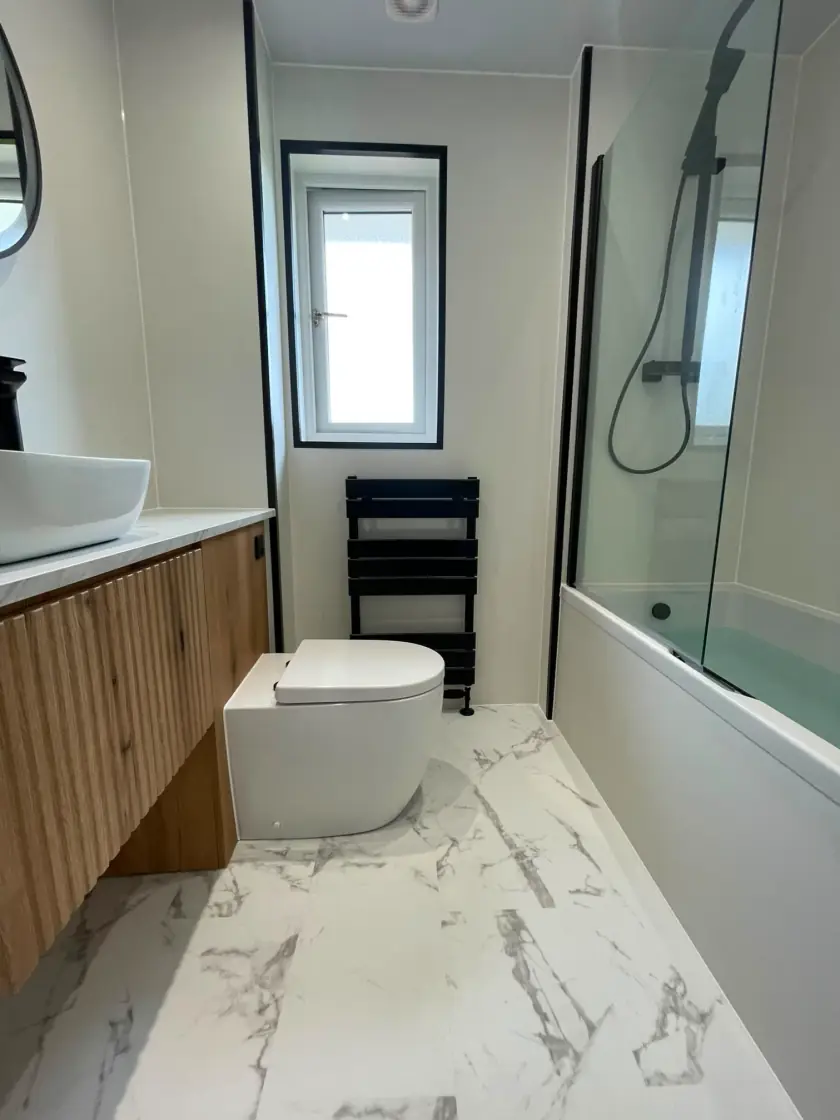
Wall panels are not automatically suitable flooring. Choose a floor product intended for the bathroom and, where relevant, the shower area. Ask about wet-use suitability, cleaning and the preparation needed beneath it. A decorative match is less important than having a sound, comfortable surface that works with the layout and drainage.
Large tiles have fewer grout lines than smaller tiles, but they still need correctly designed joints and suitable support. They are not a grout-free option. A shower tray can avoid a tiled shower floor, while a wet room needs a complete suitable floor and drainage system. Removing grout lines by itself does not make a floor slip-resistant.
Make routine care straightforward
Follow the panel manufacturer's cleaning instructions and avoid unsuitable abrasive pads or chemicals. Check corners and bath or tray edges for damage during cleaning. If a seal fails, have the cause and any hidden damage checked rather than repeatedly covering it with fresh sealant. Keep the product information so the right care and repair materials can be identified.
Ventilation remains necessary. Panels do not prevent condensation on mirrors, ceilings or colder surfaces. Keep the extractor working and use it as intended after bathing or showering. If mould keeps returning, investigate the moisture source and ventilation rather than assuming a different wall finish will solve it. The aim is less difficult cleaning, not a room that needs no care.
Compare complete panel installation quotes
Include preparation, panels, trims, seals, fitting and any changes around the bath, shower or window. Ask when the shower can be used after installation and allow the stated time for adhesives and sealants to set. During a wet wall bathroom enquiry, explain the areas you want to replace and the problems with the existing finish. Call Dream Bathrooms Glasgow on 0141 471 9145 to discuss your plans.
Plan your bathroom in Glasgow
Talk through your room, the changes you want and the work that needs to be included.