
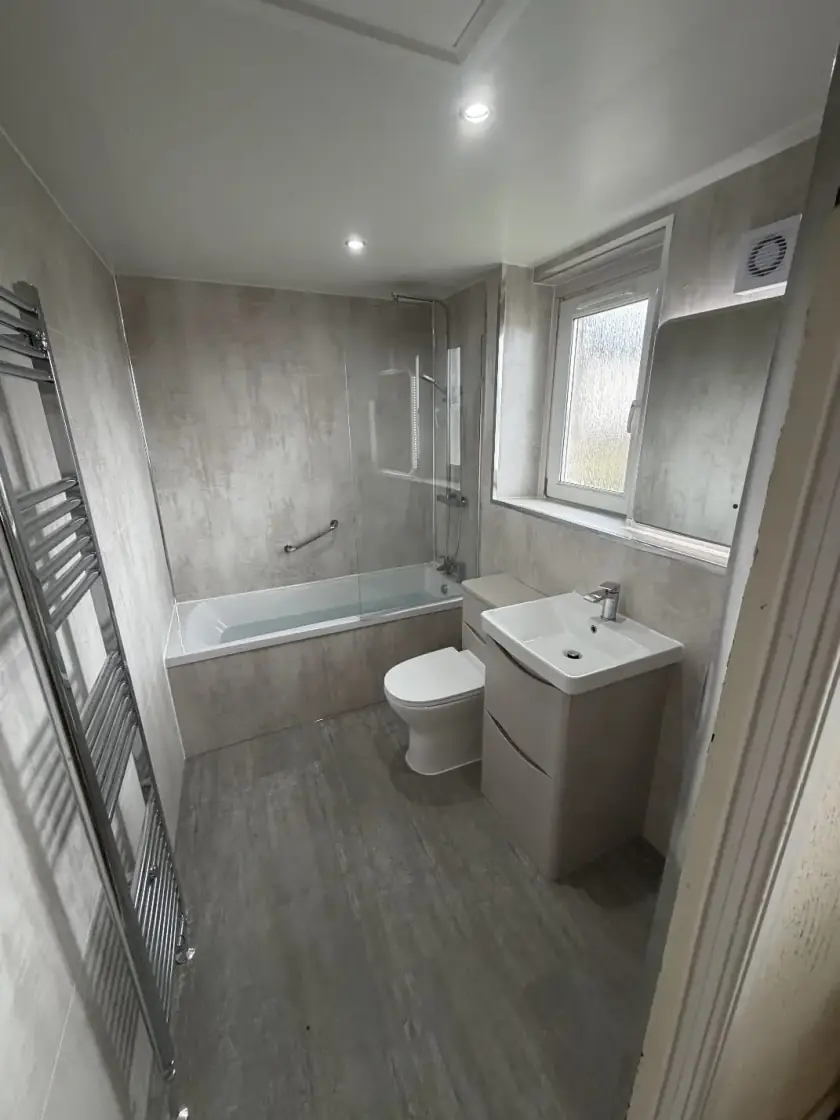
Practical Lighting Ideas for Glasgow Bathrooms
Updated 11 October 2026
Good bathroom lighting helps you see at the mirror, move around safely and clean the room properly. You may also want a softer setting for an evening bath. Plan those jobs first, then choose suitable fittings that work with your Glasgow bathroom's layout and finishes.
Light the room before adding decorative effects
Start with enough general light to see the floor, shower entrance and storage. A single fitting may work in some rooms, while others need several well-positioned lights. The answer depends on the room and the fittings' output, not a rule that every bathroom needs a row of spotlights. Avoid leaving the shower dark behind a tall screen or wall.
Check how the light behaves with the bathroom door closed and in the evening, when daylight is unavailable. Dark surfaces absorb more light than pale ones, while glossy surfaces can create reflections. The plan should account for the finishes you are choosing. Adding more lamps is not always the best answer if their positions create glare or shadows.
Put useful light at the basin
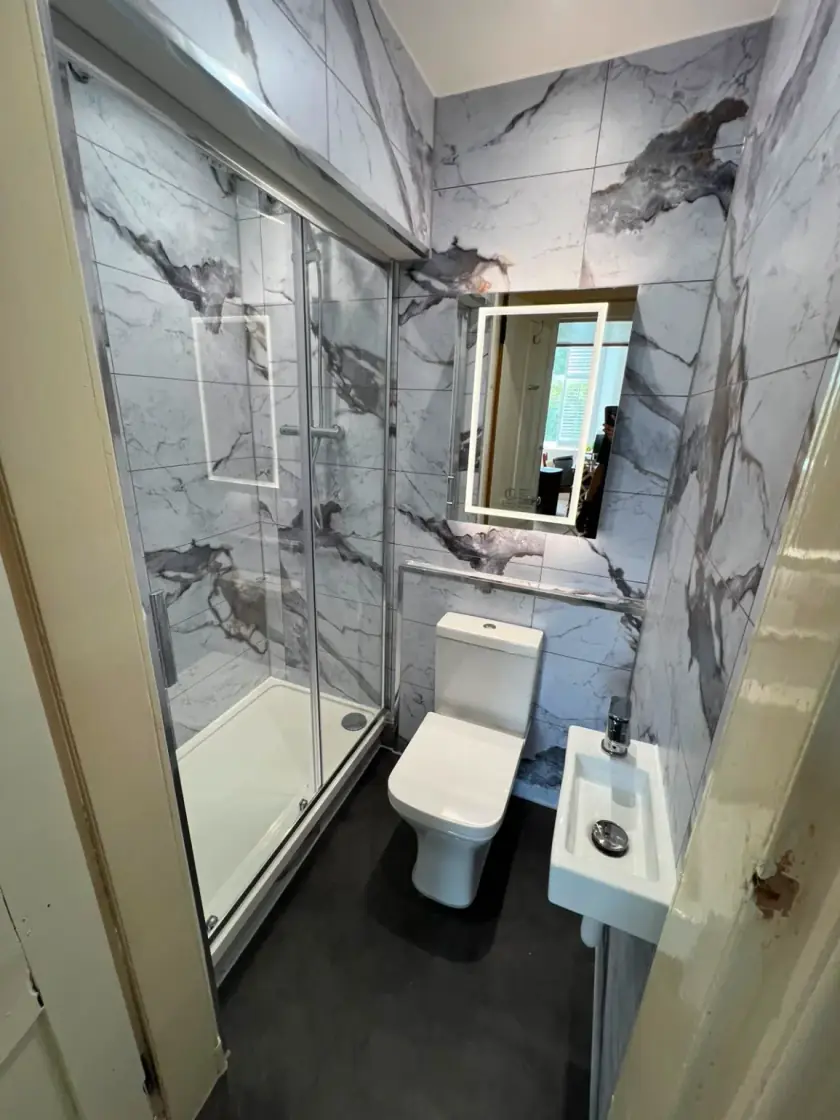
A ceiling light behind your head can leave your face in shadow when you look in the mirror. Suitable lighting beside or within the mirror can help. Compare the actual reflection on a working display where possible. A bright band around a mirror may look attractive without providing comfortable light for shaving or applying make-up.
A backlit mirror mainly sends light towards the wall behind it, so check whether it also meets your needs at the basin. You may need another light source. Our LED mirror guide explains front lighting, demisters and controls. Choose the mirror and nearby fittings together rather than adding a mirror after the electrical positions are fixed.
Choose a light colour that suits the room
Warm and cool light describe the appearance of the light, not its brightness. Look at your wall, floor and cabinet samples under the proposed lighting. A grey tile can appear different under a cool light from how it looks in daylight. Mixing several noticeably different light colours in one small room can make the finishes feel inconsistent.
Adjustable light colour can be useful if you prefer different settings, but it is not essential. Check whether the control is easy to use and whether it remembers the setting if you want it to. For tasks where colour accuracy matters, ask about the fitting's how accurately colours appear under the light, as well as its brightness.
Add a softer setting only where useful
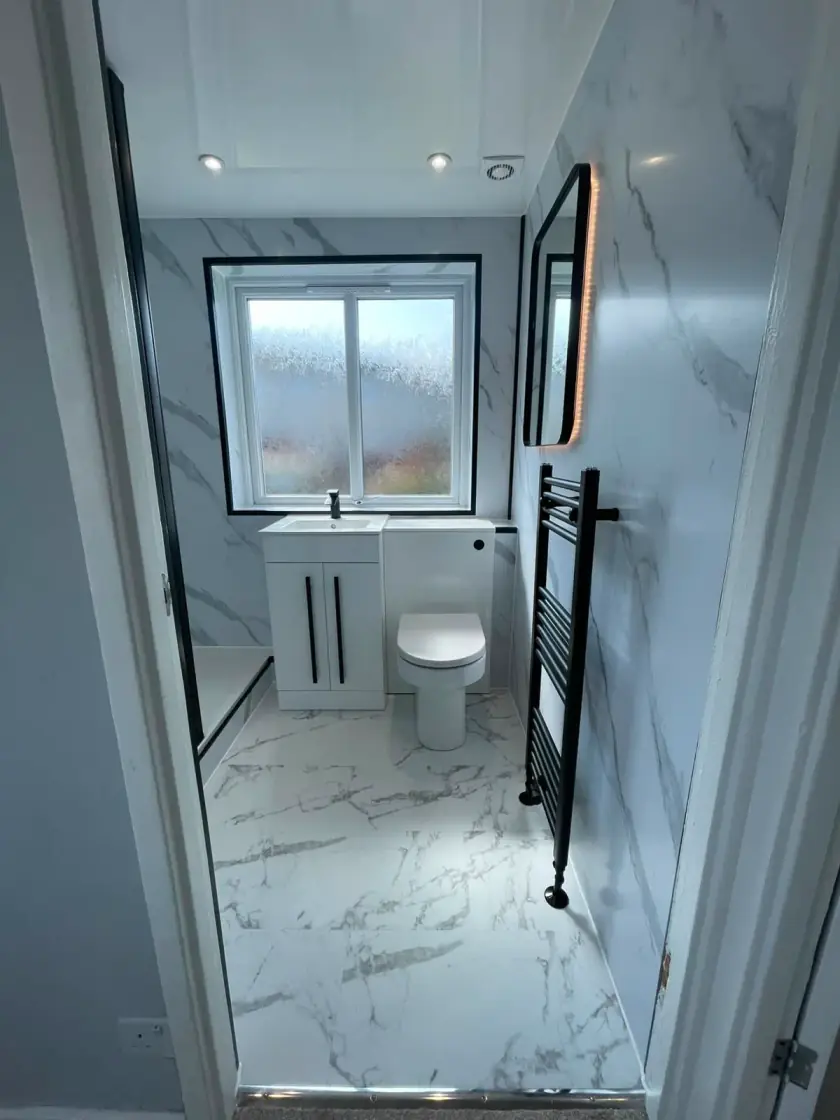
A separate mirror light or a suitable dimmed setting may give enough light for a relaxing bath without all the main lights on. Keep the route through the room visible. A decorative strip beneath a vanity can help show its outline, but it should not be the only light available for moving around or spotting water on the floor.
Use accent lighting sparingly and give it a clear purpose. A recess does not need lighting simply because space is available for it. Extra fittings bring wiring, controls and future maintenance. A small number of useful lights can give a tidy result without making the bathroom complicated to operate or repair.
Keep controls simple and reachable
Decide which lights should operate together and which need separate control. An ordinary, clearly understood arrangement may suit the household better than a phone app. Check the behaviour of dimmers and LED fittings together, since compatibility matters. A light described as dimmable still needs a suitable control and installation.
Motion sensors can be convenient, but check whether the light could go out while someone is still bathing or seated. Ask about timing, detection and manual override. For anyone with particular reach, vision or movement needs, test the proposed controls where possible. The most useful system is one everyone in the home can operate comfortably.
Have an electrician check positions and products
Bathroom electrical work needs suitable professional planning and installation. The position relative to the bath or shower affects what can be fitted, along with the supply and product instructions. An IP rating describes how well the casing keeps out water and solid particles, but it is not the only requirement. Do not buy a decorative pendant on the assumption that a bathroom label makes it suitable anywhere.
Electrical Safety First's bathroom guidance explains why this room needs particular care. Have the electrician confirm the fitting, control positions and required protection before installation. Avoid portable mains lamps or extension leads as a workaround for missing bathroom lighting. Plan the appropriate fixed solution as part of the work.
Use daylight while keeping privacy
Make the most of an existing window without blocking necessary ventilation or access. Suitable frosted or textured privacy glazing can admit daylight while obscuring the view. Check the level of privacy in the actual lighting conditions. A window treatment should suit a humid room and remain straightforward to clean.
A mirror can reflect available light, but it does not create daylight in a windowless bathroom. Such rooms still need a complete artificial lighting and ventilation plan. Adding a rooflight or changing a window is a separate building project with its own checks and costs; it is not a small lighting adjustment to assume within a standard refit.
Include maintenance and fitting in the price
Ask whether lamps, electronic power units and other parts are replaceable and how they can be reached for servicing. Compare the stated power use and expected operating hours rather than assuming extra lighting will save energy. Include wiring changes, fittings, controls, testing and repairs to walls and floors disturbed by the work in the quotation.
Bring the lighting discussion into your bathroom design appointment before the walls and ceiling are finished. Tell Dream Bathrooms Glasgow where the current room feels dark or uncomfortable. Call 0141 471 9145 to discuss the layout, fittings and work needed for your bathroom.
Plan your bathroom in Glasgow
Talk through your room, the changes you want and the work that needs to be included.