
Five Checks for Useful Bathroom Lighting
Updated 11 October 2026
Bathroom lighting should help you see clearly at the mirror, move around the room and use the shower controls. It also needs to suit a room where water and electricity are close together. These five checks help Glasgow homeowners prepare a lighting plan with an electrician before ordering mirrors, ceiling fittings or decorative lights.
1. Show the electrician the finished room layout
Mark the bath, shower, screen, basin and furniture on the plan before choosing light positions. The electrician needs to assess the actual arrangement, relevant bathroom zones, product instructions and electrical protection. A fitting described as suitable for bathrooms is not necessarily suitable for every position in one. Do not rely on a single IP rating copied from a website as approval for the whole room.
An IP rating describes protection against the entry of solids and water, but it is only part of product selection. Electrical Safety First recommends using a registered electrician for electrical installation work in its bathroom safety advice. Ask the electrician to confirm the proposed fittings and controls before purchase. Include any mirror demister, charging facility, extractor or electric heating in the discussion, so the complete installation is planned together.
2. Put useful light at the basin and shower
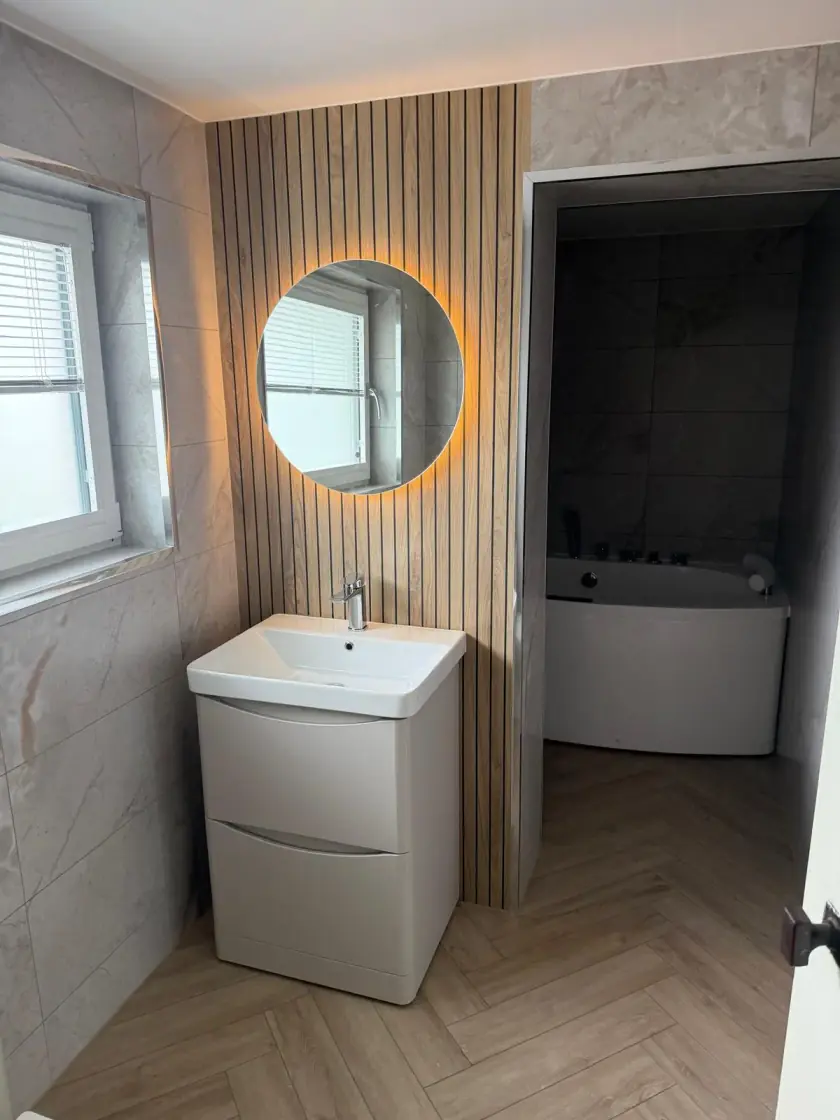
Check where you stand at the mirror and whether your head blocks the ceiling light. A bright fitting behind you can still leave your face in shadow. An illuminated mirror or suitable lights beside it may help, but compare the actual light they provide. Some backlit mirrors mainly produce a decorative glow on the wall rather than useful light across the face for shaving or applying makeup.
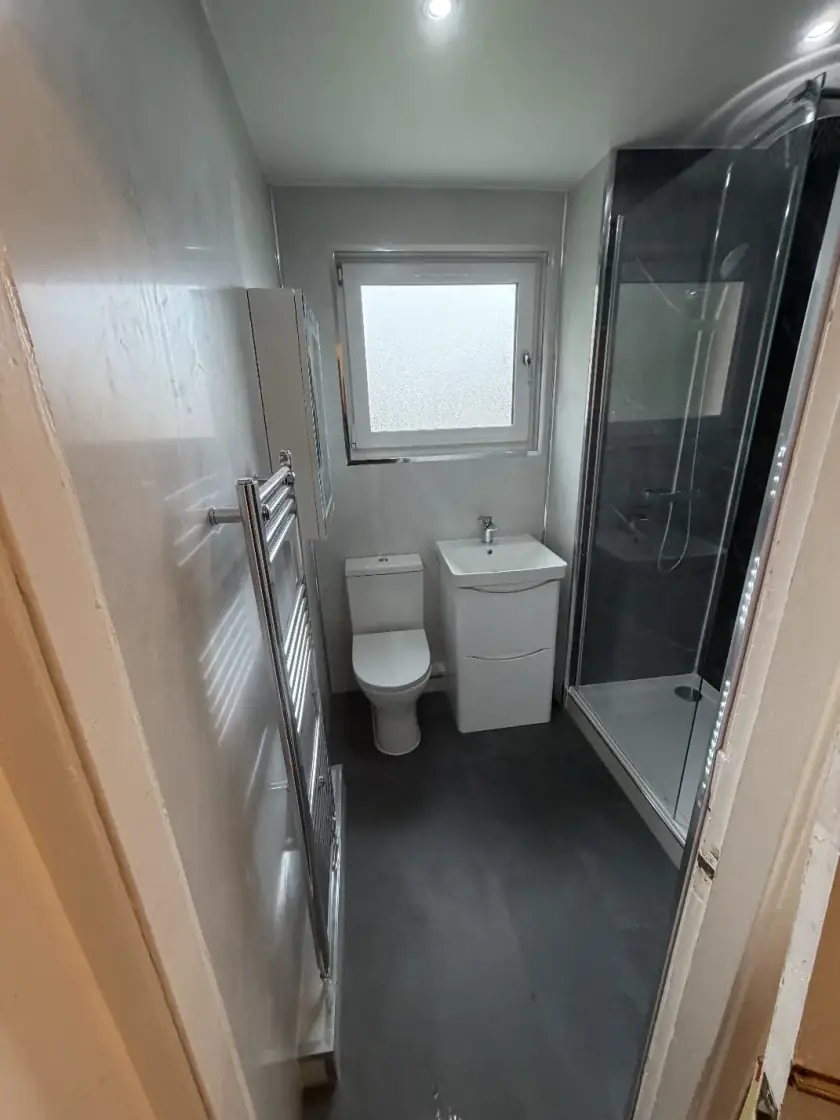
Look at the shower and storage areas too. A screen, tall cupboard or ceiling shape may block light from the main fitting. The aim is comfortable visibility where you need it, without unnecessary glare. You do not have to add a light to every corner. Our bathroom design service in Glasgow brings the fittings and layout into one discussion before the electrical plan is finalised.
3. Compare brightness and light colour in person
Lumens describe light output; watts describe power use. When comparing lamps, check both rather than assuming a higher wattage always gives the light you want. The way a fitting spreads that light also matters. A narrow beam can produce a bright patch with dark areas beside it, while a more diffuse fitting may spread light more evenly. Ask about the complete fitting rather than the lamp alone.
View your wall, floor and furniture samples under the proposed light colour where possible. Warm and cooler lighting can change their appearance, and personal preferences differ. Try to avoid unintentionally mixing several visibly different whites in one small room. Check how faces and finishes look, not just how bright the display seems. Our energy-efficient lighting guide explains further product comparisons without relying on a universal running-cost promise.
4. Choose controls that everyone can use
Decide whether the main light and mirror light should operate separately. A softer evening setting may be useful, but it still needs to provide enough light to move safely. If you want dimming, confirm that the fitting, lamp, electronic power unit and control are compatible. Not every LED lamp or integrated fitting works with every dimmer. Ask how the chosen controls will behave before they are installed.
Check switch and sensor positions against the furniture and walls. Some mirror sensors need clear space beside or below them, depending on the model. A cupboard or towel rail may interfere if those requirements are ignored. Smart controls are optional: ask how the lights work without a phone or internet connection. Everyone in the household should be able to switch them on without learning an unnecessarily complicated routine.
Tell the electrician if anyone has particular sight or movement needs. The route into the room and the ability to find a control at night matter as much as the mirror. Review the plan from that person's usual position, including seated use where relevant.
5. Plan access, cleaning and the final demonstration
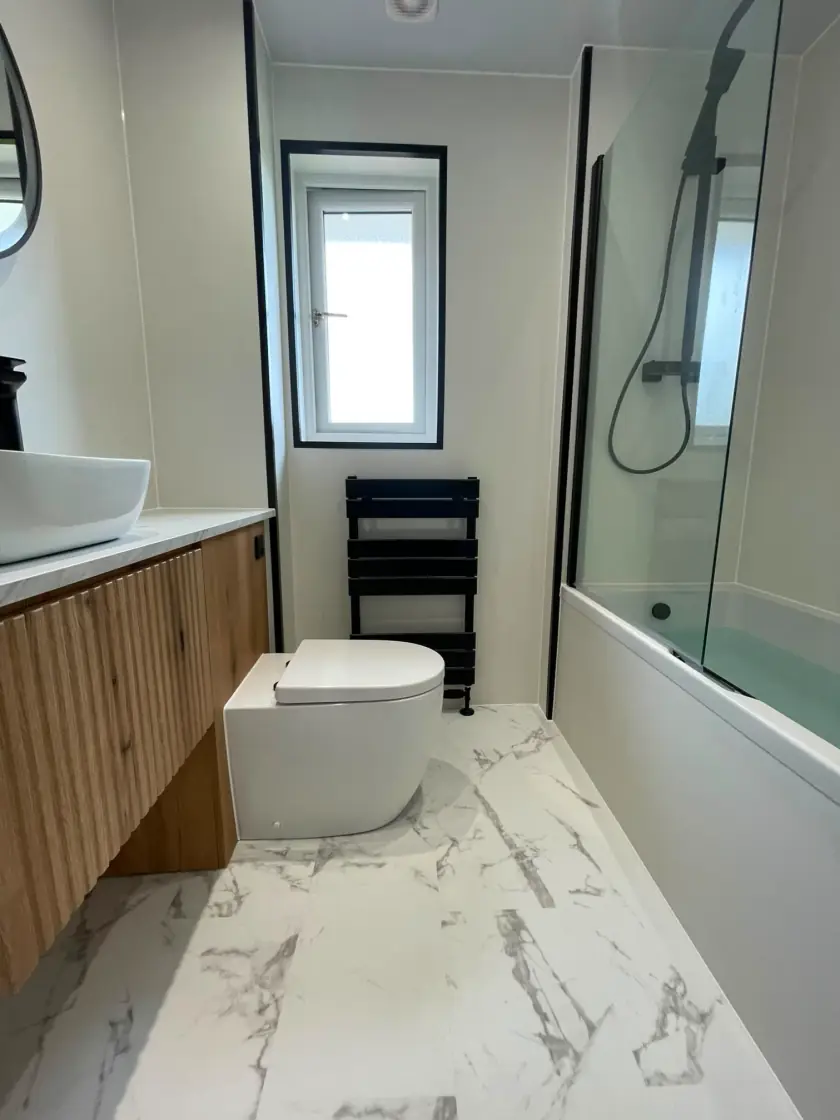
Ask how lamps, electronic power units and other parts that may need repair can be reached after installation. A concealed power supply still needs an appropriate maintenance arrangement. Check whether a failed light source can be replaced separately or whether the whole fitting needs replacement. Keep model references and warranty details. These questions help compare products that look similar but may be quite different to repair or replace later.
Confirm the exact products and electrical work in the quotation, including any repairs needed after fitting around new fittings. At handover, ask for the switches, dimmers, sensors and mirror features to be demonstrated. Keep relevant certification and cleaning instructions, and report flickering or faults rather than improvising a repair. Call Dream Bathrooms Glasgow on 0141 471 9145 to discuss lighting as part of a bathroom refit, with your daily routine and preferred layout in mind.
Plan your bathroom in Glasgow
Talk through your room, the changes you want and the work that needs to be included.