
Five Checks Before Choosing an LED Bathroom Mirror
Updated 11 October 2026
An LED mirror can provide useful light, a decorative glow or both, depending on its design. Extra controls and demister features vary between models. Before buying for a Glasgow bathroom, check how the mirror will work at your basin rather than choosing from a lit photograph alone.
1. Check the light on your face
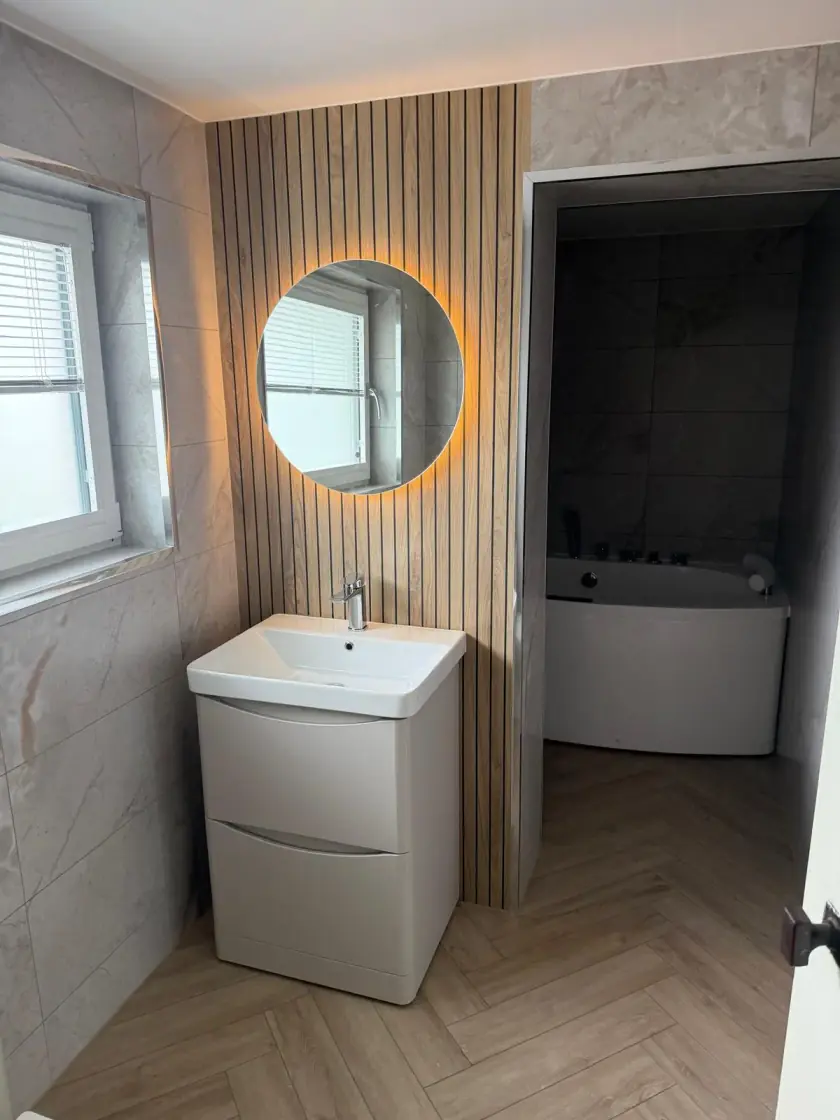
A mirror with light facing forwards may help with grooming, while light directed behind the mirror often creates more of a glow on the wall. The exact effect depends on the product. Look at a working display where possible and check the reflection from the position you would normally stand.
Do not assume an illuminated edge provides enough useful light for shaving or applying make-up. The room's other lights affect shadows too. Compare the mirror with the planned ceiling or wall lighting rather than as a standalone decoration. You may prefer a simple mirror with suitable separate lights if that gives a clearer, more comfortable result.
Check whether brightness and light colour are adjustable on the actual model. Not every LED mirror offers both. Try the controls and compare the settings without relying on labels such as daylight or luxury. Choose a light appearance you find comfortable, with enough visibility for the tasks the basin area needs to support.
2. Measure the mirror and its clearances
Check width, height and depth against the basin, taps and wall. The reflection should be useful for the people using it, not merely centred within a decorative panel. Include any pipe boxing or sloping ceiling in the measurements. A mirror that fits the wall can still be awkward if it sits too high or crowds the tap.
Sensor-operated products may need clear space beside or below the sensor to work correctly. The required clearance varies, so use the exact fitting instructions. A nearby wall, shelf or tall tap can interfere with an arrangement that looked fine in a photograph. Resolve those details before electrical connections and wall finishes are completed.
For a mirror cabinet, check the doors and internal storage as well. Doors need room to open without hitting lights or adjacent fittings, and the cabinet should not project uncomfortably over the basin. Look at shelf depth and access to daily items. Combining storage and a mirror is useful only if both functions work in the available space.
3. Understand the demister and controls
A heated demister pad helps clear condensation from its heated area. It does not ventilate the bathroom or guarantee that every part of the mirror stays clear. Check the pad's coverage and how it switches on. Some models operate it with the lighting; others use separate controls or different arrangements.
Ask for the controls to be demonstrated rather than assuming every touch button or hand sensor works the same way. Check whether a chosen setting is remembered after switching off and whether the controls are easy to locate. A feature should make the routine simpler, especially for visitors or users who do not want to learn several button sequences.
Keep the room's ventilation separate from the mirror decision. If the bathroom stays damp or mould returns, investigate that problem rather than relying on a demister. Our bathroom ventilation guide explains the fan and duct checks that may be needed during a renovation.
4. Check installation and servicing
Have the electrician confirm that the mirror and its proposed position are suitable for the bathroom. Water protection, supply and installation requirements depend on the actual product and location. Do not treat a general IP44 recommendation as permission to fit every mirror anywhere. Keep the manufacturer's instructions available before the fitting is ordered.
The wall must provide appropriate support, and parts that may need repair need an agreed way to be reached. Ask how the mirror can be removed or repaired after installation without unnecessary damage. Keep the model number and product documents. An integrated LED or electronic feature may have different servicing arrangements from an ordinary mirror or replaceable light bulb.
If smart controls or wireless features appeal, verify compatibility for the exact model. A sensor switch does not automatically mean app control, and Bluetooth audio does not mean the mirror integrates with a home lighting system. Confirm ordinary operation if a connection fails. Choose only the features you expect to use rather than paying for an unclear list of extras.
5. Compare the complete cost and care
Include the mirror, any electrical changes, fitting and repairs to walls and floors disturbed by the work when comparing options. Check the written product guarantee, including whether lighting, electronics and finishes have different terms. A long LED life claim does not necessarily describe the life of every component or the cost of replacing it. Ask the supplier about practical repair arrangements.
Follow the cleaning instructions for the glass, frame and controls. Avoid soaking edges or using unsuitable sprays around electrical parts. Ask how the demister and lights should be used in normal operation so they are not left on unnecessarily. For wider choices, see our energy-efficient bathroom lighting guide.
Our bathroom design service in Glasgow can help fit the mirror into a practical basin and storage arrangement. Bring the specification of any model you like before the layout is finalised. Call Dream Bathrooms Glasgow on 0141 471 9145 to discuss lighting and fittings that make daily use easier.
Plan your bathroom in Glasgow
Talk through your room, the changes you want and the work that needs to be included.