
Five Ways to Avoid Wasting Energy on Bathroom Lighting
Updated 11 October 2026
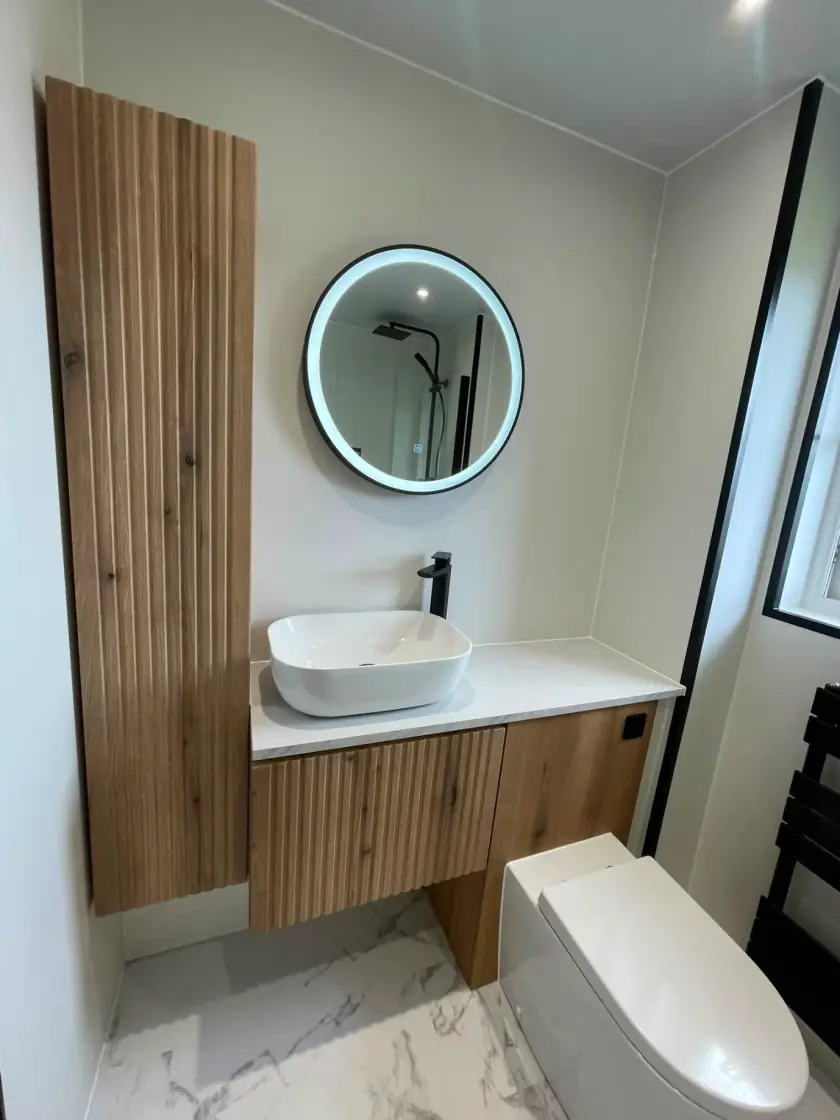
Bathroom lighting should help you see clearly without keeping unnecessary lights on. For a Glasgow renovation, start with useful light at the mirror and across the room, then choose suitable products and controls. Extra fittings and smart features are optional, not automatic energy savings.
1. Decide where light is actually needed
Look at how the current room is used. You need to see your face at the mirror, move around safely and clean the fittings properly. A ceiling light behind your head can leave shadows at the basin. Changing its position or adding suitable mirror lighting may help more than increasing brightness everywhere.
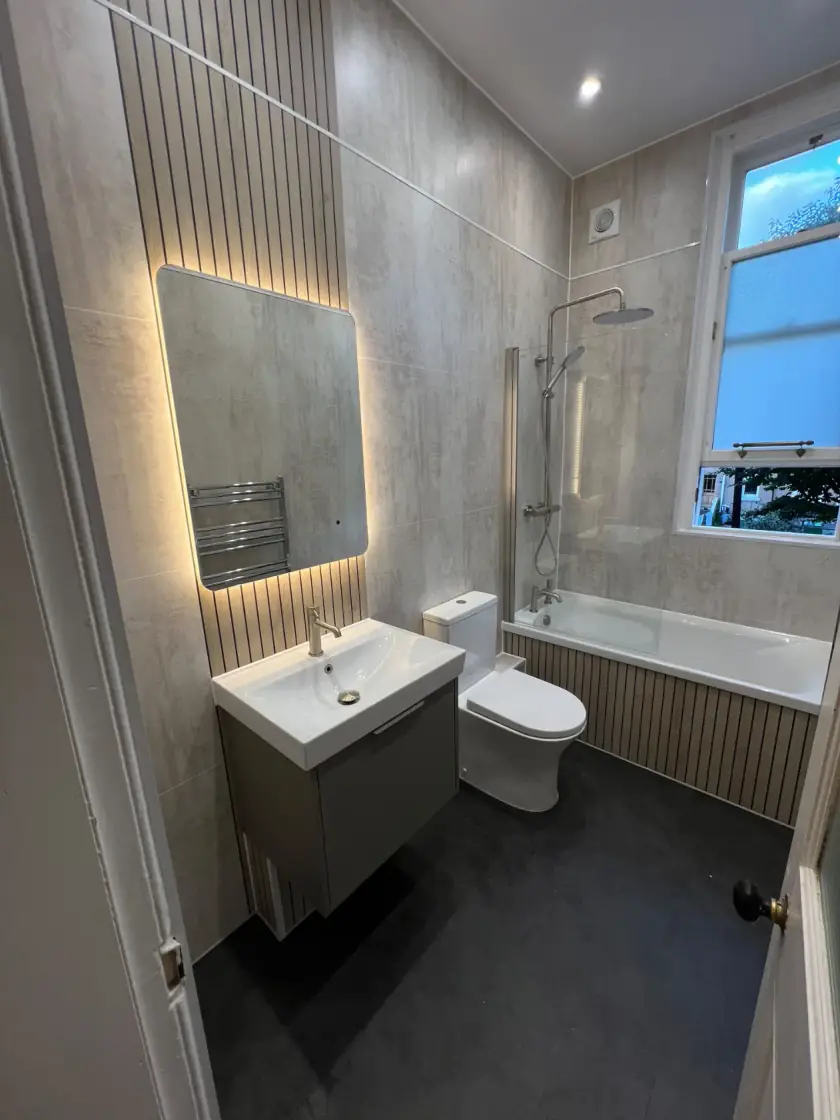
Separate those everyday needs from decorative effects. Lighting beneath a vanity or around a shelf may look attractive, but it adds another powered feature. Include it only if you want that effect and can control it usefully. A simple arrangement with well-placed fittings can be comfortable without turning every surface into a lighting display.
Discuss the plan with the electrician before ordering products. The bathroom layout affects suitable fitting positions and installation requirements. A general bathroom label or a single IP number is not a substitute for checking the actual location and electrical arrangement. Keep safety and suitability settled before comparing decorative shapes or finishes.
2. Compare light output and power separately
Lumens describe light output, while watts describe the electricity a light uses. When replacing older lighting with suitable LEDs, compare the useful brightness you need as well as power consumption. Choosing a very low-wattage product that leaves the room too dark is not a successful improvement.
The Energy Saving Trust lighting guide explains these product measures. Actual savings depend on what is replaced, how many lights are used and for how long. Do not apply a whole-home savings figure to one bathroom. Compare the proposed arrangement with your own existing lighting and normal routine.
Check the complete product, including any additional powered functions. An illuminated mirror may also have a heated demister, for example. Ask when each function operates and whether they are separately controlled. This gives a clearer picture of use than looking only at the LED label on a fitting with several other features.
3. Use controls that suit daily use
Separate controls can let you use mirror lighting without switching on every decorative fitting. Suitable dimming may provide a lower setting when full brightness is unnecessary. The lights and controls must be compatible, so have that checked before purchase. Do not assume an existing dimmer will work properly with any replacement LED product.
Sensors can be convenient, but their placement and operation need to suit the room. A poorly positioned sensor may miss somebody who is still bathing or using the toilet. Discuss a practical control arrangement that keeps the room usable. Automation should not mean having to wave repeatedly to restore light during an ordinary task.
Keep a straightforward way for the household and visitors to operate the lighting. Phone apps and schedules are not essential to avoid waste. If connected controls are chosen, confirm the actual compatibility, normal manual operation and behaviour when the connection is unavailable. Do not buy several unrelated products expecting them to work together automatically.
4. Make the existing daylight useful
Keep the window reasonably clear of tall furniture and unnecessary objects while maintaining privacy. A cabinet directly in front of it may solve storage but block useful light. Compare the layout before adding more artificial fittings. A suitable mirror and lighter surfaces can also change how the available daylight feels within the room.
Choose samples in the bathroom rather than relying only on a bright showroom. Check the effect during daylight and with the proposed lighting. A dark wall or heavily tinted finish may need a different lighting plan from a pale surface. Choose the combination you like while keeping enough useful light for ordinary tasks.
Major window changes are a separate building decision, not a simple energy-saving lighting tip. They may involve cost, permissions and work beyond the bathroom. Do not enlarge an opening solely on a promise of lower lighting bills. Work with the existing room first and assess any larger alteration on its full merits.
5. Plan maintenance and replacement
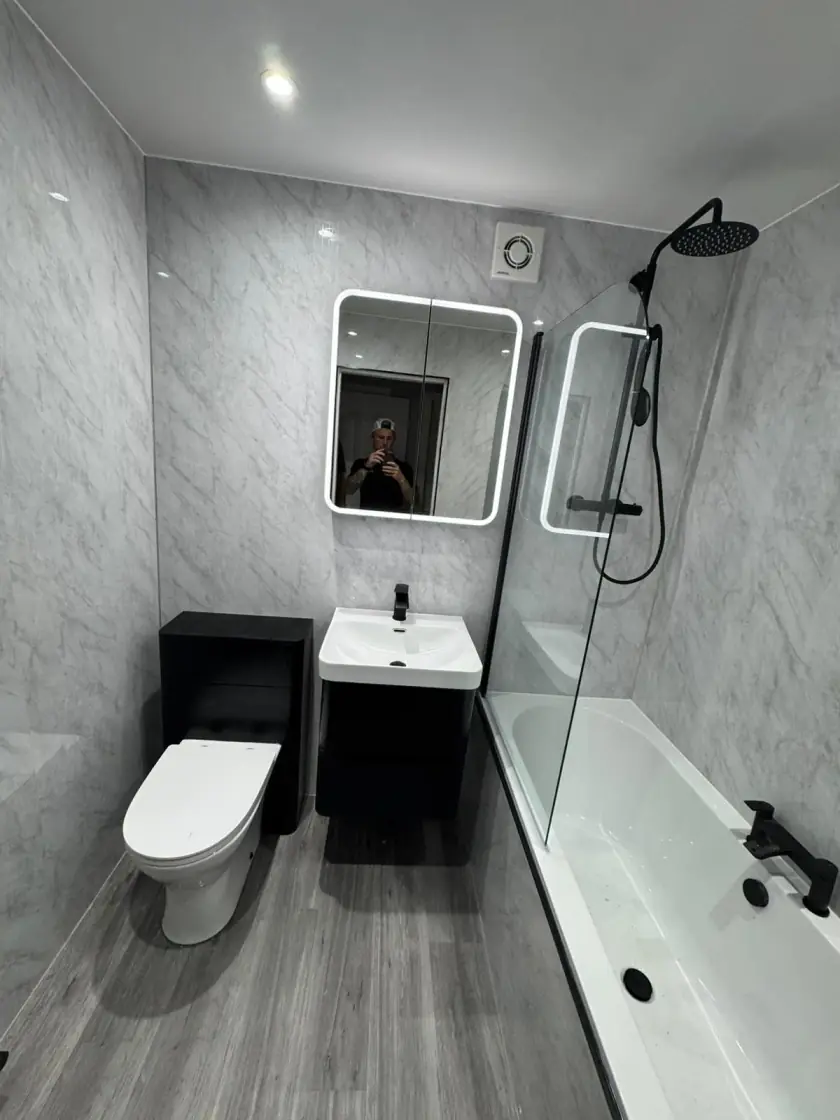
Ask whether the lamp, electronic power unit or other parts can be replaced and how they are reached. Some integrated fittings require a different replacement approach from a light with a separate bulb. Keep product details and instructions after installation. A lighting design should remain serviceable once ceilings, mirrors and furniture are in place.
Follow the manufacturer's cleaning instructions and have faults such as flickering or damaged fittings assessed appropriately. Do not open unfamiliar electrical equipment to investigate it. Keep the ventilation working as intended too; lighting does not solve excess moisture. Our bathroom ventilation guide explains what to include in that part of the renovation.
Our bathroom design service in Glasgow can help coordinate the mirror, layout and intended lighting before the electrical work is specified. Choose useful light and simple controls, then compare the complete installed cost. Call Dream Bathrooms Glasgow on 0141 471 9145 to discuss the room and the improvements you want.
Plan your bathroom in Glasgow
Talk through your room, the changes you want and the work that needs to be included.