
Five Bathroom Upgrades Worth Planning Carefully
Updated 11 October 2026
A well-finished bathroom does not need every expensive extra. The most worthwhile upgrades improve something you notice each day: the shower, storage, lighting, warmth or ease of cleaning. For a Glasgow bathroom, choose a few useful features and leave enough budget to install them properly.
1. Choose a better shower arrangement
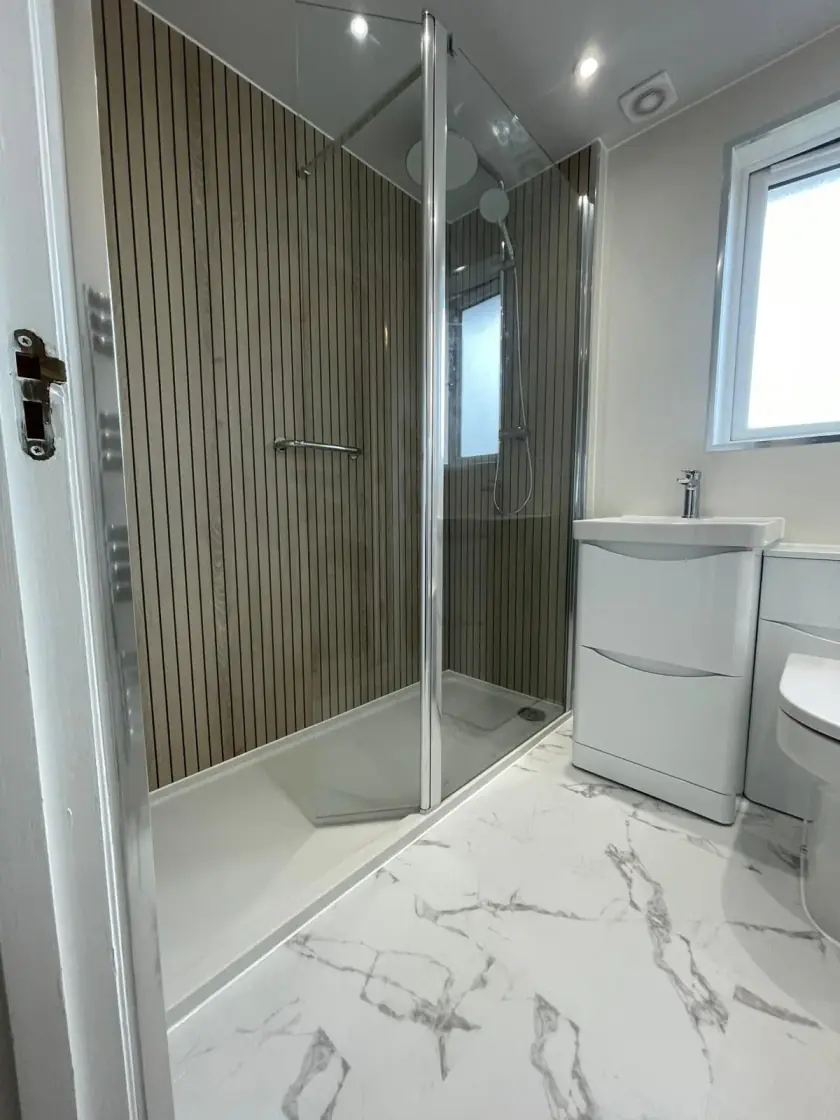
Start with the shower's everyday use. A comfortable entrance, reachable controls and a suitable spray may matter more than the largest overhead head. Check the enclosure space and door opening alongside the shower itself. If the present problem is stepping over a bath, discuss the whole replacement arrangement rather than treating a new shower valve as the solution.
Have the water system checked before choosing a more demanding product. Pressure, flow and hot water availability need to suit the specific shower and any outlets used together. A digital control or large head cannot create water capacity the system does not have. Compare suitable products first, then decide which controls and features you would actually use.
A handheld outlet can be useful for rinsing and cleaning, while an overhead head is a preference. Keep repair access and replacement parts in the discussion, especially for concealed equipment. Our single and dual shower guide explains the practical differences without assuming more outlets are always better.
2. Spend on storage that fits
Well-planned storage can make a bathroom look tidier without adding decorative features. Choose drawers or cupboards around the items you own, and check the space remaining after pipes and the basin are fitted. A wider cabinet is not automatically more useful if its internal layout is awkward or its doors cannot open comfortably.
Look at the quality and feel of handles, hinges and drawer movement. Try them where possible, including with a light grip. Soft closing can be pleasant, but it does not make up for unsuitable dimensions. Keep access to valves and traps, and ensure the furniture is supported and fixed as required by its manufacturer.
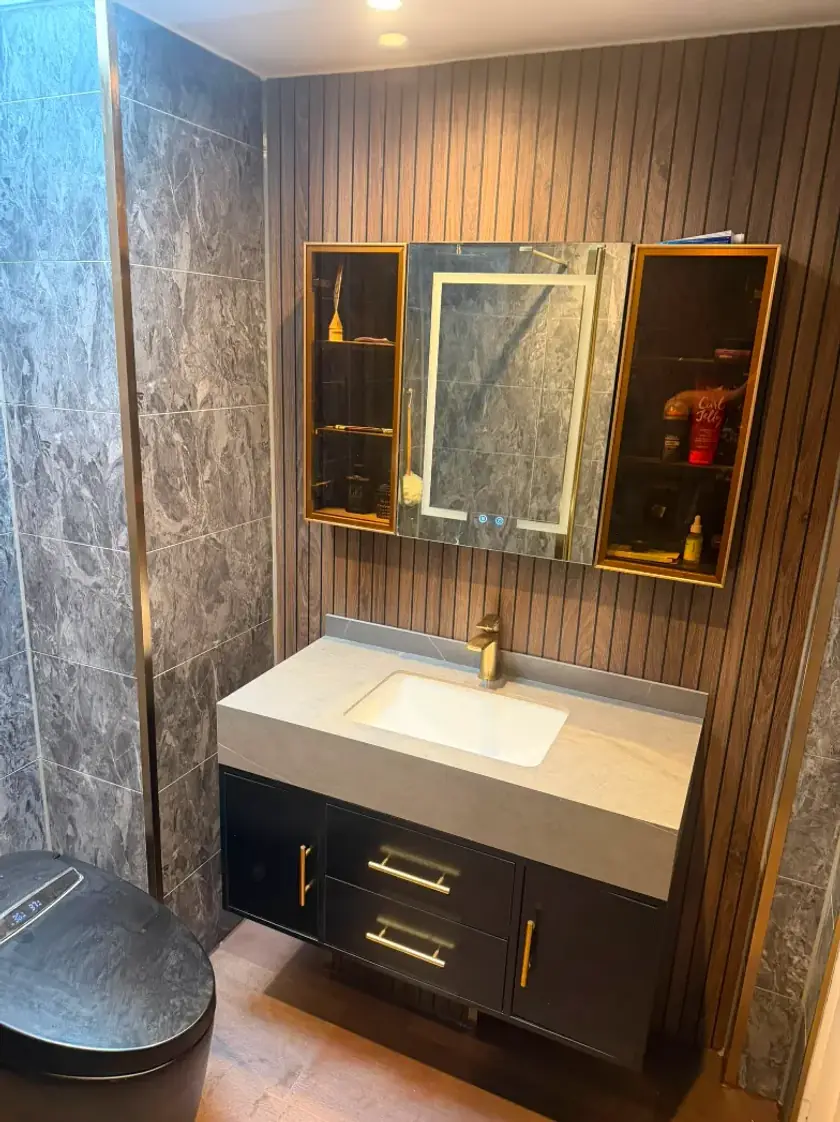
A mirror cabinet or carefully placed shelf may provide enough extra storage without a tall unit. In a small room, leaving a clear route can be more valuable than adding another cupboard. If a bespoke piece is proposed, agree its internal dimensions and finish details before it is made. The upgrade should solve a specific storage problem.
3. Improve lighting where you need it
Useful light at the mirror makes daily grooming easier. Check where shadows fall with the proposed ceiling lights and mirror position. A second lighting source may help, but there is no need to add several fittings simply to make the design sound sophisticated. Ask the electrician to recommend suitable bathroom products and positions.
Separate controls or appropriate dimming can provide a softer setting for bathing as well as bright light for cleaning. Check that the fittings and controls are compatible. Keep the route through the room visible and the controls straightforward to understand. A feature that requires a phone for an ordinary task may be less convenient than it first appears.
If you choose an illuminated mirror, compare the actual light it provides, its controls and any demister function. A lit edge does not always provide enough useful light on the face. Check service arrangements and the space needed around sensors or cabinet doors. Choose the product for how it works in your room, not only its showroom appearance.
4. Put care into wall and floor details
The finished edges, corners and joints can make a simple bathroom look carefully installed. Agree tile layouts or panel joins before fitting where possible. Look at how the chosen finish meets windows, trays and furniture. A costly pattern can be disappointing if cuts and connections look awkward or have not been planned.
Natural stone has its own care requirements, while stone-effect tiles and panels offer other choices. Compare samples and cleaning instructions rather than assuming the most expensive material is the easiest to live with. Choose flooring separately for its intended bathroom use, including wet conditions. A matching colour is not enough to establish suitability.
For a panelled finish, browse our wet wall bathroom options. Keep sound preparation and correct waterproofing in the budget. Those parts may not be visible at handover, but they support the performance of the finished room. Decorative upgrades should not replace necessary repairs to the walls, floor or services.
5. Add comfort with simple finishing choices
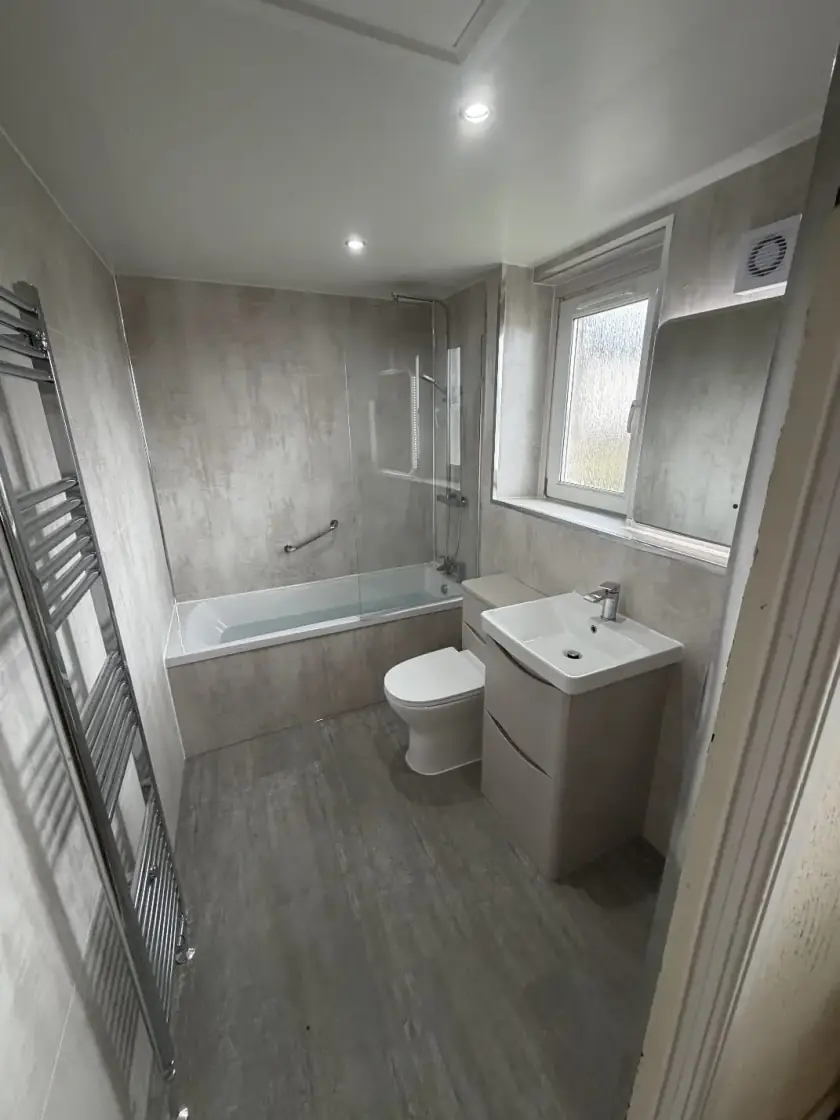
A warm room and reachable dry towel can improve the daily routine more than a large statement fitting. Check the heating requirements and whether the proposed towel rail meets them. Underfloor heating is another option where suitable, but it brings installation, control and floor-height checks. Choose it after those details have been assessed.
Coordinate a small number of finishes across taps, handles and accessories. Compare actual samples because similarly named metal colours can differ between ranges. Check the care instructions before committing to a finish. Position hooks, rails and soap holders for use, leaving the floor and doorways clear rather than filling the room with accessories.
Our bathroom design service in Glasgow can help prioritise upgrades within the complete project. Bring a short list of what you want to improve and compare the installed costs. Call Dream Bathrooms Glasgow on 0141 471 9145 to discuss a bathroom that feels well finished and works comfortably in your home.
Plan your bathroom in Glasgow
Talk through your room, the changes you want and the work that needs to be included.