
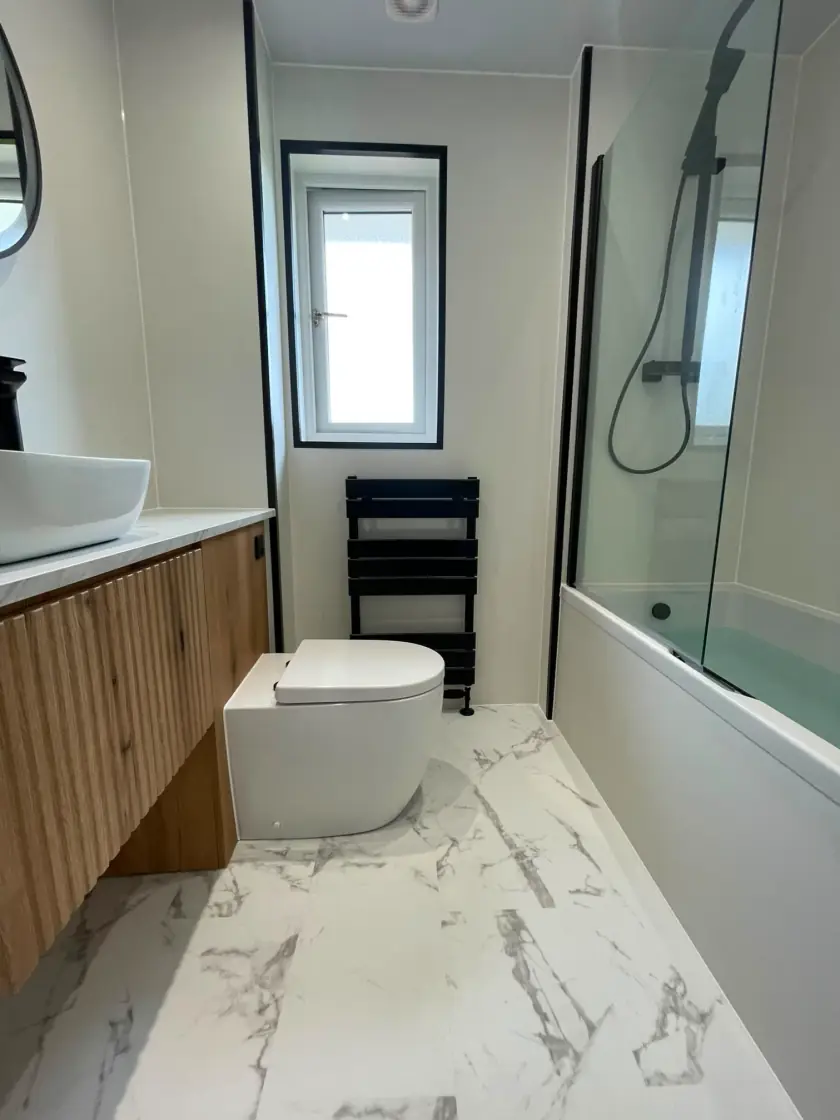
Choosing a Bathroom Mirror: Size, Storage and Lighting
Updated 11 October 2026
A bathroom mirror should give you a clear view at a comfortable height. It can also provide storage or useful lighting, depending on the model. Choose the position and size first, then compare shapes and frames. That way, the mirror works for shaving, washing and getting ready as well as looking good above the basin.
Measure the space above the basin
Measure the available wall width and height, including taps, sockets where permitted, lights and any nearby cupboard. Check the reflection from the position where you normally stand. Everyone who uses the bathroom should be able to see comfortably without leaning awkwardly. A tall mirror may help where people of different heights share the room.
Use a paper template to compare sizes before buying. A mirror wider than the basin can work, but it should not interfere with nearby fittings or look squeezed into a corner. In a room with a sloping ceiling, check the usable reflecting area rather than just the overall product dimensions. Leave the clearances required by the manufacturer.
Compare rectangular, round and shaped mirrors
A rectangular mirror gives a broad useful surface and often sits neatly above a basin cabinet. A portrait shape can suit a narrow wall, while a wider shape may work over a longer counter. Look at where the edges fall in relation to the tap and basin rather than assuming the largest available mirror is best.
A round or oval mirror can soften a room with lots of straight lines, but it has less reflecting area at the corners. Arched or shaped mirrors can add detail without changing the rest of the room. Shape does not improve the quality of the reflection by itself. Choose one that looks right and still gives you a useful view.
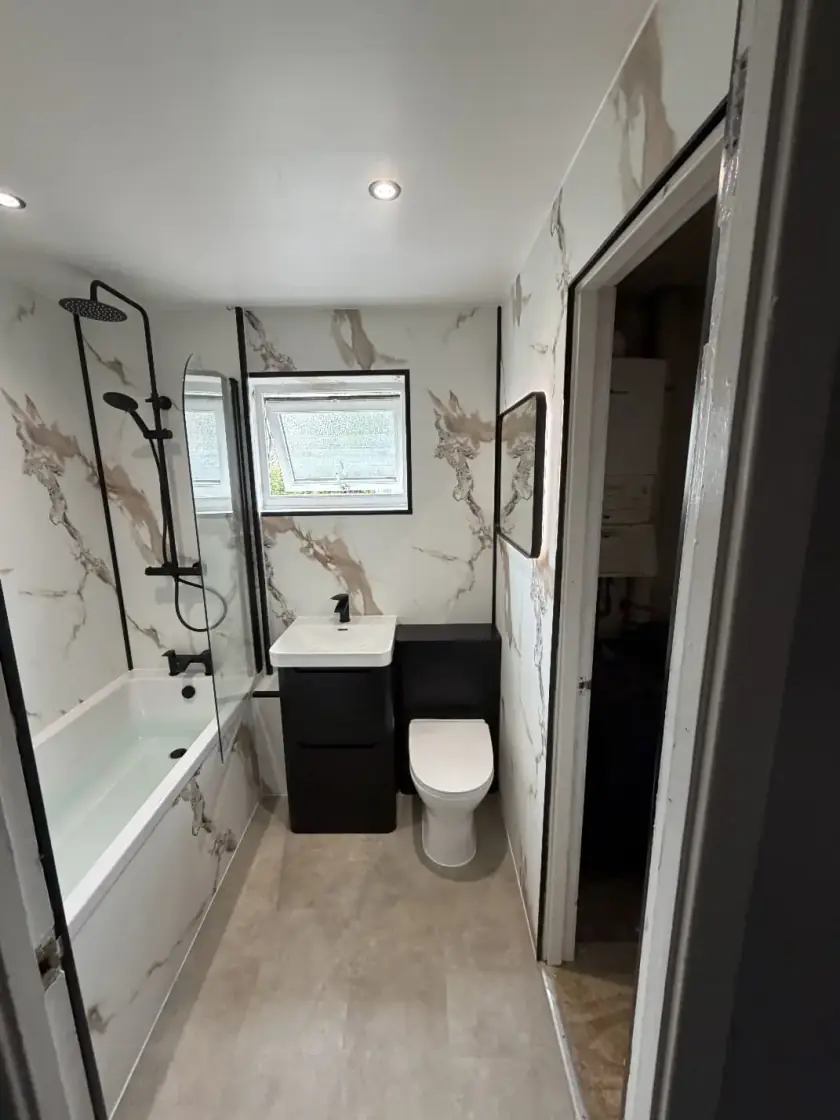
Decide whether you need a mirror cabinet
A mirror cabinet can hold toothbrushes, skincare and other small items above the basin. Check shelf spacing against the bottles you use. Some cabinets are shallow, and lighting components may take up part of the inside. Measure the depth carefully so the cabinet does not feel too close to your face when you lean over the basin.
Open the doors fully in the proposed position. They should not hit a light, wall or another cupboard, and the handles should be easy to reach. A recessed cabinet needs a suitable wall with enough room behind it. Do not assume an old wall can be cut into; a surface-mounted cabinet may be the more practical option.
Check whether built-in lighting lights your face
An illuminated mirror can provide useful light, but products vary. A glow behind the mirror may be mainly decorative, while front-facing lighting can help you see more clearly. If possible, view the product switched on. Look for even illumination without an uncomfortable bright strip reflected directly into your eyes during normal use.
Compare the colour of the mirror light with the room's other lighting. Adjustable brightness or colour can be useful if you will use it, but clear controls matter more than a long feature list. A simple mirror with well-placed separate lights can also work. Have an electrician check all electrical fittings and their positions before installation.
Understand demister pads and other features
A demister pad warms part of the mirror to reduce condensation on that area. Check its coverage, controls and operating instructions rather than expecting the whole glass to remain clear in every condition. It does not remove moisture from the room. The bathroom still needs effective ventilation, with any persistent damp or leaking connection dealt with separately.
Some mirrors include charging outlets, clocks or speakers. Decide whether those features will be useful and how they will be operated. Check access to controls, any connection requirements and what can be repaired if a component fails. A simpler mirror may be a better choice if you mainly want good light, storage and straightforward cleaning.
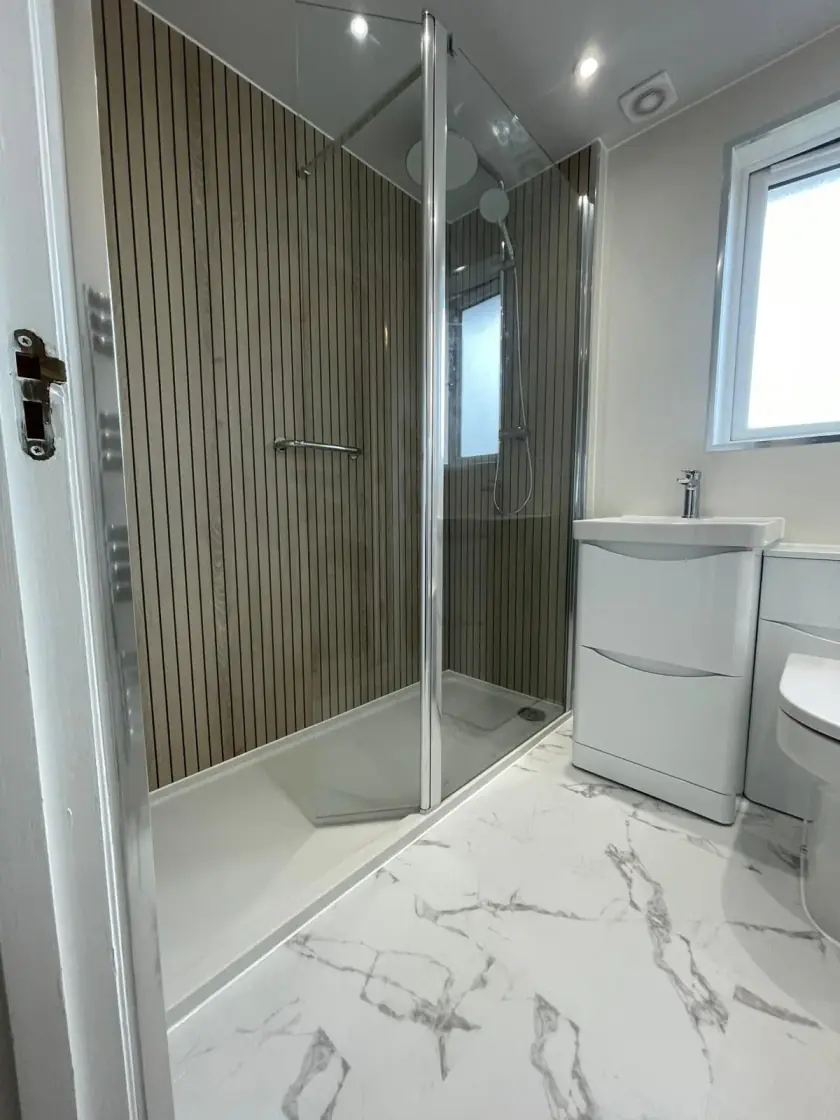
Choose a frame suitable for the room
A slim metal frame can tie in with taps or handles, although brass and black finishes can vary between suppliers. Compare samples where a close match matters. A frameless mirror gives a simpler appearance and can suit patterned walls. In either case, check that the product is intended for the bathroom environment and follow its care instructions.
Wood or wood-effect frames can add warmth beside pale tiles. Look at how edges and joints are protected from moisture, particularly near the basin. Avoid placing a frame where it will be repeatedly soaked unless the product is suitable. Use the recommended cleaner and avoid letting liquid collect around edges, electrical parts or cabinet joints.
Plan the wall fixing and electrical work
A mirror or cabinet must be fixed to a suitable wall using the correct method for its weight and construction. Tiles alone do not tell you what is behind them. The installer should check the support and the location of concealed services before drilling. A heavy cabinet needs particular care because it will also hold the items you put inside.
If the mirror needs power, plan the connection before finishing the wall. Include electrical work and any repairs needed after fitting in the quote. Ask how components can be reached for repair without damaging the surrounding tiles. Keep the product instructions and model details so future maintenance does not depend on guessing which mirror was installed.
Choose the mirror with the whole bathroom
Consider what the mirror reflects, including the window, lights and opposite wall. It can make a room feel brighter, but it will also reflect a crowded shelf. Pair it with useful storage and a clear basin surface. For more ideas, read our small bathroom storage guide and compare your favourite options together.
As part of a full refurbishment, our bathroom design service in Glasgow helps coordinate the mirror, basin, furniture and lighting. Call 0141 471 9145 or request a free home design visit. Bring a photograph of the room and note whether your main priority is better lighting, more storage or a clearer view.
Plan your bathroom in Glasgow
Talk through your room, the changes you want and the work that needs to be included.