
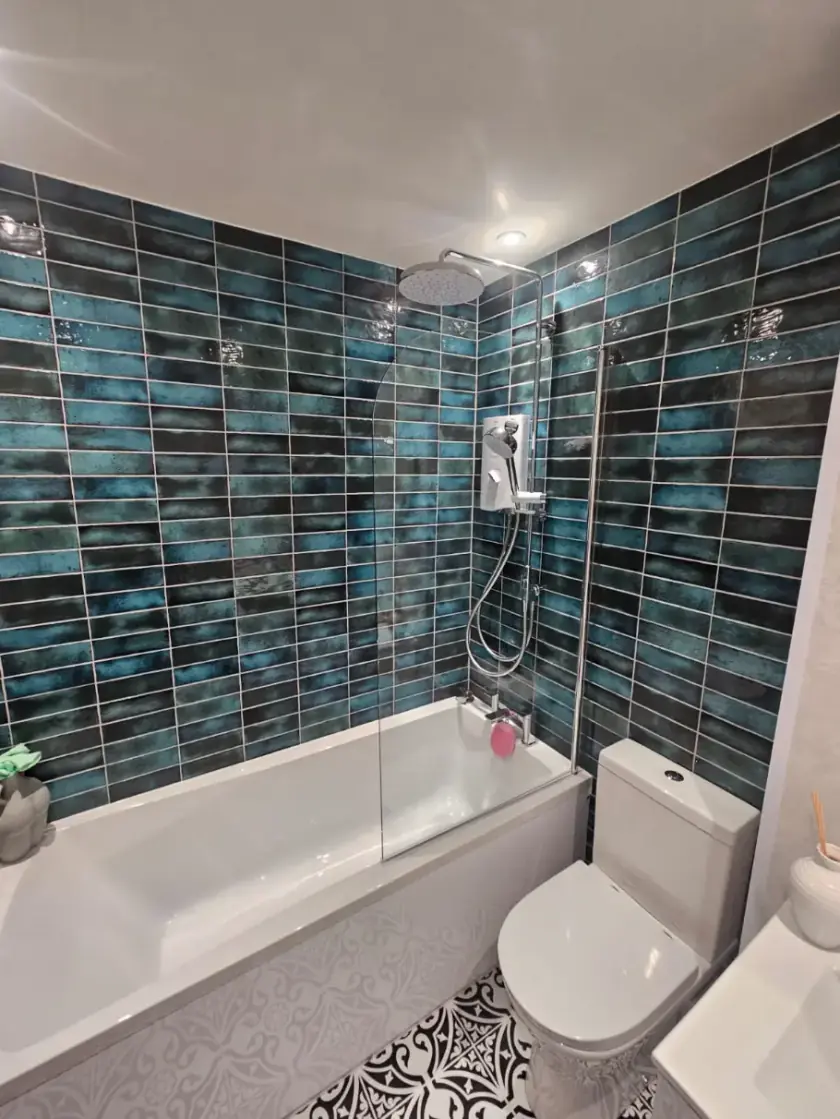
Glass or Acrylic Shower Screens: A Practical Comparison
Updated 11 October 2026
When comparing a glass shower screen with an acrylic one, check the complete product rather than just the material name. The opening, wall fixings, seals and cleaning instructions all affect daily use. For a Glasgow bathroom refit, choose a screen that fits the shower and can be maintained easily.
Check what the screen is made from
Glass shower screens commonly use toughened safety glass specified for the product. Plastic screens can use different materials, so do not assume that every clear plastic panel is acrylic. Ask the supplier for the exact specification. A PVC seal around the edge does not mean the main panel is made from PVC, and a general-purpose sheet is not a complete shower screen.
Buy a product designed for its intended use, with the necessary frame, fittings and instructions. The screen must suit the tray or bath and the way it opens. Replacing one panel with a different material without the manufacturer's approval can affect its fit and performance. Check compatibility before treating a cheaper sheet as an equivalent replacement.
Compare the weight and wall support
Glass can be heavier than a similarly sized plastic panel, but the actual product determines the load and fixing requirements. A hinged door places different demands on its supports from a fixed panel. The installer should check the wall behind the tiles and use the specified fixings. A lighter screen still needs secure support and proper sealing.
In an older bathroom, the wall may need preparation before any new screen is fitted. Existing holes may not line up, and the surface may be uneven. Ask whether the proposed screen has enough adjustment for the finished opening. Do not assume a flexible plastic panel can safely compensate for an unsuitable wall or poor measurements.
Choose the opening before the finish
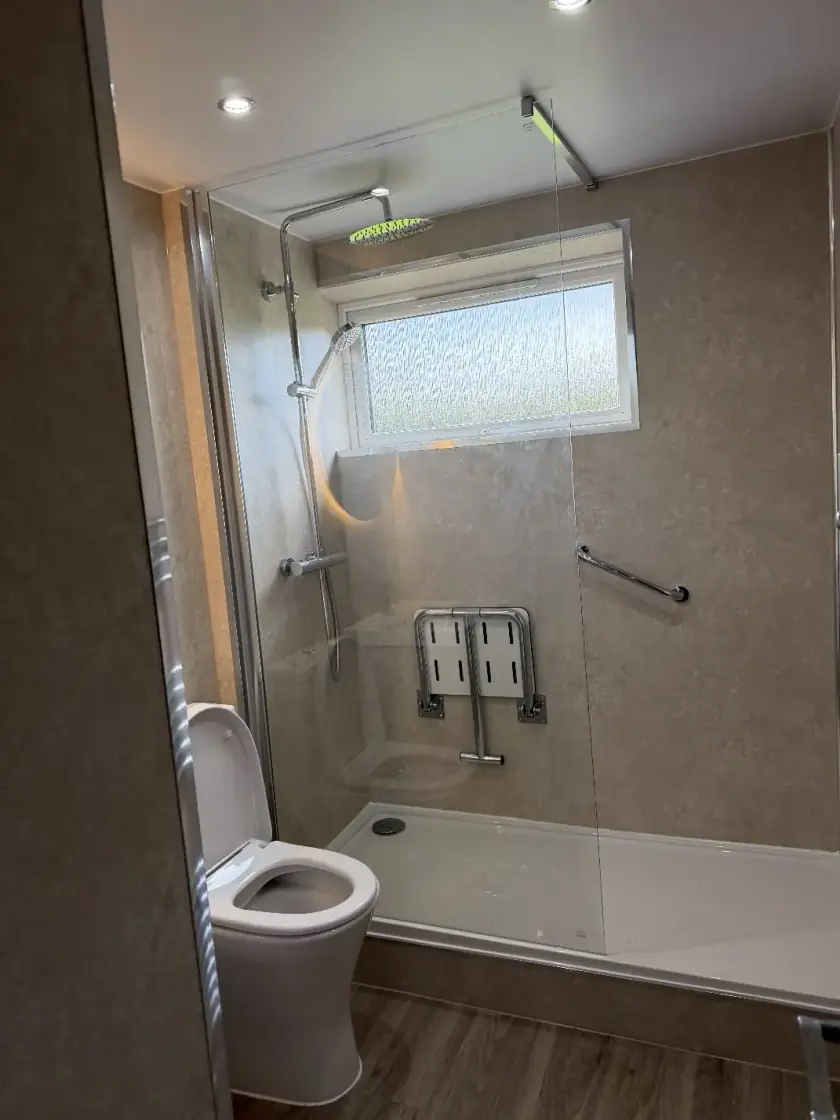
A sliding door may help where a hinged door would hit the basin. A folding arrangement can give a different opening width, while a fixed panel avoids moving parts but leaves an open entrance. Compare the clear space available when the door is in use. The outside dimensions alone do not show whether entry will be comfortable.
Think about how you reach the shower controls and clean the enclosure. A door that opens neatly in a showroom may be awkward beside your toilet or vanity. If someone needs assistance while showering, discuss their access needs separately. Material choice alone does not make a screen suitable for assisted washing or allow its frame to be used as a support rail.
Judge the appearance from an actual sample
Clear glass can show the wall finish through the shower area, which may help a small room feel less divided. Plastic panels vary in clarity, texture and colour. A textured or frosted finish can provide more privacy, but it may also change how light reaches the shower. Compare a sample in similar lighting where possible.
Look at the frame and fittings as well as the panel. Their colour, width and position can be more noticeable than a small difference in transparency. You do not need every item from one range, but samples help when matching metal finishes. Our framed and frameless screen guide explains the practical differences between those arrangements.
Understand damage and replacement
Toughened glass is stronger than ordinary glass but can still break. Damaged edges, unsuitable fitting or an impact can be a problem. Do not continue using a chipped or unstable screen without having it assessed. Safety glass is not a promise that broken pieces cannot cause injury, and a damaged panel should not be repaired with improvised filler.
Plastic panels can scratch or suffer other damage, depending on the material and treatment. Do not assume every mark can be polished away: some repair products can damage a coating or change the appearance. Ask the manufacturer what is permitted. Check whether a replacement panel, handle, seal or hinge can be supplied without buying a complete new enclosure.
Follow the correct cleaning instructions
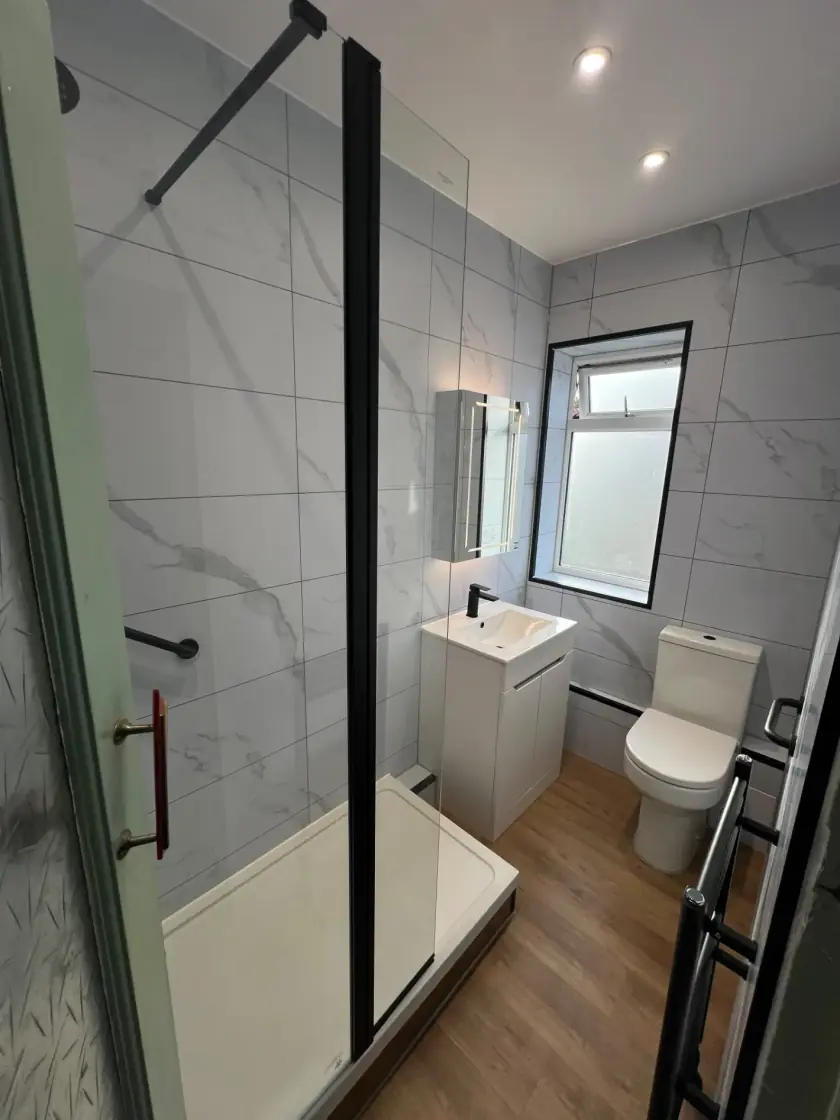
Use the care guidance supplied with the exact product. Abrasive pads and unsuitable chemicals can affect glass coatings, plastic surfaces, metal finishes and seals. A cleaner suitable for one part may not suit another. Try not to let soap residue build up in corners and around the bottom seal, where it can be harder to remove later.
An easy-clean coating still needs routine care. Check whether it needs a particular maintenance product and what the guarantee excludes. Make sure the screen's design lets you reach the surfaces that need cleaning. Good bathroom ventilation helps the room dry after use, but choosing glass or plastic does not replace a properly working extractor and sensible moisture control.
Compare the total fitted price
Ask for the screen model, dimensions, material and opening style in the quote. Include removal of the old screen, wall preparation, fitting and repairing old fixing holes. A lower purchase price may not mean a lower installed price if extra work is needed. Compare like-for-like proposals rather than judging from an online product photograph.
Check delivery arrangements, guarantees and spare-part availability before ordering. Keep the installation instructions and product details with your bathroom paperwork. Neither material guarantees a higher resale price or a fixed service life. The useful question is whether the chosen product suits your room, budget and expected cleaning and repair needs.
Plan the screen with the rest of your bathroom
The shower head position, tray, drainage and screen need to work together to contain water. During a bathroom design appointment, explain the problems with your current shower and who uses it. Call Dream Bathrooms Glasgow on 0141 471 9145 to discuss the layout and fittings you want to include in your renovation.
Plan your bathroom in Glasgow
Talk through your room, the changes you want and the work that needs to be included.