
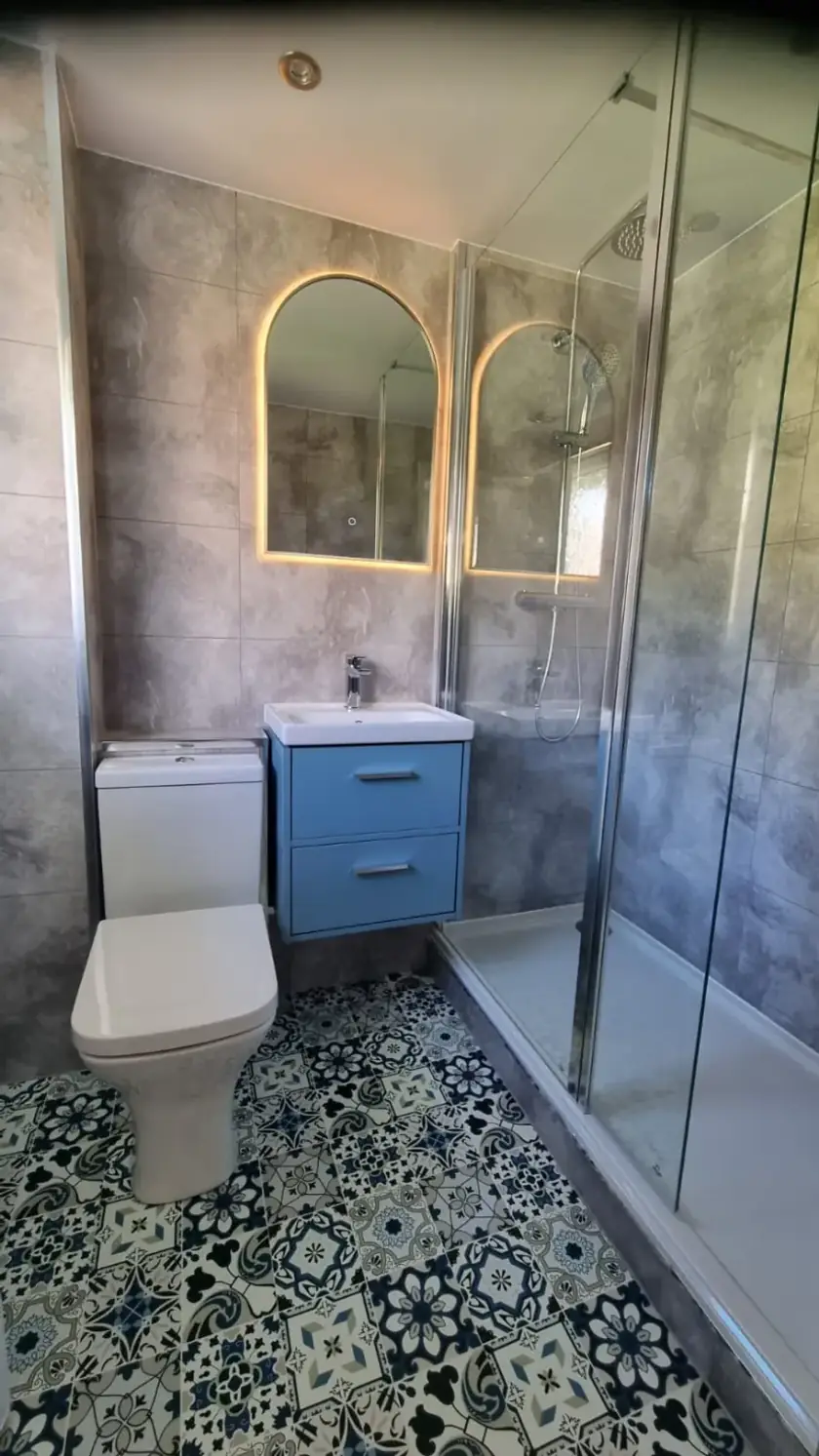
Underfloor Heating or a Radiator for Your Bathroom?
Updated 11 October 2026
Underfloor heating can warm the floor, while a radiator or heated towel rail uses wall space to provide heat. The right choice depends on the room's heat needs, existing system and planned floor work. This guide helps Glasgow homeowners compare the installation, controls and maintenance without assuming that one option is always cheaper to run.
First decide what the heating needs to do
Tell the installer whether the present bathroom is cold, whether the floor feels uncomfortable or whether towels fail to dry. These are related but different problems. Ask for the room's heat requirement to be assessed rather than choosing a heater only by its dimensions. Windows, external walls, insulation and the heating system all affect the answer. A towel rail that fits neatly into a gap may not provide enough heat for the room.
Think about when the bathroom is used and how it is heated now. You may want warmth at different times from the rest of the home. Ask how the proposed controls would handle that routine. Our bathroom design service in Glasgow can include heating in the room plan, alongside storage and fittings. It should be discussed before every usable wall or section of floor has been allocated to something else.
Check what underfloor heating involves
Electric systems use heating cables or mats, while water-based systems use pipes carrying heated water. They have different installation and control requirements. Ask which is being proposed, how it works with the home and what preparation the floor needs. The usable heated area matters: the installer must follow the system's layout rules around fixed fittings and other obstructions. Total room area is not necessarily the area available for heating.
Check the complete finished floor height, including insulation, heating, preparation and floor covering. Confirm that the chosen finish, adhesive and underlay where relevant are compatible, including temperature limits. Ask whether the planned system can meet the room's heat requirement or is intended mainly for floor comfort. A warm floor is useful, but it should not be mistaken for proof that the room needs no other source of heat.
Compare a radiator or heated towel rail
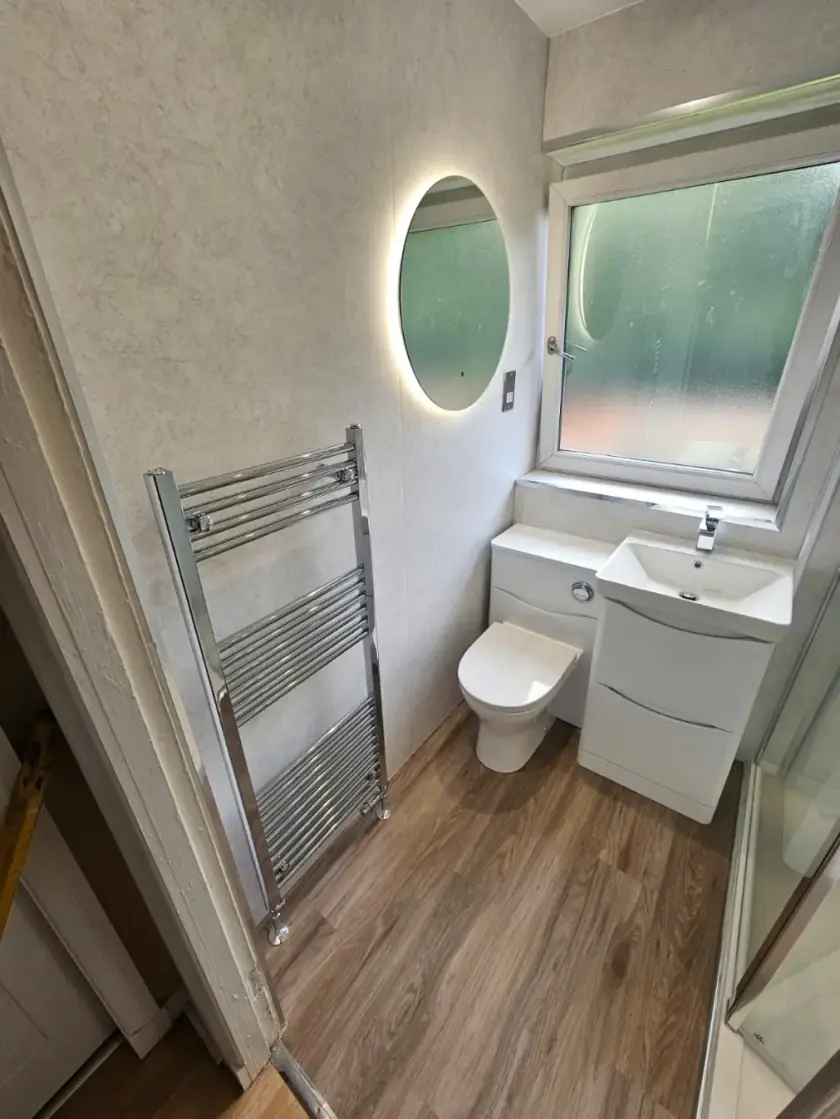
An existing radiator position may offer a straightforward option if the pipework, wall support and chosen replacement are suitable. Ask the installer to check output at the actual system temperatures. A radiator's appearance or physical size alone does not tell you how well it will heat the room. Keep enough space around it for doors, furniture and cleaning, and make sure the controls can be reached comfortably.
A heated towel rail may serve the towels, the room or both, depending on its output and installation. Covering it with towels affects how heat reaches the room. Electric and dual-fuel versions need appropriate product selection, electrical installation and operating instructions. Do not use an ordinary plug-in heater or extension lead as a bathroom substitute. Any work involving gas appliances must be handled by someone appropriately registered for that work.
Compare real costs and controls
Ask for the complete installation price of each option. Underfloor heating may involve floor preparation, insulation, controls and a compatible finish as well as the heating product. A radiator change may involve pipe alterations and repairs to walls and floors disturbed by the work. Comparing only the price of a mat with the price of a towel rail does not show the finished cost. Include any work already planned as part of the refit without counting it twice.
Running costs depend on the energy source, system design, insulation, settings and hours of use. Lower operating temperatures do not automatically mean that electric floor heating costs less than a radiator connected to another heat source. Ask for any estimate to state its assumptions. Choose controls you understand and can reach. More complicated scheduling is not useful if the household cannot adjust it or regularly leaves the system running unintentionally.
If both floor heating and a towel rail are proposed, ask why both are needed and how they will be controlled. One may serve floor comfort while the other dries towels, but the combined arrangement should have a clear purpose and price.
Keep access and handover instructions in the plan
Ask how thermostats, valves and other parts that may need repair can be reached. For underfloor systems, keep the layout and testing records supplied by the installer with the product details. Know where heating elements or pipes are located before any later drilling or floor work. For a radiator or rail, keep valves accessible and follow the manufacturer's maintenance instructions rather than treating unfamiliar fittings as a routine DIY adjustment.
At handover, ask for the normal controls and any dual-fuel operating requirements to be demonstrated. Keep relevant certification, warranties and the floor-care instructions. Heating does not replace ventilation, so include the extractor in the overall plan. Our bathroom installation page explains the next step for a proposed refit. Call 0141 471 9145 with your room details and the heating problem you want to solve.
Plan your bathroom in Glasgow
Talk through your room, the changes you want and the work that needs to be included.