
Bathroom Colour Ideas for Glasgow Homes
Updated 11 October 2026
Choose bathroom colours by looking at the room, its light and the finishes you want to keep. You do not need to follow a trend or copy every detail of a showroom display. This guide compares light neutrals, greens, blues and warmer shades, with practical ways to test them before ordering tiles, panels or furniture.
Start with the finishes that are hardest to change
A floor, tiled wall or fitted vanity is usually more involved to replace than towels or a painted area. Start with those main surfaces and compare them together. If the bathroom already has a finish you intend to retain, include it in the sample set. A new warm cream can look quite different beside an existing cool white, even if both appeared neutral when viewed separately in photographs.
Choose one main surface you particularly like, then use it to narrow the other choices. That might be a stone-effect wall panel, a patterned floor or a coloured vanity. You do not need a strong feature on every surface. Our bathroom design service in Glasgow is a starting point for discussing how the layout, finishes and fittings work together before individual products are ordered.
Compare light neutrals without assuming they all match
White, off-white, pale grey and beige can form a simple background for a bathroom. The useful question is which version works with your light and fittings. Put samples beside the actual basin or bath colour where possible. A bright white tile may emphasise the warmer tone of another white surface. Decide whether you like that difference rather than expecting all products described as white to match exactly.
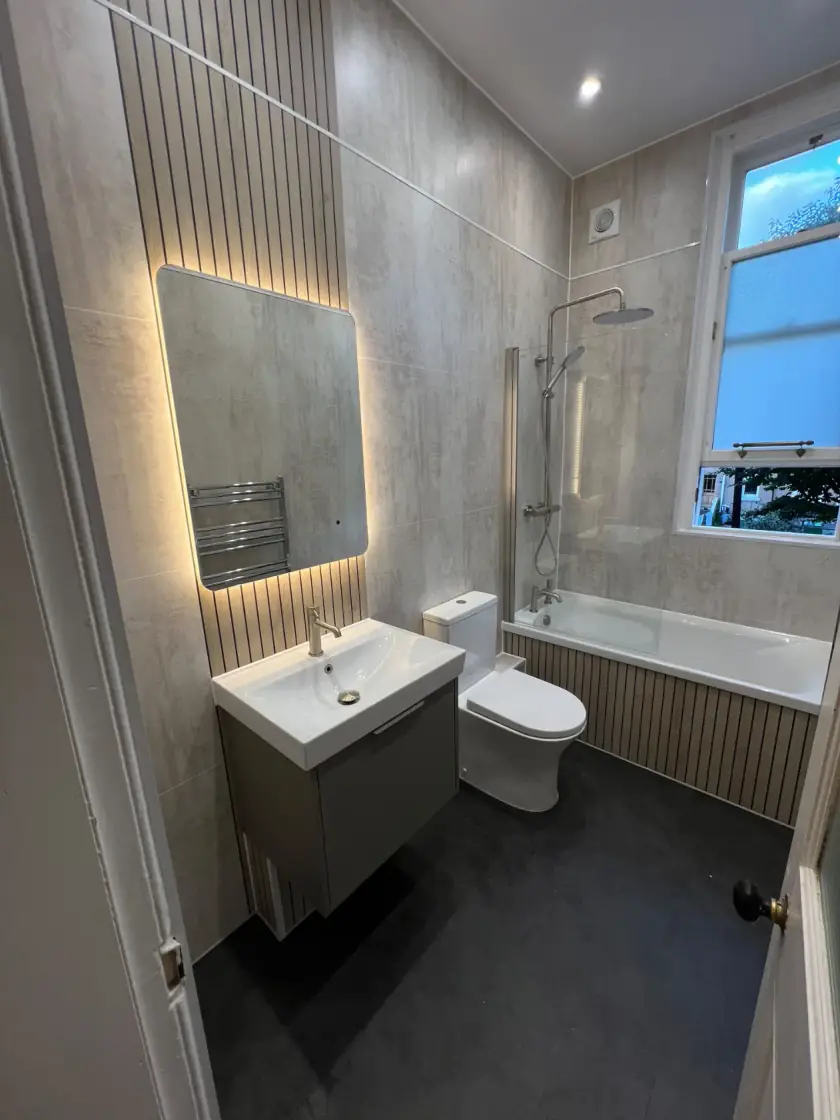
You can add interest through the surface pattern, furniture or a small colour accent. A plain wall with a wood-effect vanity looks different from the same wall beside glossy white drawers. Check the amount of pattern across the whole room. If the wall and floor both have strong veining, compare larger samples so you can see whether they compete. Small chips rarely show the full repeat of a printed finish.
Try green or blue in a manageable area
A green or blue vanity can introduce colour while leaving the main walls quieter. Alternatively, use a coloured tile in one part of the room and compare it with the floor and metal fittings. There is no requirement to keep colour to a single wall, but seeing the intended amount on a drawing or sample board helps you judge it more reliably than looking at one tile in isolation.
Check how the shade looks in your actual light. A pale green may appear grey in one setting and warmer in another; a deep blue can become much darker in an unlit corner. Do not assume that a colour will produce the same mood for everyone. Choose the version you enjoy looking at and can imagine living with, rather than relying on a promise that a particular shade will make you feel calmer.
Use warmer colours and dark contrasts deliberately
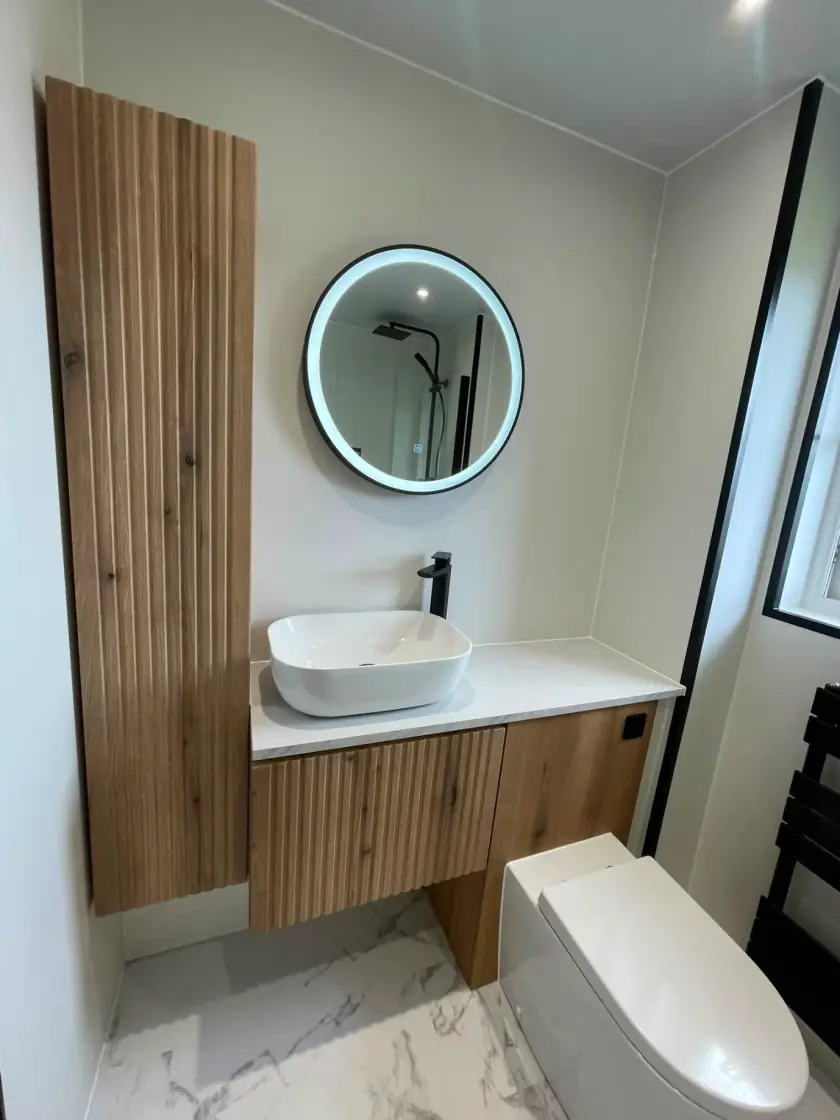
Warm beige, muted clay or a timber effect can work with white sanitaryware and a variety of metal finishes. Compare the undertones: two warm products can still look mismatched when one leans pink and the other yellow. Bring the floor, wall and vanity samples together. If you choose a strong timber grain, check its direction and repeat across the furniture so the finished unit looks as expected.
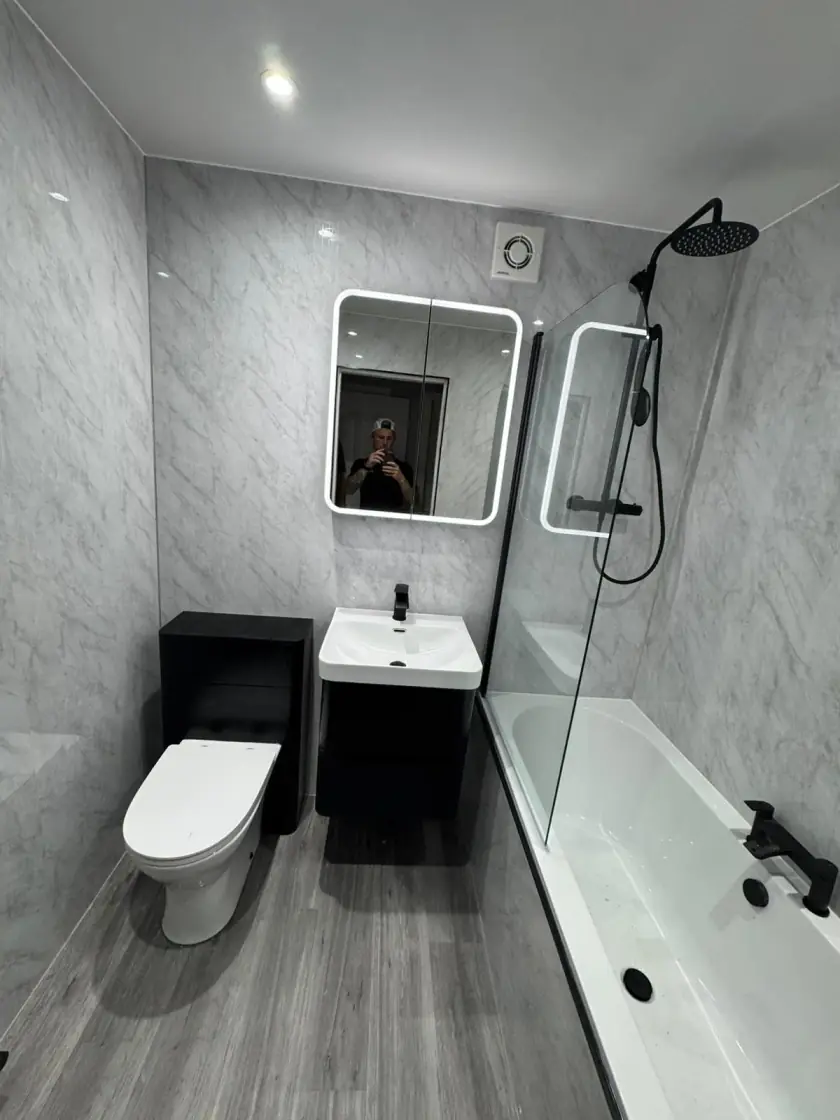
Darker furniture or fittings can give a clear contrast against lighter walls. Check the care instructions as well as the appearance, because water marks and cleaning residues show differently on different finishes. Black, chrome and brass are not interchangeable in their maintenance requirements. Our modern bathroom page shows the wider design decisions to discuss alongside colour, including storage, shower screens and the amount of visible pipework.
For a small bathroom, check colour choices from the doorway as well as close up. A dark unit beside a narrow entrance may look more prominent than it did on a sample board. Keep the room's useful light and clear route in mind while comparing options.
Test the full combination before giving approval
View samples in daylight and with the proposed lights on. Include grout, panel trims and sealant colours where they will be visible. Ask about the actual finish and care requirements, particularly for painted areas near water. The colour is only one part of suitability: paint, tiles and panels need the right preparation and installation for their location in the bathroom.
Record exact product and colour references on the agreed specification. If a supplier offers a substitute, compare it with the complete sample set before accepting. Keep accessories until later if that helps you make the main decisions clearly. Our small-bathroom tile-pattern guide explains how joints and patterns change the appearance. Call Dream Bathrooms Glasgow on 0141 471 9145 to discuss the room and bring a few colour combinations you like.
Plan your bathroom in Glasgow
Talk through your room, the changes you want and the work that needs to be included.