
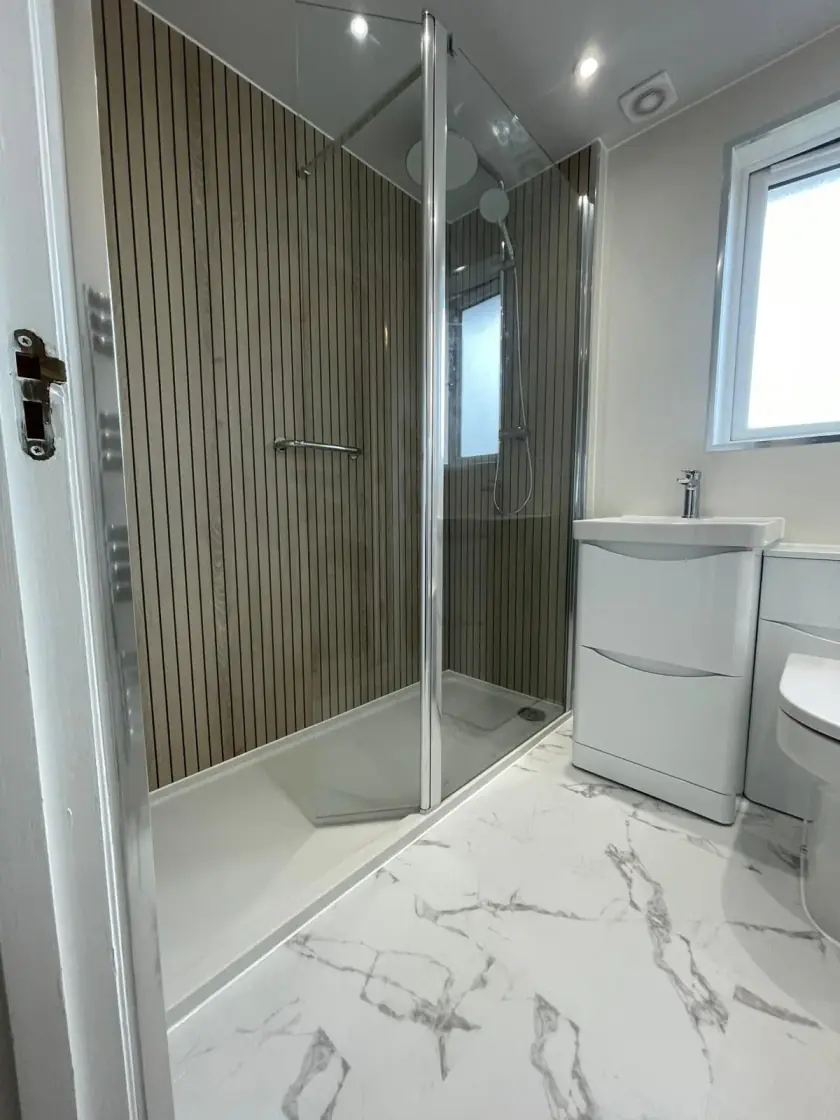
Five Ways to Reduce Water Waste in the Bathroom
Updated 11 October 2026
You can reduce bathroom water waste by fixing leaks, using taps and showers thoughtfully and choosing suitable fittings during a refit. In Glasgow, saving water does not automatically reduce a household's water bill, because many homes pay unmetered charges. These five points separate practical water-saving choices from claims about savings that may not apply to your home.
1. Understand which costs can change
Scottish Water explains that unmetered household charges are linked to Council Tax bands. Using less water does not directly reduce those charges in the way it could affect a metered bill. Check your own charging arrangement before treating a product's advertised cash saving as relevant. Saving water is still useful, but the financial explanation should be accurate for the household.
Using less heated water can also reduce the energy needed to heat it, depending on the system and how it is used. The result varies with shower duration, flow, temperature and energy costs. Do not assume that a new fitting pays for itself within a fixed period. Compare actual product information with your routine, and keep purchase and installation costs separate from any estimated change in running costs.
2. Arrange repairs for visible leaks and running toilets
Look for a tap that keeps dripping after it is closed or water continuing to run into the toilet bowl after the cistern should have finished refilling. Tell the plumber what you see and hear. Do not assume every leak needs a full new fitting: the appropriate repair depends on the fault, condition and availability of parts. Keep model references where possible so replacement components can be identified correctly.
Report hidden-leak signs such as recurring damp or unexplained water around a fitting. A refit is a useful time to investigate known problems before covering pipes and joints. Our bathroom installation service in Glasgow is the starting point for discussing that work. Ask what will be repaired, what can remain and how parts that may need repair will be reached once the new bathroom is finished.
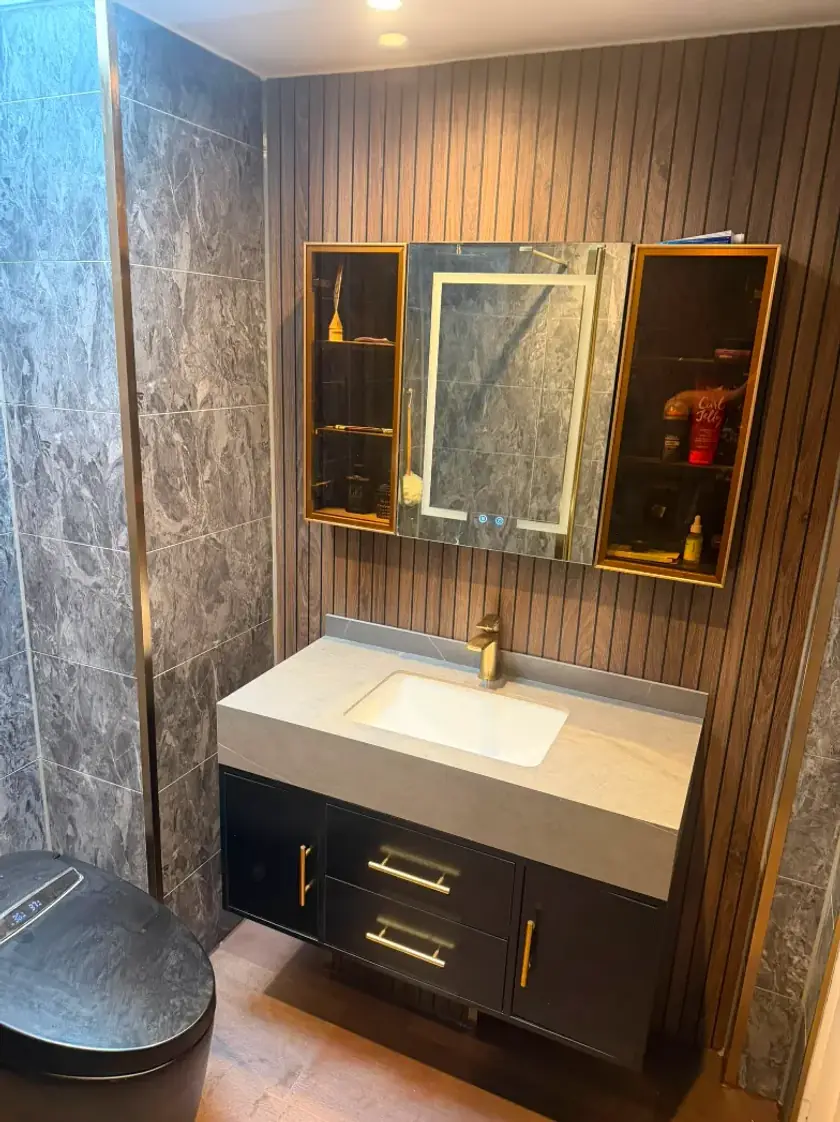
3. Choose showers and taps that suit the system
Compare the stated flow information for the products you are considering, but ask the installer to confirm suitability for the home's hot water system and supply. A flow-limiting head or attachment is not appropriate for every shower. Follow the shower manufacturer's requirements, especially for electric showers, rather than adding a restrictor because it is marketed as water-saving. The complete fitting needs to work properly at the available pressure and flow.
A comfortable shower does not necessarily need several outlets running together. Think about which features you will use, and compare a straightforward handset with a larger multi-outlet arrangement. Controls should be easy to operate and reach. Our electric and mixer shower comparison explains the basic difference between those systems. Ask for the exact selected model in the quote so its requirements can be checked before installation.
Keep heads and outlets clean according to the manufacturer's instructions, and report a change in performance rather than compensating by leaving water running longer. If the shower takes an unusually long time to reach a usable temperature, describe that to the plumber. The cause should be checked before buying a different head or adding another control.
4. Use the toilet's flush options correctly
When selecting a toilet, compare the complete pan and cistern combination rather than a flush mechanism in isolation. The components need to be compatible and installed as specified. If it has two flush options, ask the installer to demonstrate them. A smaller flush is useful for the use it is designed for; repeatedly flushing an unsuitable arrangement is not a sensible way to reduce water consumption.
Avoid improvised objects in the cistern or alterations to its settings without appropriate product advice. They can interfere with moving parts or performance. Keep cleaning and repair access in the design, particularly with a concealed cistern. Our water-saving toilet guide covers the questions to ask. No toilet can be judged only by a green label or a headline claim about litres saved.
5. Make small changes to the daily routine
Turn off taps when water is not needed, such as while brushing teeth, and avoid leaving a shower running while getting ready elsewhere. If shorter showers suit your household, reducing unnecessary running time is a straightforward starting point. Scottish Water's water-saving advice offers further practical ideas. Keep hygiene, personal needs and safe use of the fittings central to any change in routine.
For a planned refit, discuss water use with the installer alongside comfort, repairs and maintenance. Specialist water-reuse systems need separate design and upkeep; they should not be improvised by connecting waste water to normal supplies. Call Dream Bathrooms Glasgow on 0141 471 9145 to discuss suitable bathroom fittings. Start with the system you have and how the household uses it, so any proposed change has a clear purpose.
Plan your bathroom in Glasgow
Talk through your room, the changes you want and the work that needs to be included.