
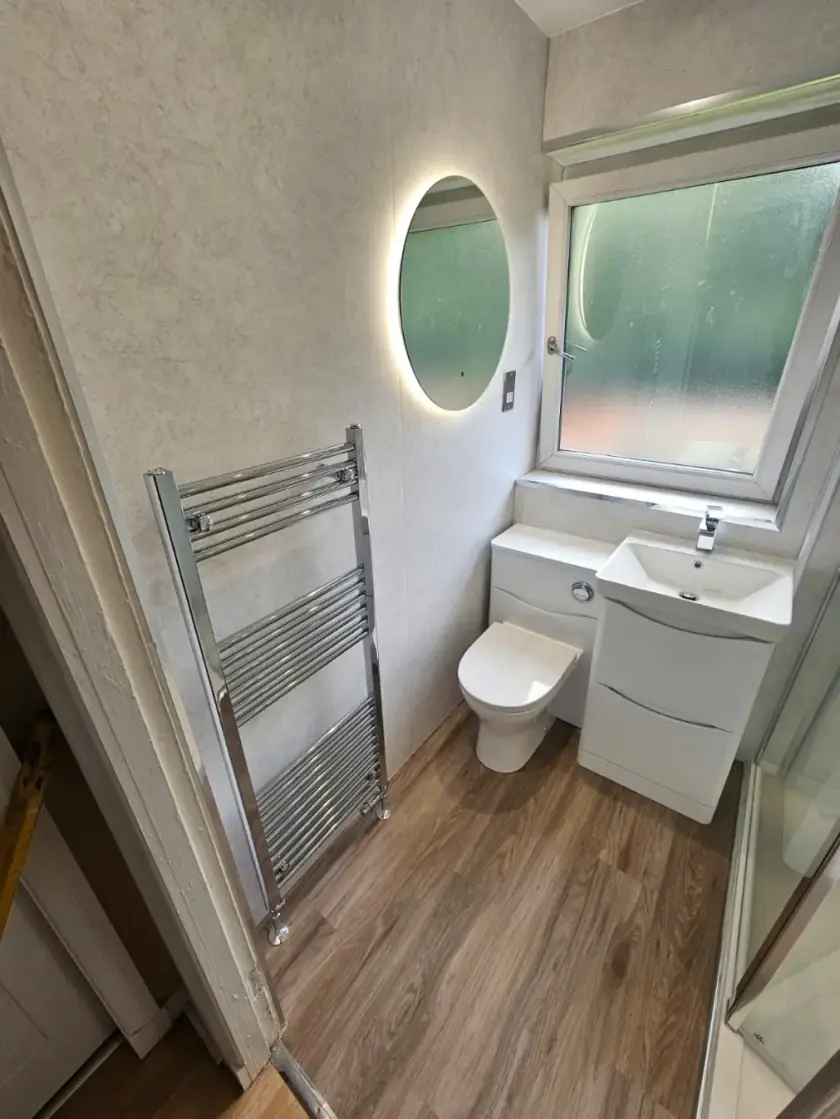
Five Checks When Choosing a Shower Screen in Glasgow
Updated 11 October 2026
A good shower screen fits the finished space, contains the spray and opens comfortably. Glass thickness is only one part of that choice. Before ordering for your Glasgow bathroom, compare the complete enclosure, its fixings, cleaning access and available replacement parts.
1. Measure the finished opening
The screen needs to fit after the walls are prepared and the final surfaces installed. Product sizes and adjustment ranges differ, so the installer should check the actual opening against the selected model. Do not order solely from the old screen's label or a rough measurement between unfinished walls. Small differences can affect whether the new enclosure fits correctly.
Check the tray and screen as a compatible arrangement, including their shape and dimensions. A curved enclosure may not match a tray that looks similar. For a bath screen, the bath rim and surrounding fittings also matter. The whole combination needs to support the intended use and the manufacturer's installation details.
Look at the wall fixing positions and any concealed pipes or cables before installation. Heavy glass and its hardware need suitable support, but choosing thicker glass does not automatically make the enclosure safer or longer lasting. The complete product design, correct handling and installation are more important than treating one thickness as a universal quality rule.
2. Choose a comfortable door opening
A hinged door needs room to swing without hitting the basin, toilet or towel rail. A sliding door uses a different arrangement but may provide a narrower clear entrance than expected. A folding design also needs checking in use. Compare the actual opening dimensions and movements rather than choosing from the name alone.
Stand where you would enter, turn and dry off. Include the space needed by anyone who uses a mobility aid or requires assistance. An open walk-in screen removes a door but still needs enough room to contain the spray and provide suitable access. It is not automatically the best option for every small bathroom or every user's needs.
Try handles and door movement on a display where possible. Check that the grip is comfortable and the door feels manageable. A screen that suits the room visually can still be awkward to use daily. Keep the shower controls and towel position in the same plan so that the entrance does not become crowded by other fittings.
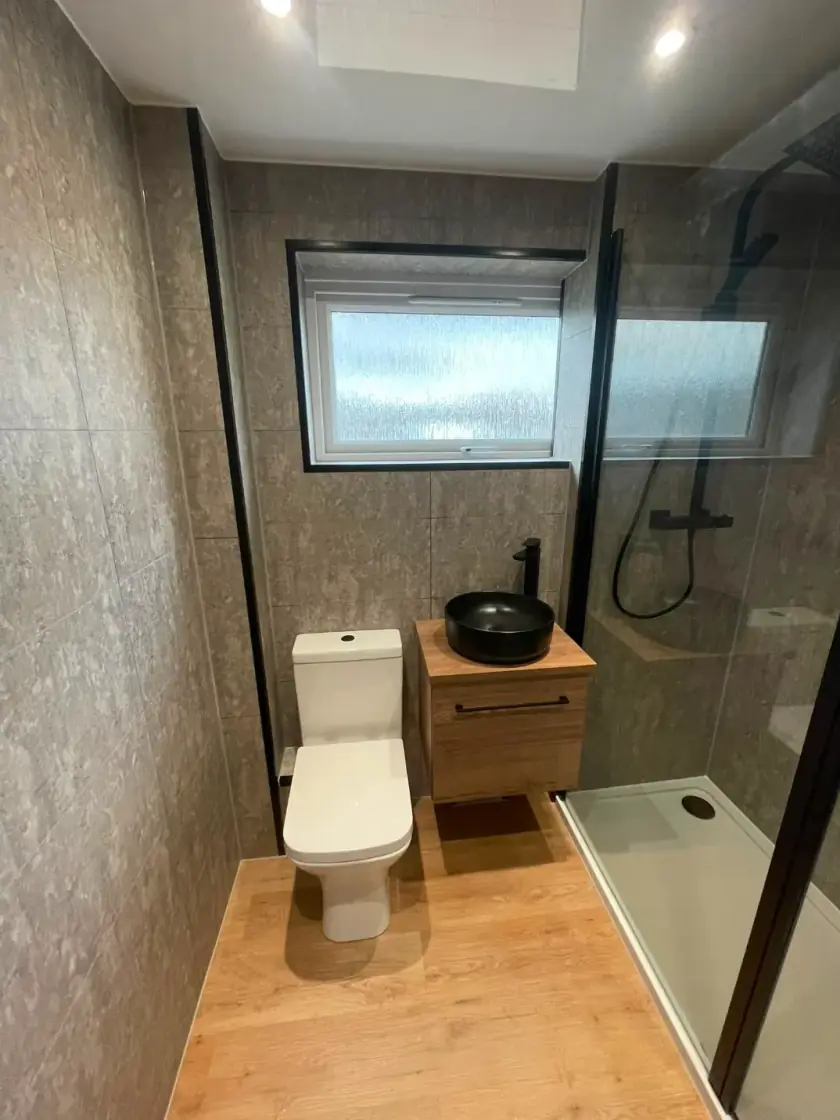
3. Check the glass and complete product specification
Use a shower enclosure or screen designed for its intended purpose, with the relevant product information available. Ask the supplier about the glass specification and the manufacturer's installation requirements. Do not substitute an ordinary glass panel because its dimensions appear right. The glass, edges, supports and hardware form a complete system.
Safety glass can still break and cause injury. Avoid claims that a screen is unbreakable or that thicker glass removes the need for careful use. Damage to edges, loose fittings or a door that catches should be assessed. Do not continue forcing a misaligned door or treat a chip as merely a cosmetic mark.
An easy-clean coating is a cleaning feature, not a promise of glass strength or protection against slipping on the bathroom floor. Check what the coating is intended to do and how it must be maintained. Keep floor safety, spray containment and glass specification as separate questions rather than assuming one product feature answers all three.
4. Look at seals, rollers and cleaning access
The door and seals should direct water as the enclosure is designed to do. Ask how the screen will be sealed to the tray and wall, following the specific instructions. More sealant in every visible gap is not always the correct approach, because some systems have particular drainage details. Leave installation and adjustments to the appropriate installer.
Check how you will clean behind tracks, around hinges and between overlapping panels. Some products have release features for cleaning, but the method is specific to the model. Follow the instructions rather than removing parts by guesswork. A smooth-looking enclosure can still have awkward areas if it is positioned tightly beside another fitting.
Use approved cleaning products and avoid abrasives or chemicals that may damage the glass coating, metal finish or seals. Keep the enclosure and ventilation in ordinary use as intended. If water starts escaping, have the cause checked rather than simply adding more sealant. Door alignment, seals and the original installation may need different repairs.
5. Ask about parts and the installed price
Find out whether replacement seals, handles, rollers and hinges can be identified for the chosen model. Keep its name and product number with the instructions. A small worn component may be replaceable without changing the entire enclosure, but availability and compatibility need checking. Similar-looking parts are not necessarily suitable substitutes.
Compare the screen, delivery, fitting, removal and any required wall or tray work together. Ask what the written product guarantee includes and which maintenance conditions apply. Do not assume every part has the same warranty or that a longer headline period covers all installation costs. The complete proposal should explain both the product and the work.
Our bathroom installation service in Glasgow can help you discuss the shower area as a whole. For different frame arrangements, see our framed and frameless shower screen comparison. Call Dream Bathrooms Glasgow on 0141 471 9145 to discuss a screen that fits the room and is comfortable to use.
Plan your bathroom in Glasgow
Talk through your room, the changes you want and the work that needs to be included.