
Bathroom Ideas That Use Less Water, Energy and Materials
Updated 11 October 2026
A less wasteful bathroom starts with practical choices: repair leaks, keep sound fittings where they still work, and choose products that can be maintained. During a full renovation, compare water use, lighting and heating controls alongside the layout. Avoid assuming that a natural-looking material or a smart label automatically makes a product the better environmental choice.
Keep useful parts where it makes sense
Before replacing everything, identify which fittings remain sound and suitable for the new layout. A serviceable bath or cabinet may be worth keeping if it works for the household and can be protected during the job. Ask the installer what keeping those parts would involve, including connections, surrounding finishes and any limitations on the completed installation.
Do not keep a damaged item solely to avoid buying new if it will cause further leaks or repairs. Compare the condition and likely work honestly. Where items are removed, agree responsible disposal and any realistic reuse options. Reuse should depend on the product's condition and suitability, not a blanket claim that every old bathroom fitting can be reused safely.
Deal with leaks and unnecessary running water
A dripping tap or water continually entering the toilet pan deserves attention. Have the fault identified and repaired rather than accepting it as normal. Keep service access clear so small repairs do not require damage to the room. Turning off the tap when it is not needed is another simple way to avoid wasting water during daily routines.
Using less hot water can also reduce the energy needed to heat it. Scottish Water's saving-water advice covers everyday habits and leaks. Do not assume a particular reduction in water use gives every Scottish household the same bill saving; charges and heating arrangements differ, and the amount saved depends on actual use.
Compare shower flow without losing useful performance
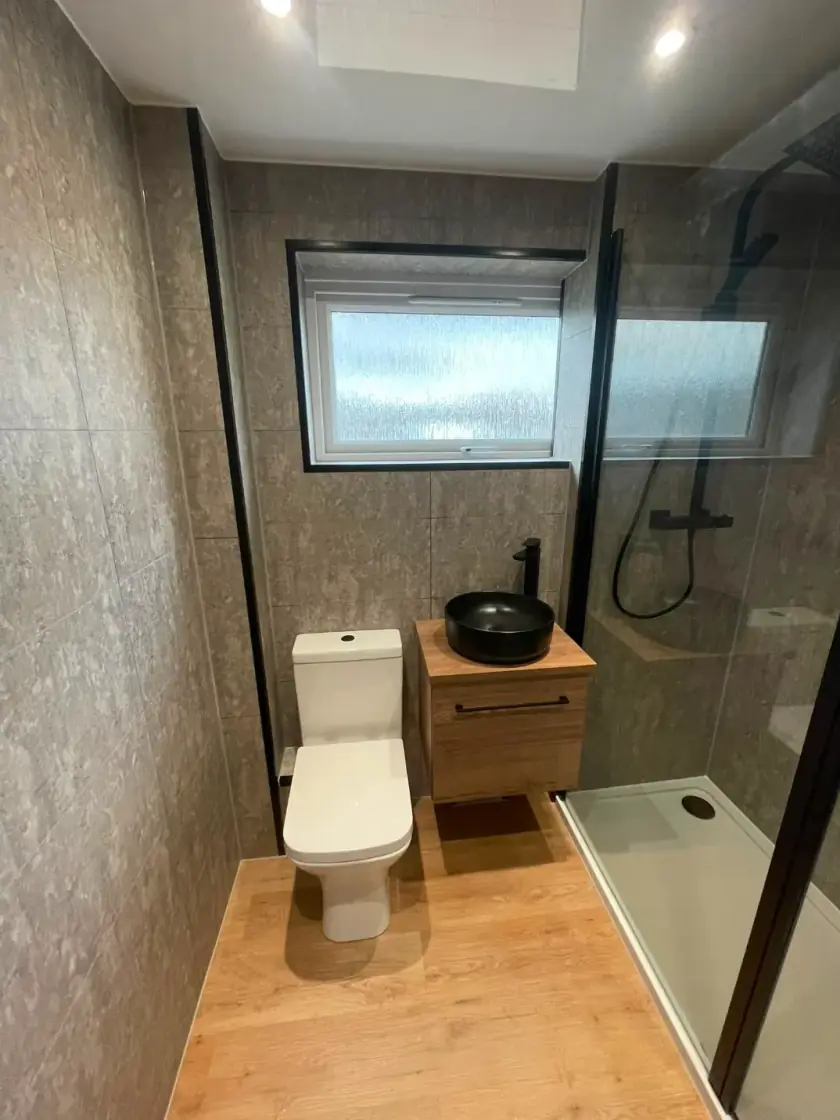
Ask about the flow rate of the proposed shower and whether it suits the existing supply. A suitable efficient head may reduce water use compared with a more demanding product, but compatibility matters. Check the manufacturer's advice before changing the head on an electric shower or other system with specific requirements.
A shorter shower can use less hot water without a full renovation. If buying new, balance the spray and controls you like with the amount of water used. A very large head is not automatically more comfortable or more efficient. Avoid adding complicated controls purely for a green claim if a straightforward product would meet the household's needs.
Choose lighting for useful light
LED lighting can be an efficient choice, but the design still needs enough light at the mirror and through the room. Compare output and suitability rather than adding several decorative fittings by default. Have an electrician check the positions, controls and bathroom requirements. A soft background glow should not replace the light needed for washing and shaving.
Choose controls you will actually use and avoid leaving unnecessary lights on. If a mirror has integrated lighting, ask what can be repaired when a component fails. A replaceable or serviceable product can reduce the need to discard a complete fitting. Check the guarantee and spare-part information before choosing on the appearance of an illuminated display alone.
Control heating around the room's needs
A towel rail or underfloor system should be selected for the room and its intended purpose. Ask whether it is warming towels, heating the whole bathroom or supporting another heat source. Include suitable controls and understand how to use them. A product described as smart is not automatically cheaper to run in your home.
Running cost depends on energy use, operating time and the actual tariff. Compare those factors instead of relying on a general saving percentage. If changes to insulation or the heating system are proposed, get appropriate advice for the building. Heating and ventilation should work together, with any existing damp or leak investigated rather than hidden by new finishes.
Ask for evidence behind material claims
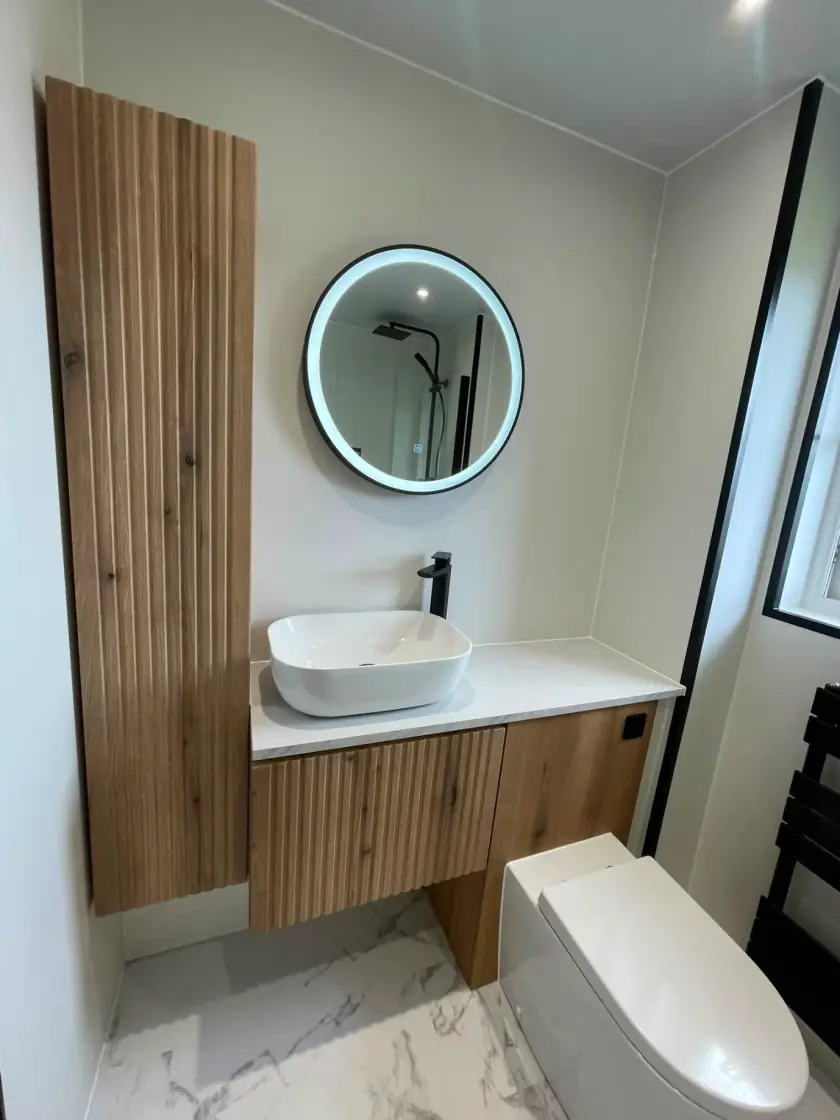
Natural, recycled and eco-friendly are broad descriptions. Ask what the claim covers and what product information supports it. A natural material still needs to be suitable for its bathroom position, and a recycled product still needs reliable fitting and care. Compare durability, repair options and sourcing information rather than judging environmental value from a wood or stone appearance.
Avoid specifying unnecessary quantities of finishes just to create a look. Plan tile cuts and ordering with the installer, allowing sensible spares without excessive surplus. Keep leftover usable pieces labelled for repairs. Our guide to easier bathroom maintenance and repair explains why accessible parts and sound preparation matter alongside material selection.
Make care simple enough to follow
Choose finishes with cleaning instructions you are willing to use. A high-maintenance surface that is regularly damaged by the wrong product may need replacement sooner. Read the instructions for each fitting and surface; vinegar, strong cleaners and abrasive pads are not universal solutions. Never mix cleaning products, and follow their directions for use and storage.
Keep the room well ventilated and report faults promptly. Persistent mould or staining needs its cause checked, which may involve ventilation, leaks or another defect. Do not rely on plants, scented products or a coat of paint as a substitute for dealing with the problem. The practical aim is a room that works and can be cared for properly.
Put the useful improvements first
Rank the changes by what they solve in your home: a leak, excessive shower flow, poor lighting control or furniture that cannot be repaired. Ask for the cost and expected practical effect of each proposal. Expensive additions such as water-reuse systems need specialist design and maintenance assessment; they should not be treated as a standard bathroom extra.
Our bathroom design service in Glasgow helps plan the layout, products and fitting together. Call 0141 471 9145 or request a free home design visit. Explain which parts you want to keep and where you want to reduce waste so the proposal starts with useful, achievable changes.
Plan your bathroom in Glasgow
Talk through your room, the changes you want and the work that needs to be included.