
Bathroom Flooring for Scottish Homes: A Practical Guide
Updated 11 October 2026
A bathroom floor needs to suit splashes, cleaning and the people using the room. The surface matters, but so does the floor beneath it. Compare bathroom-suitable tiles, sheet vinyl and LVT, then check preparation, grip, comfort and care. Choose the product for your actual bathroom rather than assuming every material with a waterproof label is suitable everywhere.
Check the existing floor before covering it
Look into soft spots, loose boards, movement and signs of water damage before choosing a new finish. A leaking connection or failed shower seal needs repair, not just a new covering. The installer should check what preparation is needed and explain which parts of the existing floor can remain and which need work.
Ask how the quote handles damage that only becomes visible when the old floor is removed. Agree how additional repairs will be explained and approved. New tiles, vinyl or boards need a suitable base; none can make an unsound floor sound. In an older home, suspect materials should be assessed appropriately before they are disturbed during removal.
Tiles give a hard surface with visible joints
Ceramic and porcelain floor tiles come in many sizes, colours and patterns. Check that the exact product is intended for flooring, as some tiles are only for walls. Compare the appearance of several pieces with the proposed grout. A tile can look very different once its pattern repeats across the room and the joints are visible.
Tiles can feel cool under bare feet, and the grout needs cleaning as well as the tile face. Natural stone and some other materials have particular sealing and care requirements. Ask for those instructions before deciding. Waterproofing where needed is part of the installation beneath and around the finish; tiles and grout alone should not be treated as the complete protection.
Sheet vinyl and LVT are different choices
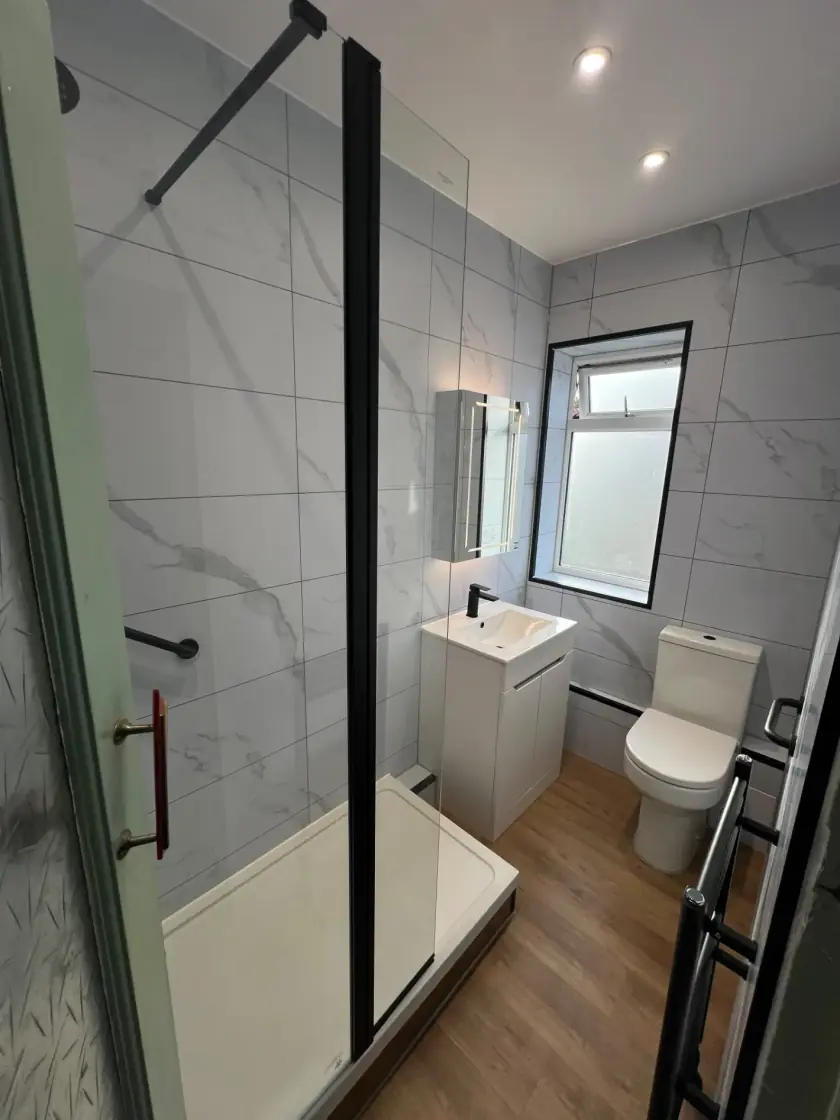
Sheet vinyl covers an area in larger pieces, while luxury vinyl tile, or LVT, uses individual tiles or planks. Both offer different bathroom-suitable products and fitting methods. Compare real samples for comfort, texture and appearance. A wood or stone effect lets you use that look without making the surface you walk on from the natural material.
Check the manufacturer's requirements for bathroom use, preparation, joints and edges. A waterproof vinyl product does not automatically create a waterproof room. Water can still reach below through unsuitable details or damage. Our tile and LVT comparison explains the differences in feel, maintenance and installation to discuss with your fitter.
Be careful with laminate and real wood
Do not assume ordinary laminate or timber flooring is suitable because you like its appearance in another room. Bathrooms expose floors to splashes, humidity and possible standing water. If considering either material, check explicit bathroom-use instructions and guarantee conditions for that product. Suitability cannot be decided from the words water-resistant or engineered alone.
A wood-effect vinyl or porcelain product may give a similar appearance with different care requirements. Compare those options if your main aim is the colour and grain. Think about the household too: frequent splashing around a family bath creates different demands from occasional use. Choose a system whose permitted use matches the position and routine it will face.
Check grip, transitions and drainage
Ask for the relevant slip-resistance information and discuss the room's use with the installer. A matt or textured appearance alone does not prove suitable performance when wet. No floor removes every slip risk. Keep water and soap spills under control and make sure the layout leaves a clear, comfortable route between the shower, basin and door.
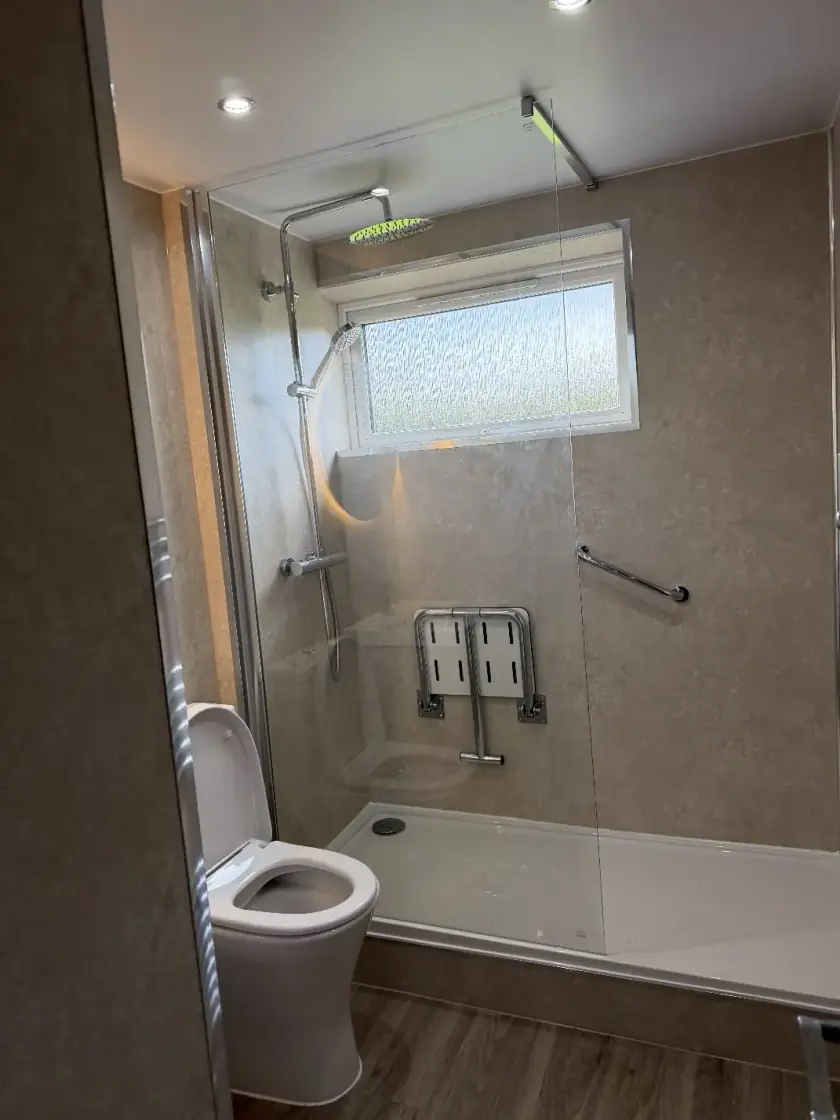
A wet-room shower floor needs a suitable complete system, including slopes that direct water towards the drain and waterproofing. Ordinary bathroom flooring is not automatically suitable inside that shower area. If someone has mobility needs, consider thresholds, turning room and support together with the floor choice. Get advice specific to the person rather than selecting a product simply because it is advertised as accessible.
Plan warmth and finished floor height
If you want underfloor heating, check that the heating system, preparation, adhesive and finish are compatible. Product temperature limits and control requirements matter. Ask for an explanation of the proposed system and what will affect the electricity it uses, rather than assuming any heating mat can be placed beneath any bathroom floor.
The new layers beneath the finished floor can affect the doorway, adjoining floor and clearances around fittings. Ask what the finished height will be and whether a door adjustment or transition strip is needed. Include that work in the quote. A neat edge at the bathroom entrance matters for daily use as well as for the final appearance.
Choose a look you can maintain
Compare samples beside the wall finish and furniture, in your own lighting. A simple floor can balance patterned walls, while a patterned floor can add detail to an otherwise plain room. Think about cuts around the suite and how the pattern starts at the doorway. Large formats do not automatically look better in every small bathroom.
Read the cleaning instructions and ask how a damaged section could be repaired. Keep product details and suitable spare pieces where practical. Use only approved cleaners and methods, and report lifting, cracking or softness promptly. These can point to a problem beneath the finish that should be checked instead of covered by another layer.
Compare the full fitted cost
A useful flooring quote includes removal, preparation, necessary repairs, fitting materials, trims, labour and waste. Compare the same work across the options, because the cheapest material may need more preparation in your room. Check when the floor can be walked on and when the bathroom can be used, following the chosen products' requirements.
Our bathroom design service in Glasgow helps plan the floor with the walls, fittings and layout. Call 0141 471 9145 or request a free home design visit. Tell us what you dislike about the current floor and whether comfort, easier cleaning or a different appearance is your main priority.
Plan your bathroom in Glasgow
Talk through your room, the changes you want and the work that needs to be included.