
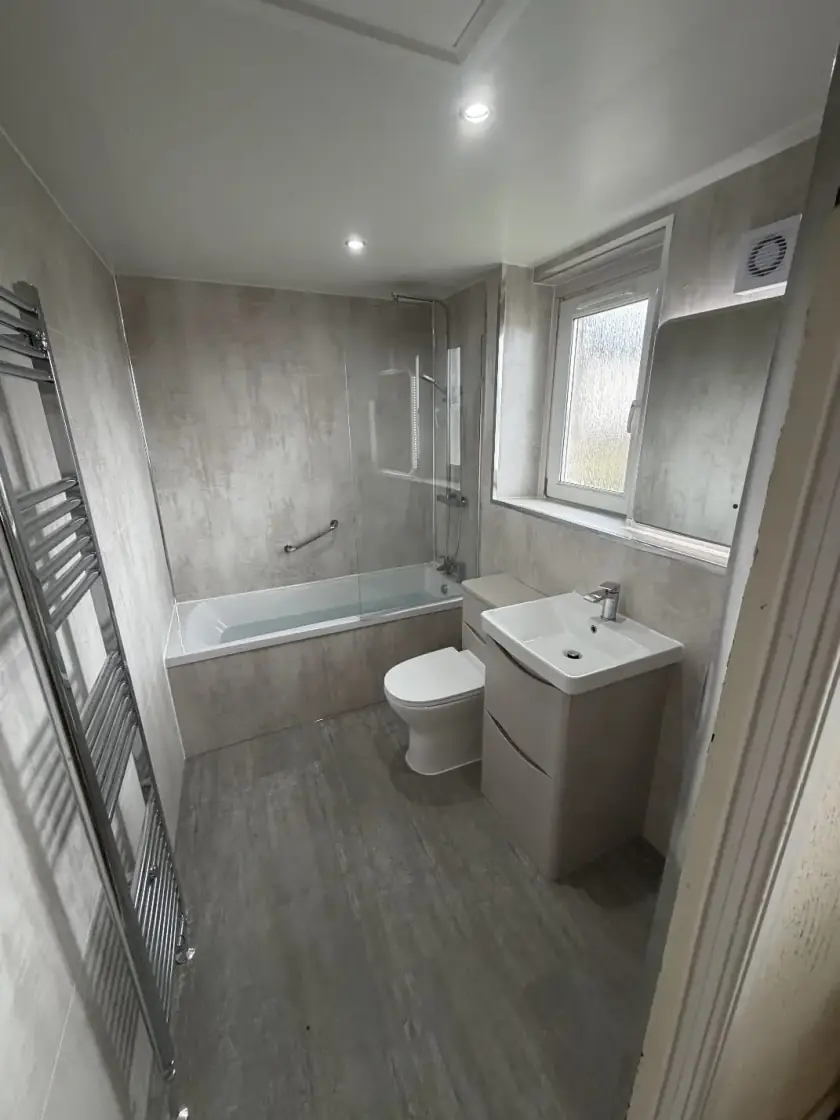
Five Ways to Plan a Bathroom on a Limited Budget
Updated 11 October 2026
When the bathroom budget is limited, start with the problems the work must solve. A leaking shower, awkward layout or damaged floor needs a different plan from a room that simply looks dated. These five steps help Glasgow homeowners compare the complete cost, choose where to spend and avoid saving on work that the bathroom genuinely needs.
1. Separate necessary repairs from optional changes
Write down what is wrong with the current room and ask the installer to inspect those concerns. A new surface should not hide a leak or damaged wall or floor beneath it. List the work needed to make the bathroom usable, then list the improvements you would like if the budget allows. This makes it easier to compare a practical refit with a more extensive redesign without confusing essential repairs and decorative extras.
Decide on a spending limit for the complete job, including installation and repairs to walls and floors disturbed by the work. Keep some money available for problems that cannot be confirmed until old fittings are removed. The appropriate allowance depends on the building and proposed work; a percentage copied from an article cannot guarantee it will be enough. Ask which areas remain uncertain and how the installer will price and discuss any additional work before proceeding.
2. Compare keeping the layout with moving fittings
Keeping the main plumbing positions may reduce work, provided the arrangement serves you well and the existing services are suitable. Ask for a comparison before moving a toilet or shower to another wall. The change may involve drains, floors and adjoining finishes as well as pipes. Sometimes a shallower vanity or different shower door solves the daily problem without a major rearrangement of the room.
Do not retain an awkward layout just because every move is assumed to be expensive. Explain the improvement you need and ask what it would involve. Our bathroom design service in Glasgow can discuss the options for your room. Compare the actual benefit with the quoted cost. A clear shower entrance or usable basin may deserve more of the budget than a decorative feature wall.
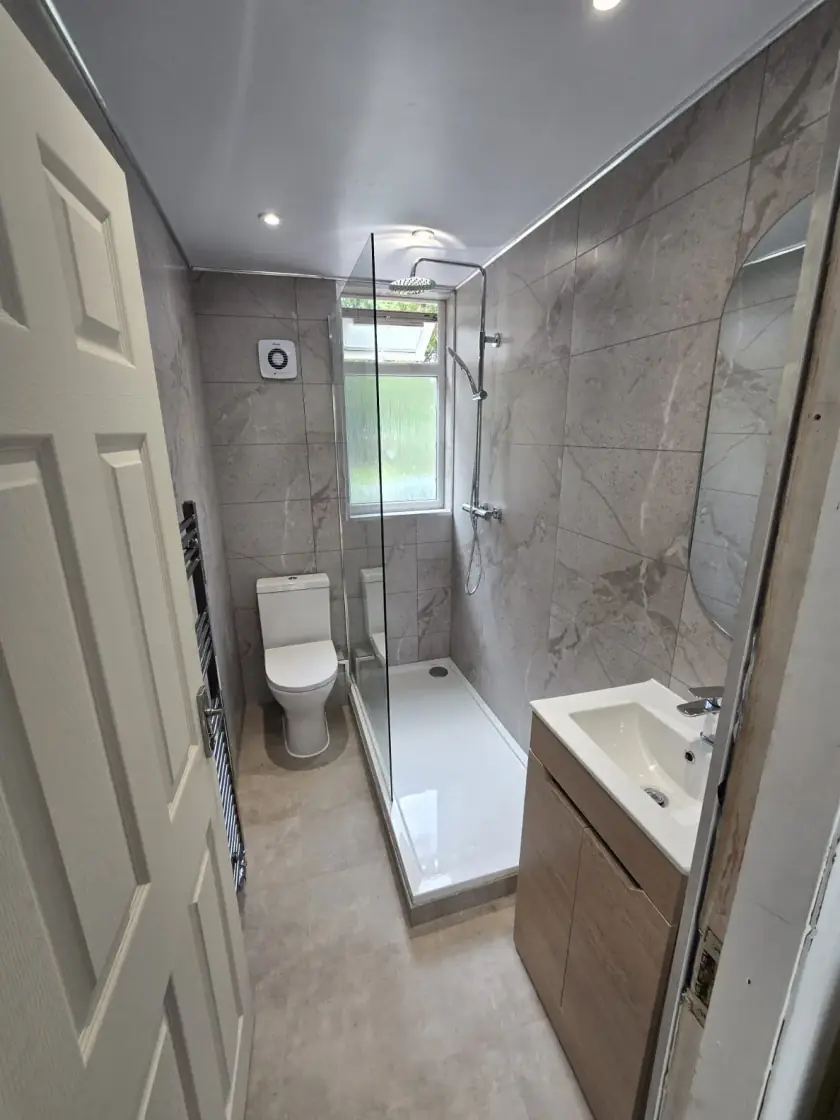
3. Compare the fitted cost of materials and products
The price on a tile box is only part of its cost. Preparation, quantities, cuts, waste, trims and fitting time also matter. Ask for the finished cost of the options you are considering. A standard-size product may be easier to source than a custom item, but suitability comes first. Confirm the dimensions, water requirements and installation instructions before buying something because it appears to be a bargain.
Clearance or display products need extra checks. Confirm that all parts are present, the condition is acceptable and the required quantity is available. Ask about returns and warranty terms before paying. If you buy products yourself, agree who checks compatibility and who handles missing or damaged items. A discounted shower or vanity can hold up the job if an essential part is unavailable when the installer needs it.
4. Compare quotations for the same work
Give each installer the same room information and priorities. Ask for the products and installation work to be named clearly, including strip-out, waste removal, plumbing, electrical work, wall and floor preparation, finishes and repairs to walls and floors disturbed by the work. Check whether taxes, delivery and any required approvals are included. Two totals are not a fair comparison if one includes the full refit and the other leaves several necessary tasks for you to arrange.
Ask how payments relate to the work and products, when decisions are needed and how changes are approved. Keep agreed details in writing. If you reduce the price by removing an item, make sure the revised quote says exactly what has changed. Our bathroom installer checklist gives further questions to ask before committing. Clear answers are more useful than vague promises of a complete package.
Keep product prices and installation costs together when comparing alternatives. A cheaper fitting that needs more preparation may not reduce the total. Ask for the revised finished price before making the change.
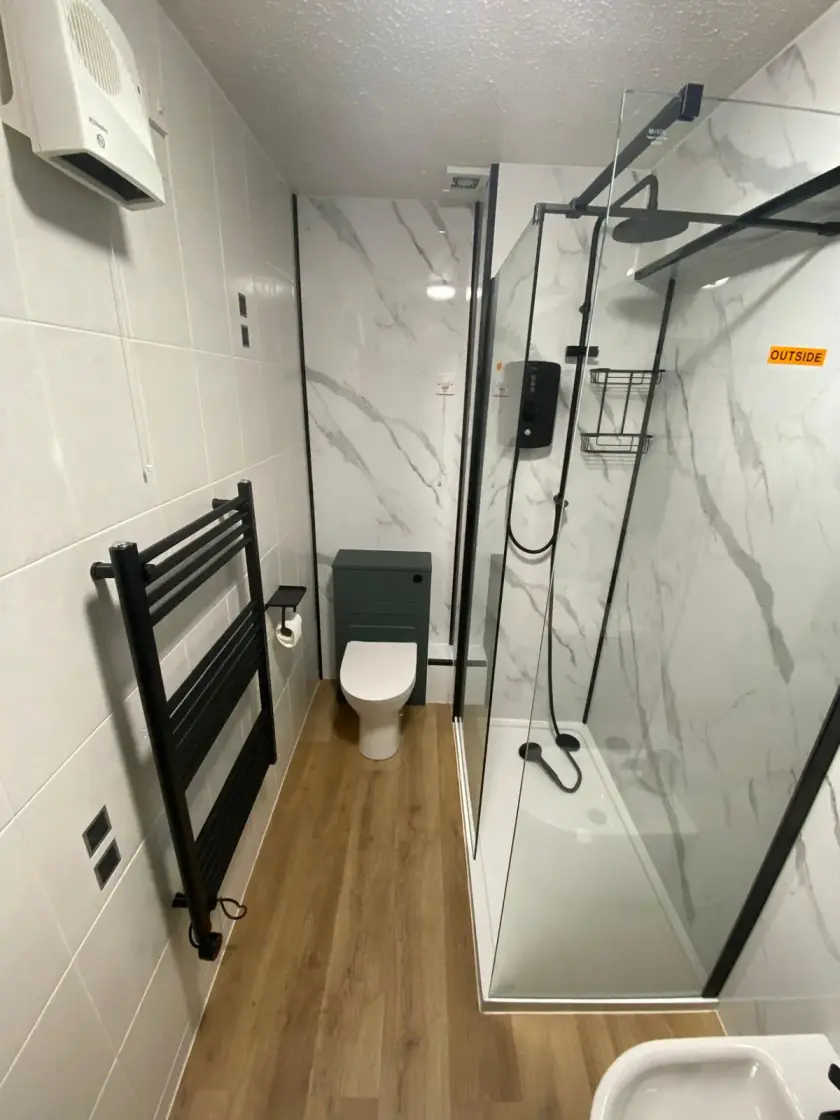
5. Save on extras without leaving essential work unfinished
Discuss which decorative additions can wait. A simple mirror or fewer accessories may suit the budget while leaving suitable waterproofing, ventilation and electrical work in place. Do not assume that every item can be added cheaply later: concealed pipework or wiring may require finished surfaces to be opened. Ask about the actual consequences before removing something from the installation plan to lower the initial total.
Keep a record of approved changes and the amount still to pay. Avoid adding small upgrades without checking their combined cost and any effect on labour or delivery. For more detail, read our guide to keeping a bathroom refit on budget. Call Dream Bathrooms Glasgow on 0141 471 9145 to discuss your room and priorities. A useful starting conversation is what needs fixing, what you would like and what you can comfortably spend.
Plan your bathroom in Glasgow
Talk through your room, the changes you want and the work that needs to be included.