
Modern or Traditional Bathroom: Choosing a Style for Your Glasgow Home
Updated 11 October 2026
Modern and traditional bathroom styles can both work in Glasgow homes. The age of the property does not force you to choose one or the other. Start with a practical layout, then compare the shapes, colours and details you prefer within fittings that suit the room.
Recognise the details you like
Modern designs often use simpler shapes, plain cabinet fronts and less visible trim. Traditional designs may use panelled furniture, rounded basins, crosshead taps or patterned tiles. These are useful descriptions, not strict rules. A modern bathroom can have colour and texture, and a traditional one can be simple and easy to use.
Collect a few examples and identify the actual features you want. You may like the cabinet colour in one picture and the tile pattern in another without wanting the whole room. This is more useful than asking for a broad hotel or heritage look. It also helps avoid buying decorative fittings that do not solve your bathroom's practical needs.
Set the layout before selecting statement fittings
Measure the room and include doors, drawers and shower screens in their open positions. A freestanding bath may suit a traditional design, but it still needs comfortable access and cleaning space. A large open shower may look modern, but it needs enough room to contain splashes. Neither style changes the dimensions available.
Keep the facilities the household needs. A fitted bath with a shower can suit either style, and a practical vanity can provide storage in a period-looking room. Moving the toilet or basin may add work regardless of appearance. The layout and existing plumbing should guide those decisions before the finish choices are finalised.
Compare taps and controls in use
Crosshead handles can provide a traditional detail, while simple levers often suit a modern look. Try the actual controls if possible, particularly if grip or movement is difficult. A handle that looks attractive may be awkward with wet hands. There are options with different appearances and operating methods, so do not assume style decides ease of use.
Check that the tap or shower suits the water supply and the basin or bath. Ask about spare parts and servicing. New traditional-style fittings are not necessarily the same as reclaimed vintage products, and each needs checking on its own merits. Decorative appearance does not tell you the condition, compatibility or repairability of the internal parts.
Use tiles and panels to set the background
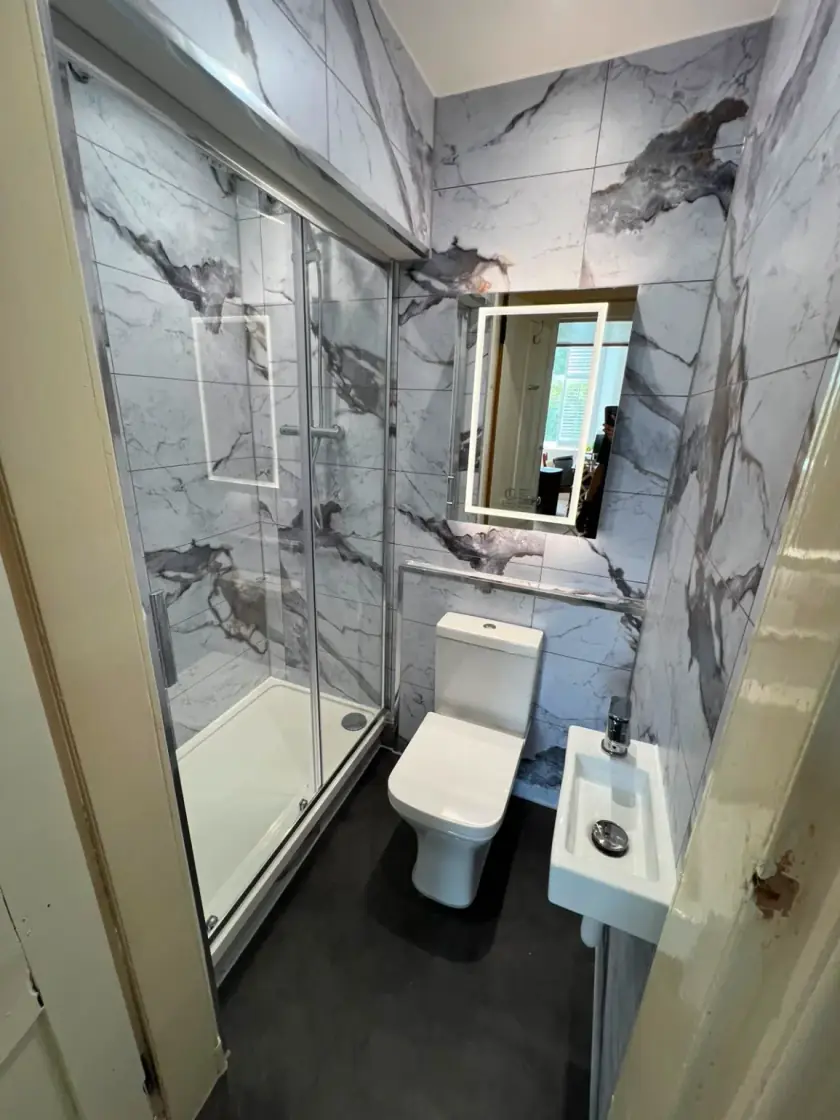
Small rectangular tiles, a patterned floor or a suitable panelled effect can give a traditional reference. Plain large tiles or broad wall panels can create a simpler background. Either approach needs suitable preparation and waterproofing in wet areas. Choose the complete finish and fitting method rather than assuming an older-looking material requires older construction methods.
Compare the grout or panel joins, trims and window edges. A busy floor may work best with quieter walls. A traditional room does not need several ornate patterns, and a modern one does not have to be grey. Samples viewed together help you decide where the detail should be strongest and which surfaces should remain simple.
Choose storage that belongs in the room
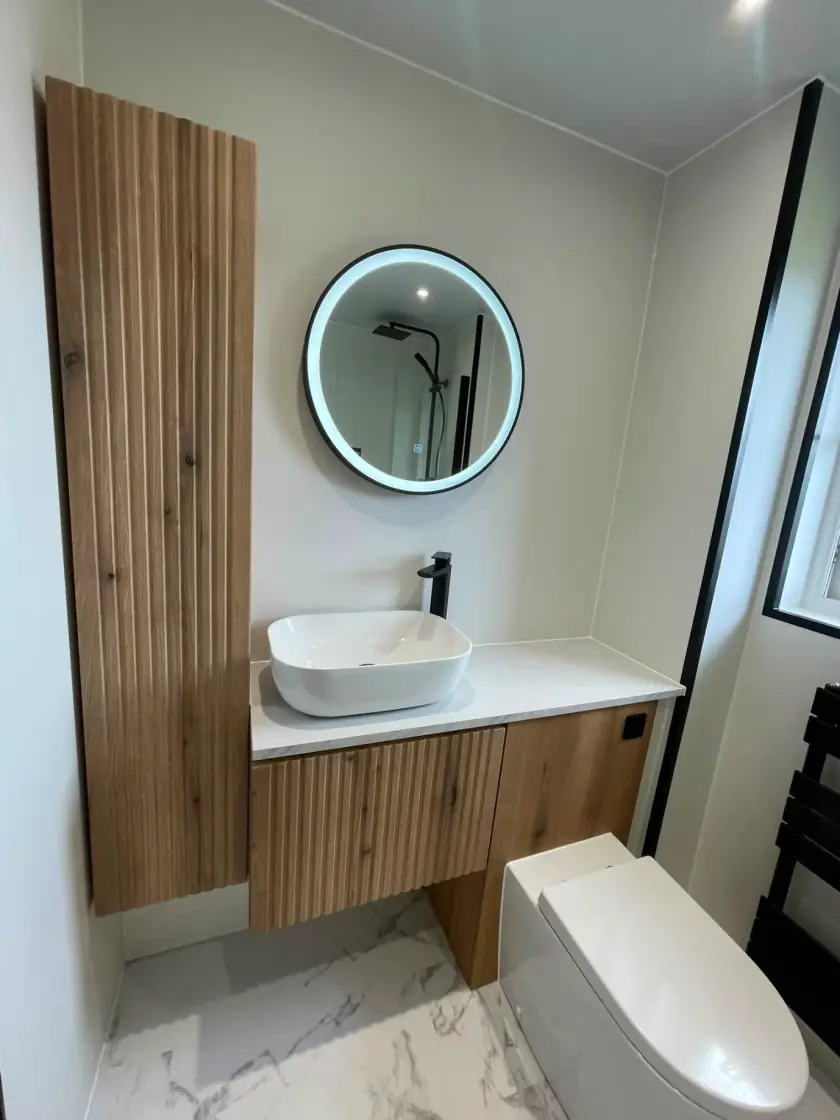
Panelled vanity doors can provide a traditional appearance while keeping everyday items hidden. Flat-front drawers can give a simpler look. In both cases, check the usable storage around the pipes and the room needed to open the furniture. A shallow cupboard that works well is more valuable than a decorative cabinet that blocks movement.
You can mix a traditional-style basin with a suitable mirror cabinet or contemporary internal storage. Keep the proportions and colours coordinated rather than trying to make every piece identical. Our vanity guide explains the dimensions and fittings to check whichever cabinet style you prefer.
Keep lighting, heating and extraction practical
Both styles need comfortable mirror lighting, clear general light and effective ventilation. A decorative light must still be suitable for its bathroom position and installation. Have an electrician check it before purchase. A traditional-looking room can use efficient modern equipment without needing every working component to look historic.
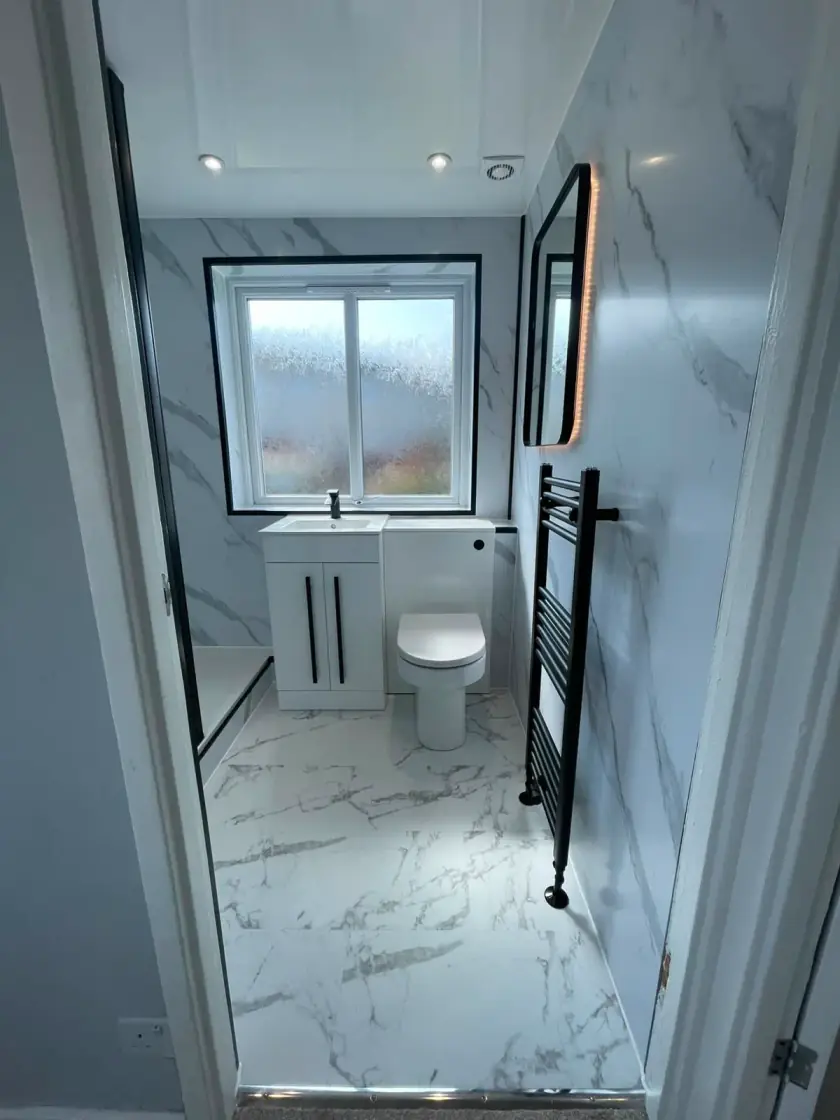
Likewise, select heating for the room's actual needs. A decorative towel rail or column-style radiator needs appropriate output for the system and space. Keep controls easy to use and access available for maintenance. Comfort and moisture control should be part of the plan before the remaining budget is allocated to decorative details.
Respect original features where relevant
If you want to retain cornicing, old tiles or other original details, identify them before removal begins and agree how they will be protected. Their condition may affect what is practical. In a listed property, check whether the proposed alterations require consent before proceeding. A room's traditional appearance does not by itself satisfy any permission requirements.
You can often create a mixed design without copying an entire period room: a straightforward shower with a panelled vanity, for example. Check the proportions and finish samples together. Avoid assuming a modern bathroom always clashes with an older home or that a traditional bathroom automatically increases its value. The result needs to suit your preferences and daily use.
Compare the cost of your chosen products and work
Modern and traditional styles both include products at different prices. Preparation, layout changes, detailed fitting and material choices affect the total. Ask for the same products and work when comparing quotes, including removal and repairs to walls and floors disturbed by the work. Check care requirements too: ornate shapes or particular coatings may require different cleaning from simpler surfaces.
Compare our modern bathrooms and traditional bathrooms, then discuss the features you like. Call Dream Bathrooms Glasgow on 0141 471 9145 to plan a room that combines your preferred style with comfortable access and useful storage.
Plan your bathroom in Glasgow
Talk through your room, the changes you want and the work that needs to be included.